


SAKHI
(HINDI - FRIEND)
AI chatbot-supported application and device promoting menstrual health awareness amongst rural Indian women to break away from the taboo of menstruation
pROJECT BRIEF
In a market saturated with menstruation-tracking applications, addressing the subject of periods or menstrual cycles remains taboo in India. Despite the great possibility of outreach with the widespread availability of smartphones and affordable 5G networks, a critical question arises:
WHERE ARE WE FALLING SHORT?

Drawing insights from extensive research, user interviews and a thorough analysis of competing products and services, this project endeavors to take the inaugural step in generating awareness among women. It utilizes an AI Chatbot-integrated application and a menstruation tracking device inspired by the Indian Bangle to inform users, address their queries, minimize the burden of constant input and alleviate the challenges faced by uneducated, rural, and digitally inexperienced populations. Its ultimate goal is to empower women to embrace and take pride in their bodies.

TIMELINE
Dec 2023 - Jan 2024
tools
Figma, Rhinoceros, Illustrator, Photoshop, Blender
My Contribution
Empathy Building, Ideation, Research, Storyboarding, UX, Wireframing, UI Design, Prototyping, Usability Testing, Heuristic Evaluation
collaborators
Ishita Kohli , Utkarsh Verma
pROBLEM STATEMENT

Despite advancements in technology, many women in uneducated, rural, and digitally inexperienced populations face significant challenges in accessing comprehensive menstrual health information and effectively tracking their cycles, highlighting a critical gap in menstrual health management.
01
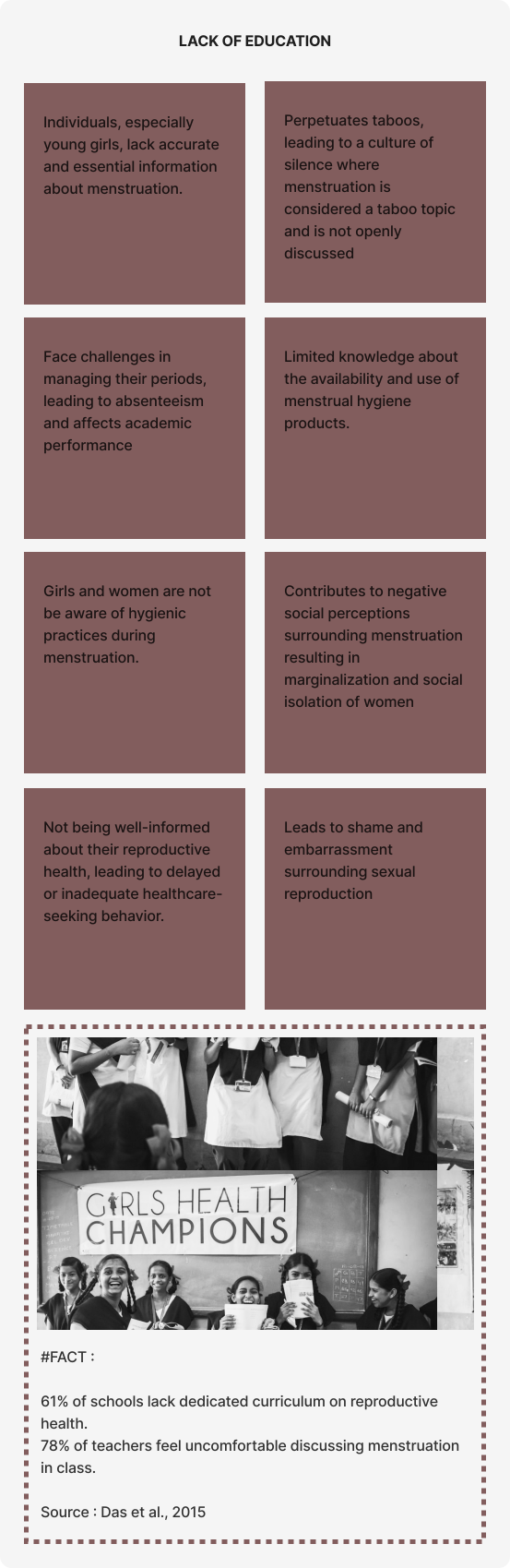
Lack of education and awareness
02
Existing myths and taboos surrounding menstruation
03
Ostracization, misunderstandings, social isolation, and discrimination of women leading to limited access to crucial medical information
04
Existing solutions in the market overlook the cultural and rural intricacies
why this issue ?
MAY 9TH, 2023
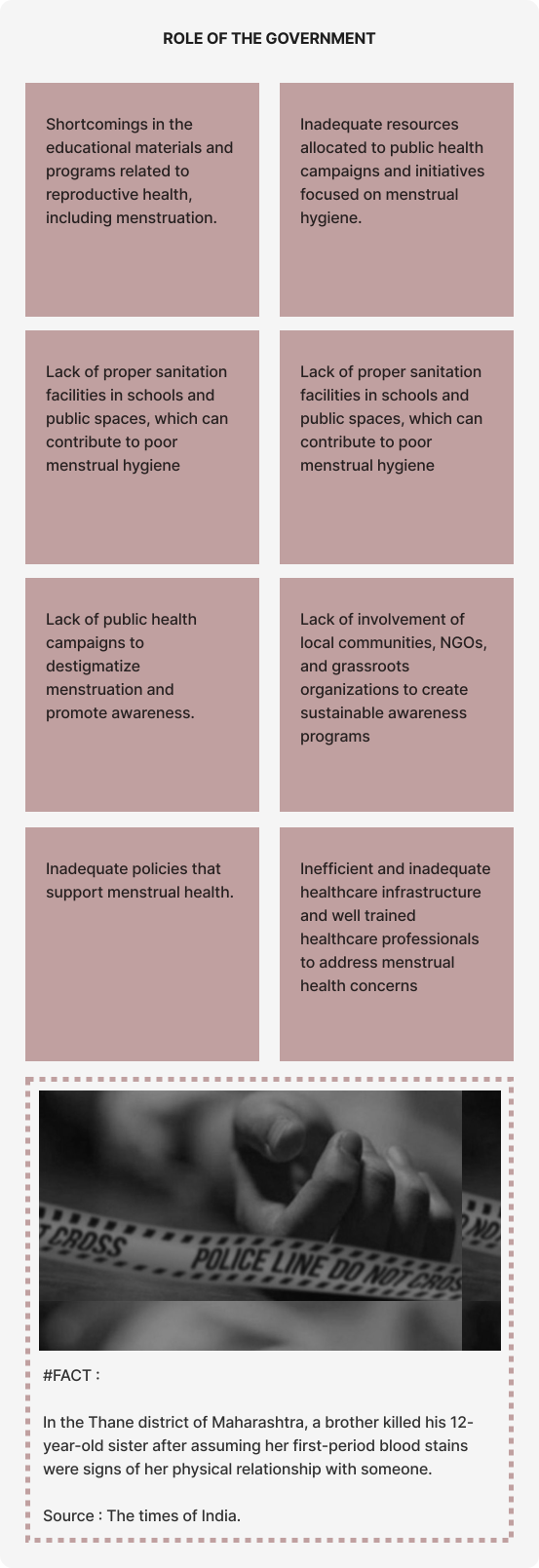
GIRL GETS HER 1ST PERIOD, BROTHER FEELS IT'S AN AFFAIR AND KILLS HER IN THANE, MUMBAI
A 30-year-old security guard has been arrested for allegedly killing his 12-year-old sister over suspicion that she had got physical with someone. Police sources said it was a misunderstanding as the girl had reached menarche - the first time that a girl menstruates - but the brother thought she had got physical with someone.
CURRENT SITUTATION
PERIODS OF HELL IN BHAMRAGAD
The Madia, an Adivasi tribe, segregates menstruating women, forcing them into "Kurma Ghars" or period houses based on outdated beliefs about menstrual impurity. These huts lack basic amenities such as beds, bathrooms, or electricity, causing significant discomfort and health concerns. The dim, poorly ventilated environment, along with the presence of rodents, exacerbates the challenges faced by these women. Additionally, they are restricted from storing their sanitary products, primarily old cloth, anywhere else. Superstitions dictate that any interaction during this time could provoke the wrath of the village deity, further isolating these women.
Instances and practices like these are a common affair in India and the main reason behind this the lack of awareness in the public. Having conversations regarding menstruation is increasingly becoming a more common feature amongst working women in first tier cities. However, this is a fairly recent development in urban sectors. In rural parts of India, it still remains a rarely discussed taboo topic.
THE final Solution

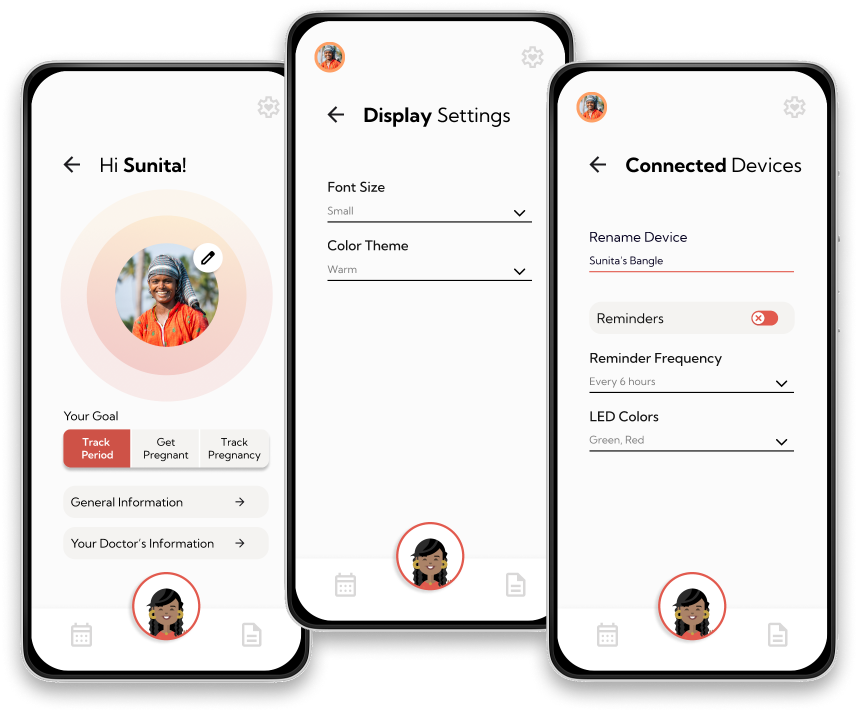
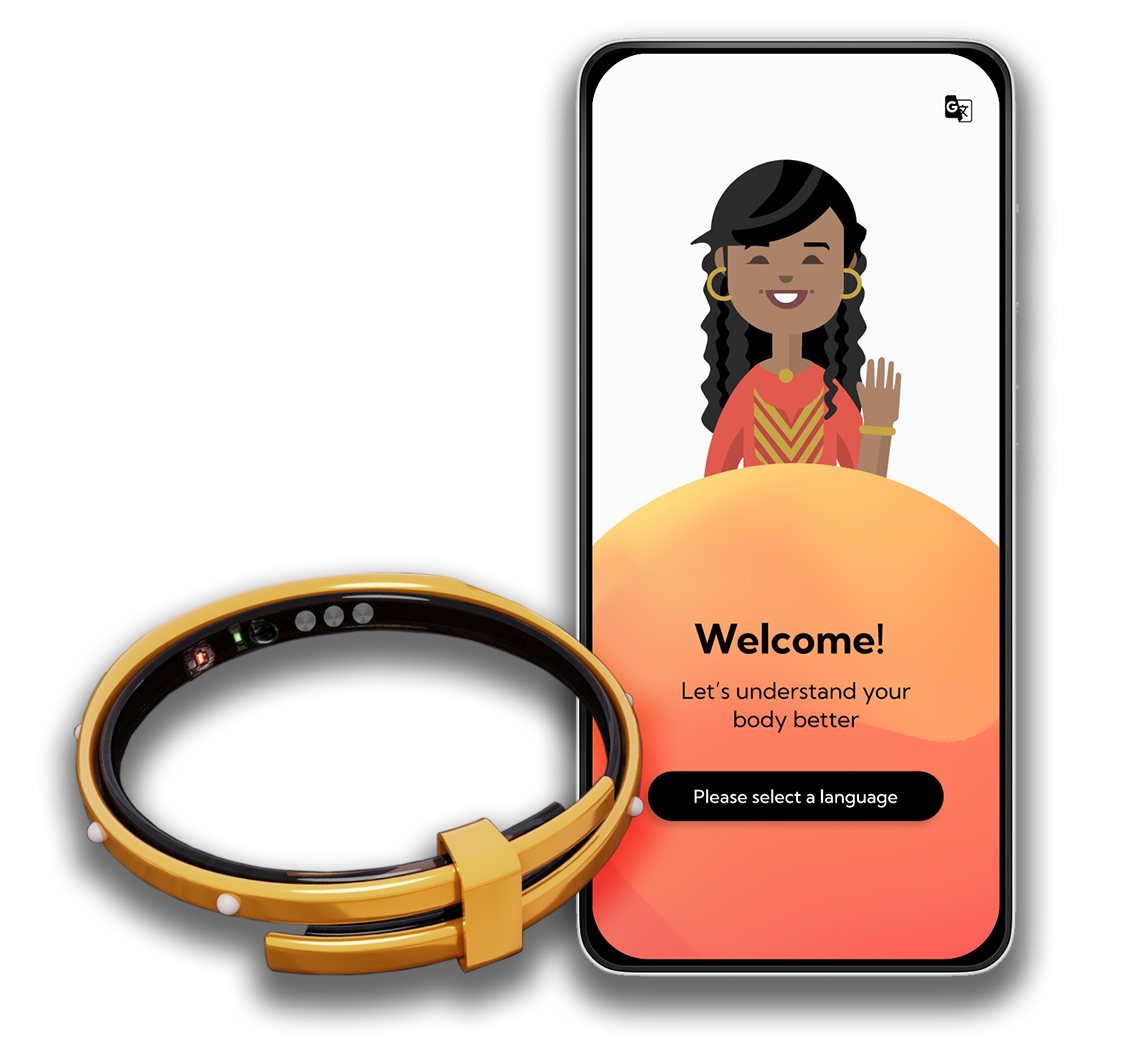
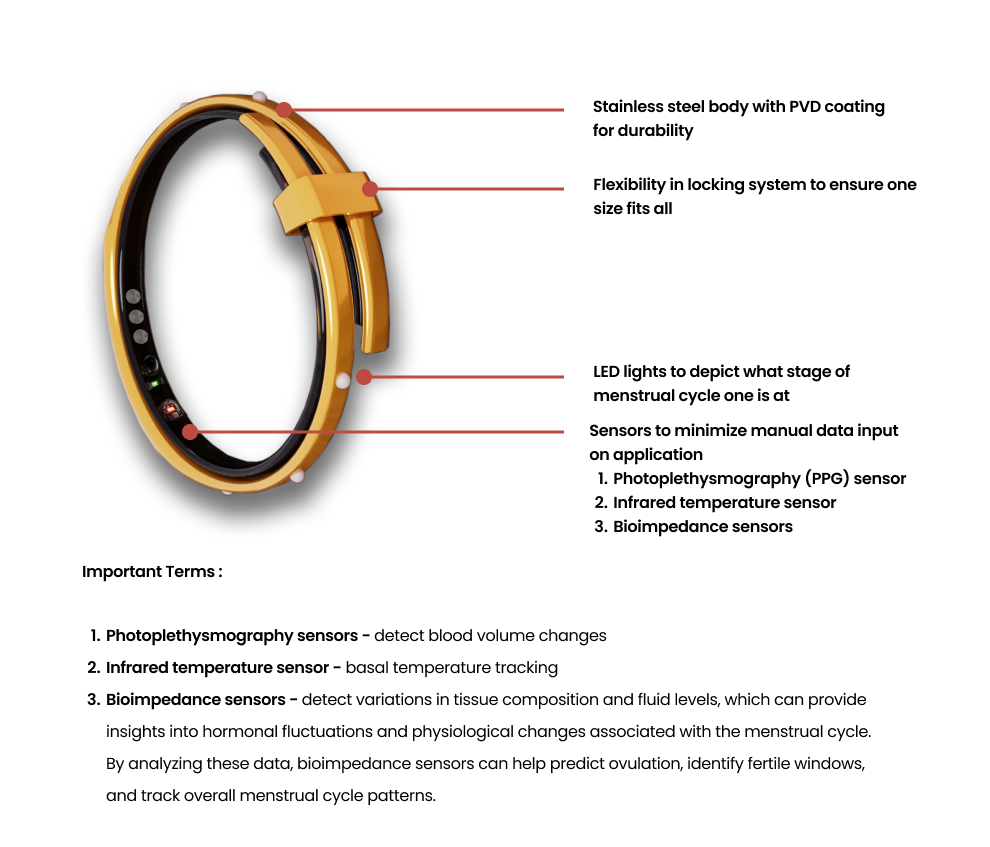
The final solution comprises the Sakhi Bangle (bracelet) and the Sakhi Application, designed to raise awareness about menstruation and the importance of tracking cycles among the targeted users, Indian rural women. The wearable, inspired by the Indian Bangle, is a screenless device intended to track the menstrual cycle using multiple sensors and ensuring minimal manual input on the application. The application is designed to observe the data tracked by the bangle, add to, or override this data if incorrect (thus improving predictions over time through machine learning), analyze user cycles and symptoms, and can be used to share this data with a healthcare professional. Additionally, the application is equipped with an AI chatbot named Sakhi, which aims to answer any user queries and provide guidance for a seamless experience.
THE SAKHI BANGLE 
THE SAKHI APPLICATION
EMPATHIZE
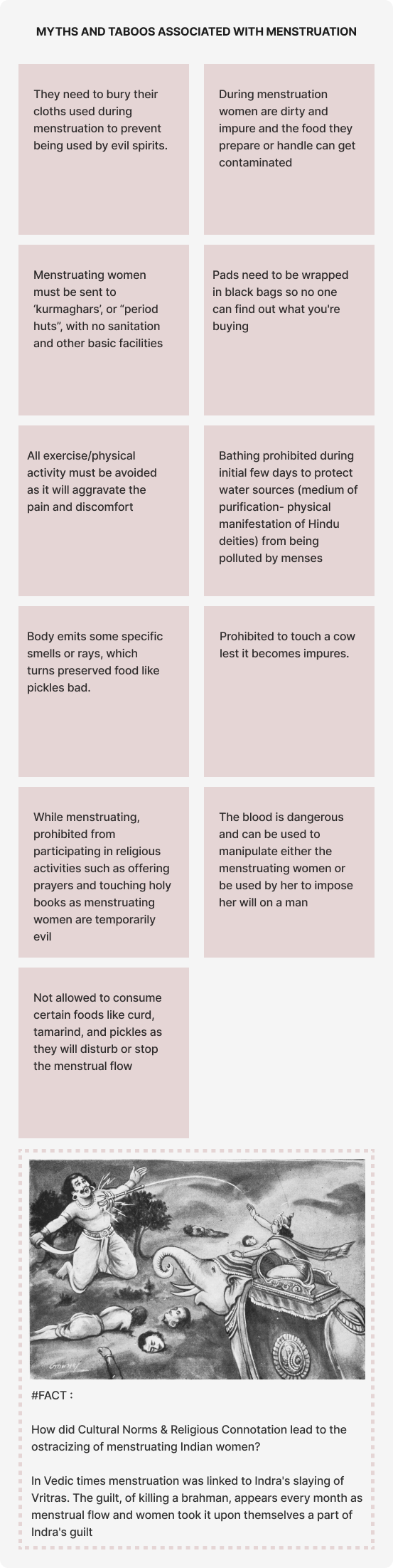
The project came into being as we observed a trend of social norms and practices in India around the realm of menstruation and women health. These include but not are not limited to the following absurd practices during menstruation :
01
Menstruating women not allowed to take a bath especially for first few days of their period.
02
Menstruating women must avoid exercise/physical activity.
03
Certain foods like sour food like curd, tamarind, and pickles are usually will disturb or stop the menstrual flow.
04
Menstruating women are prohibited from participating in normal life activities such as entering the kitchen/temple.
05
Menstruating women are dirty and impure and the food they prepare or handle can get contaminated
06
The body of a menstruating woman emits some specific smell or ray, which turns preserved food bad.
07
Women must bury their cloths used during menstruation to prevent them being used by evil spirits.
08
Menstrual blood is dangerous and a woman can use her menstrual blood to impose her will on a man.
09
Menstruating women are prohibited from touching a cow lest it becomes infertile
10
A women may never reveal that she is menstruating and must always conceal her sanitary products because periods are a shameful experience.
All Indian women whether living in the urban or rural sector has been subjected to at least one of these practices.
For more information on the religious and cultural norms and practices surrounding menstruation and women health, please click on the link to ourFigJam file.
CONTEXTUAL ENQUIRY
Interviews
We tried engaging in conversations with women coming from diverse socio-economic backgrounds, it was realized that there is very little awareness and a lot of skepticism to discuss this topic freely.
Articles and Research Papers
Several articles and research papers revealed the reasons for the existence of such practices and the effects it has on the lives of the women.
Takeaways :
01
Girls drop out of school when they begin menstruating and are often married off at a young age
02
Improper Sanitary Products Used because taboo to discuss the right way.
03
Poor protection and inadequate washing facilities and infrastructure
04
Fear of staining - made to feel embarrassed by family members and peers
05
Fewer job opportunities as employers think they don't work or work inefficiently during periods
#FACT : Did you know that only 36% of India's 355 million menstruating females use sanitary napkins?
These factors often tend to disrupt a woman's life especially their emotional state, mentality, lifestyle and physical health.
AFFINITY MAPPING
Affinity Mapping was employed to discern recurring themes across various sources, including conversations, research papers, and articles. These insights were instrumental in understanding the underlying factors contributing to prevailing social norms and practices regarding menstruation in India. Furthermore, the process shed light on the barriers preventing women from adequately addressing menstrual health concerns.
insights
Indian menstruating women encounter ostracization and struggle to address their menstrual health due to a multitude of reasons. These issues encompass the following :
01
Cultural barriers - myths and taboos associated with menstruation
02
Economic constraints
03
Low tech-savviness and complicated existing applications
04
Little health consciousness
05
Lack of education
06
Gender inequality
07
Inefficient government policies to address issues of the rural woman
However, the underlying issue amongst all of these is the lack awareness, not tracking their health at all and not being able to discuss the topic freely.

Given the lack of conversation about periods, according to a study by UNICEF, 71% of adolescent girls in India are unaware of menstruation until they get it themselves.  

USER PERSONAS & empathy mapping
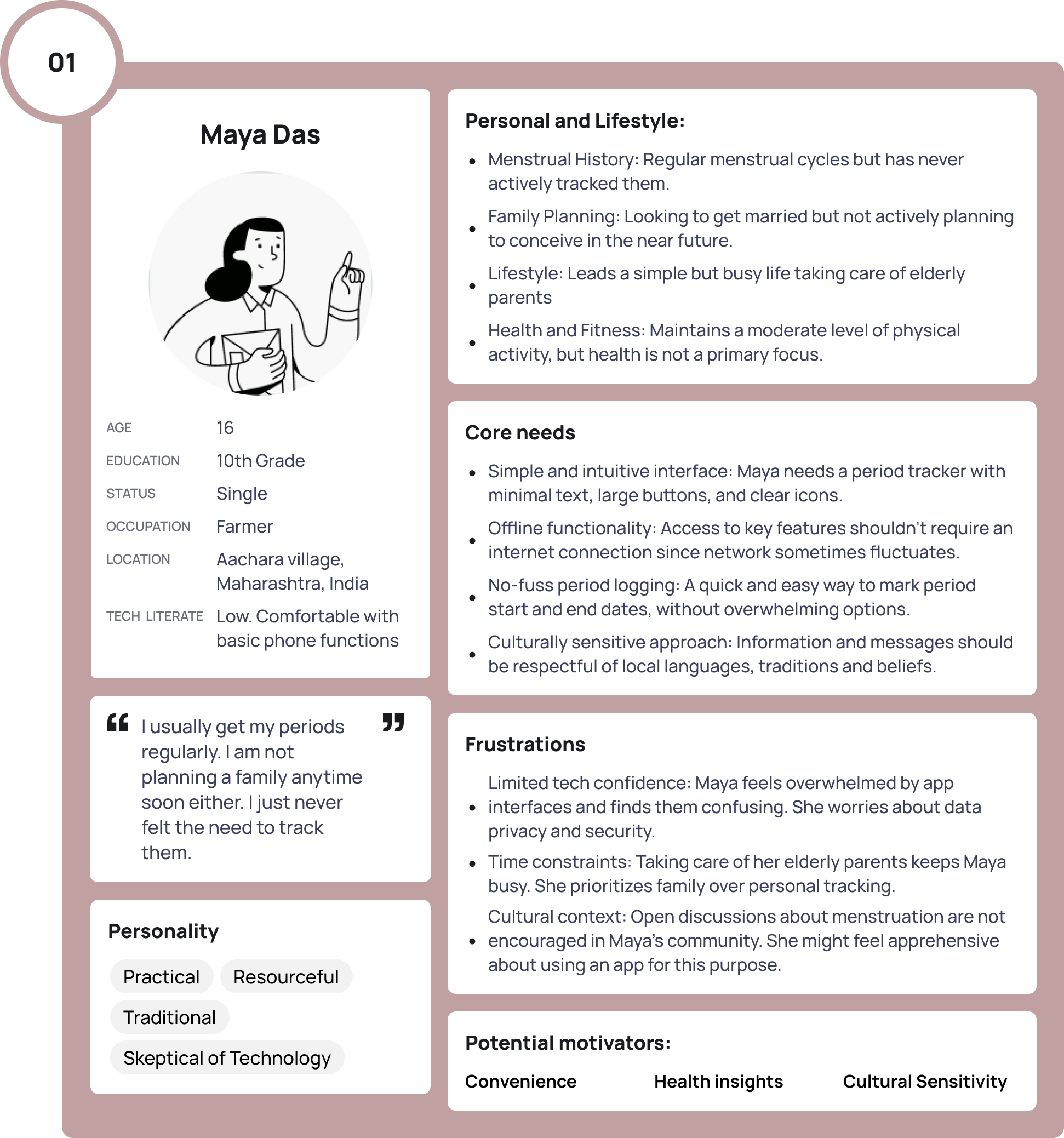
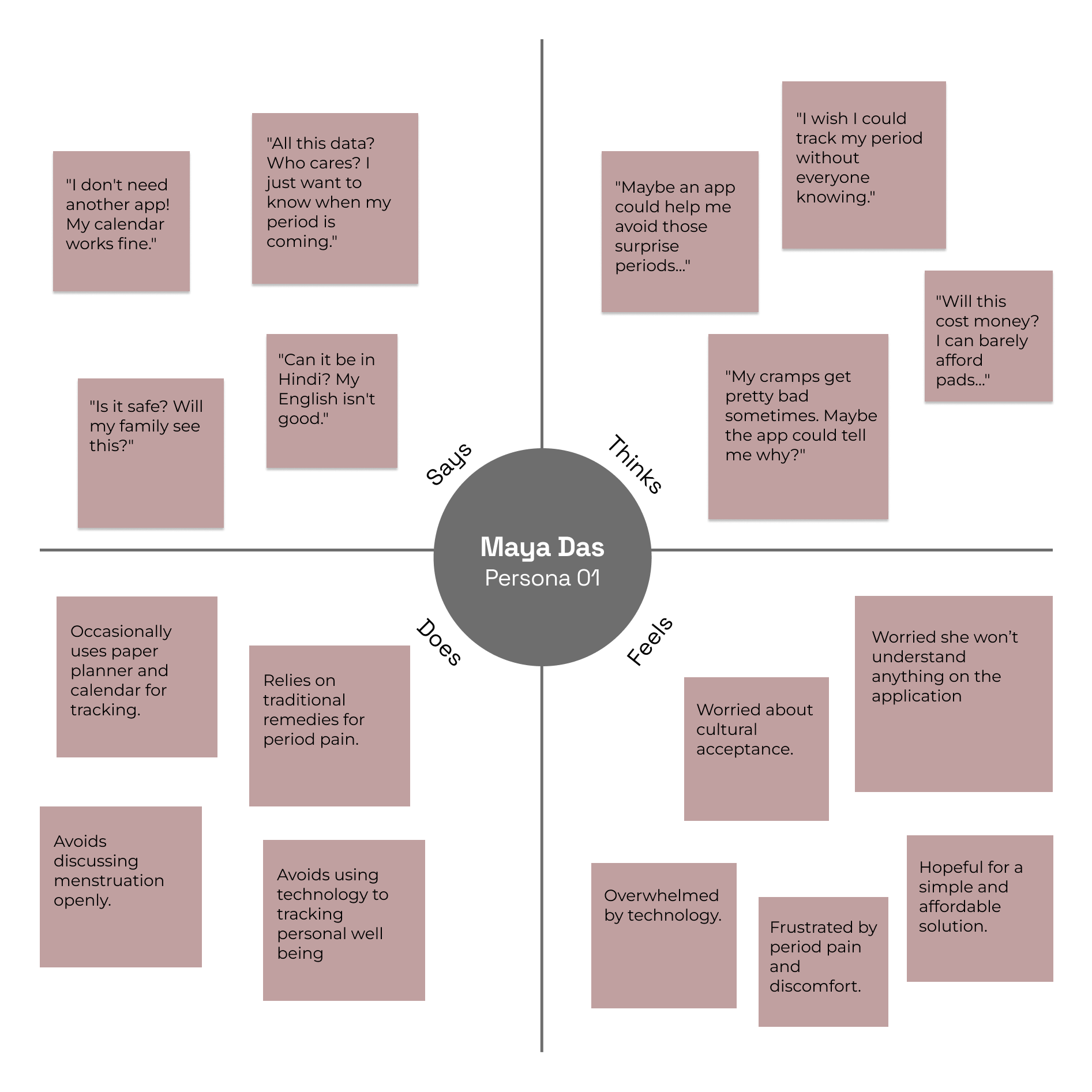
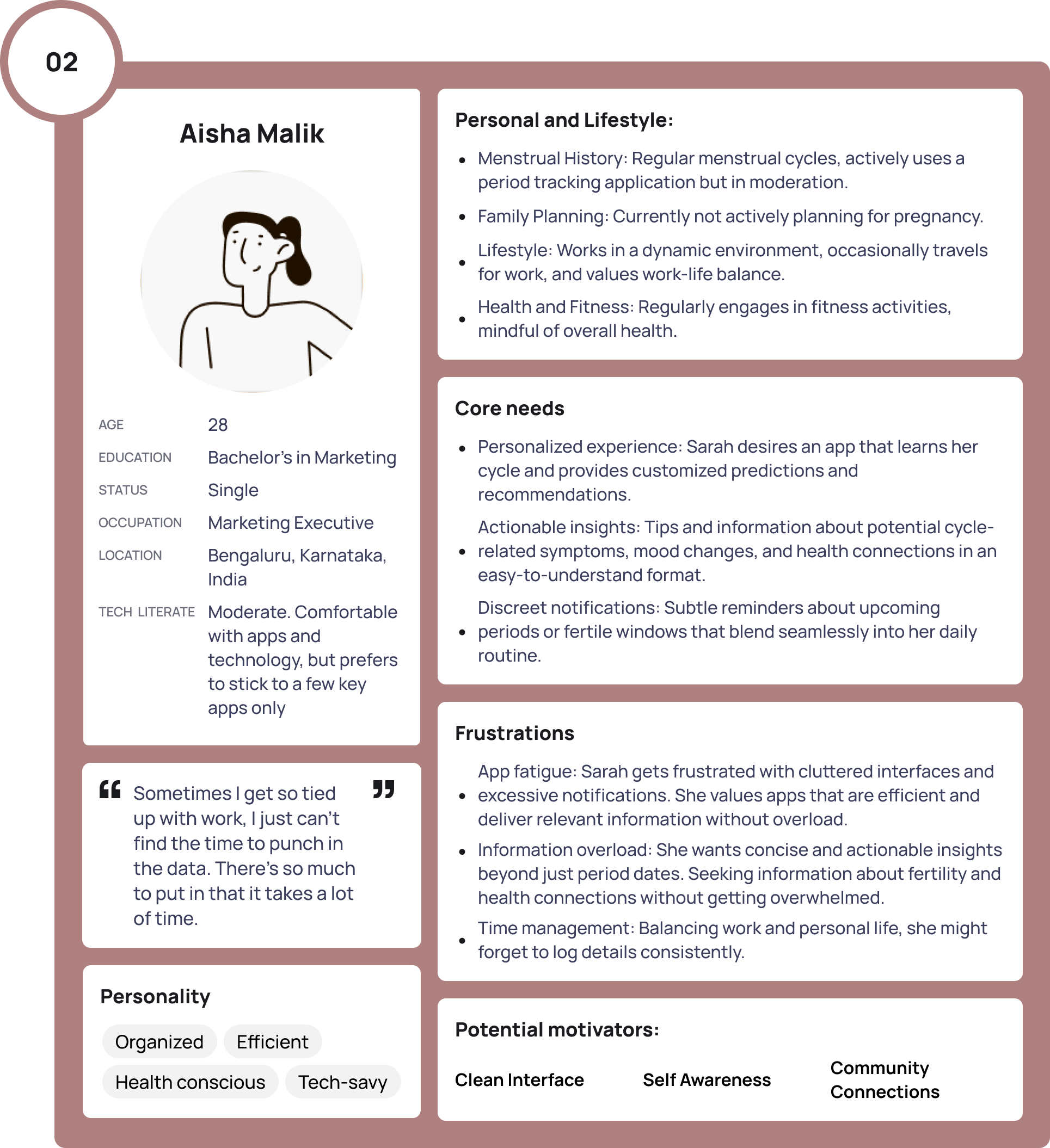
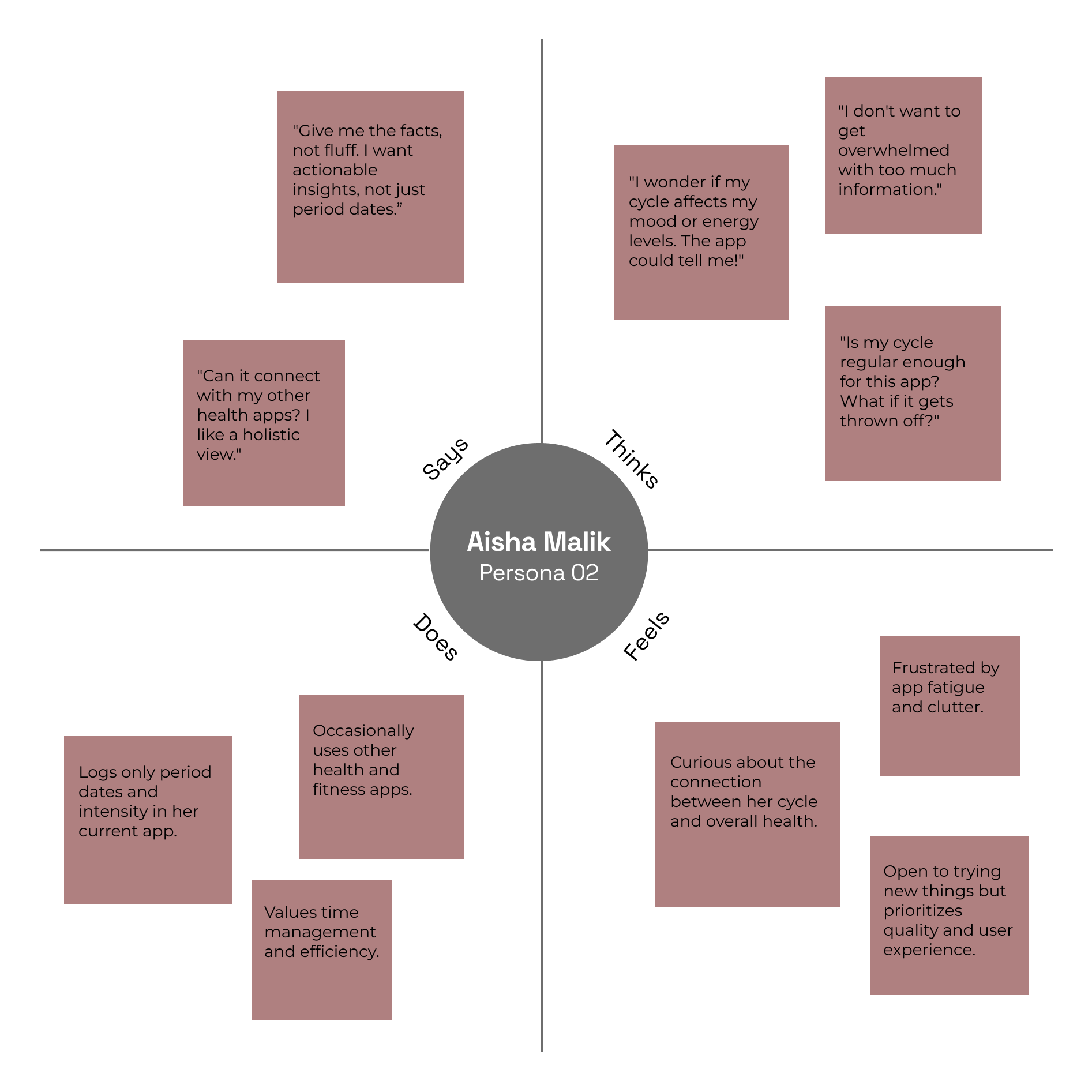
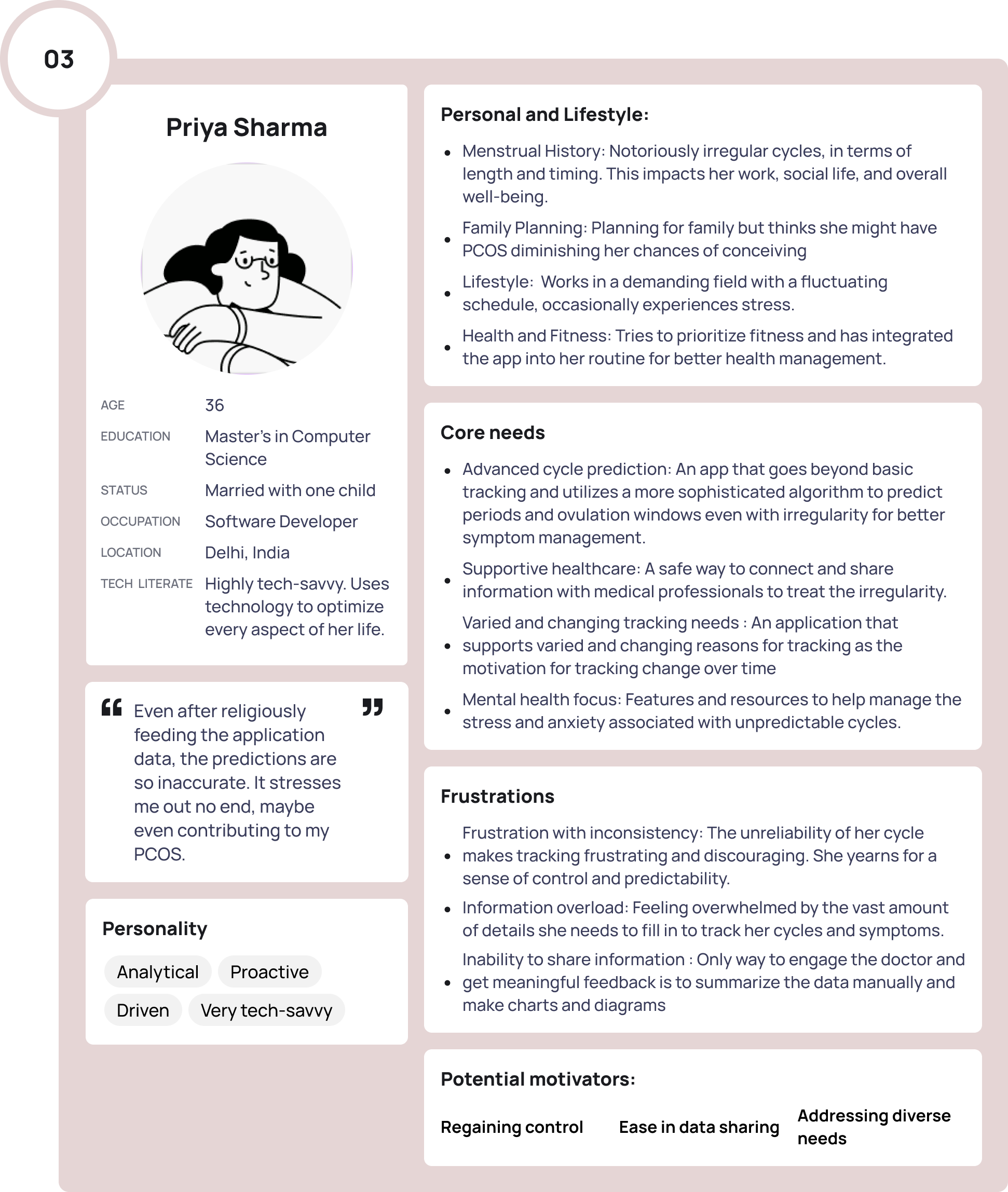
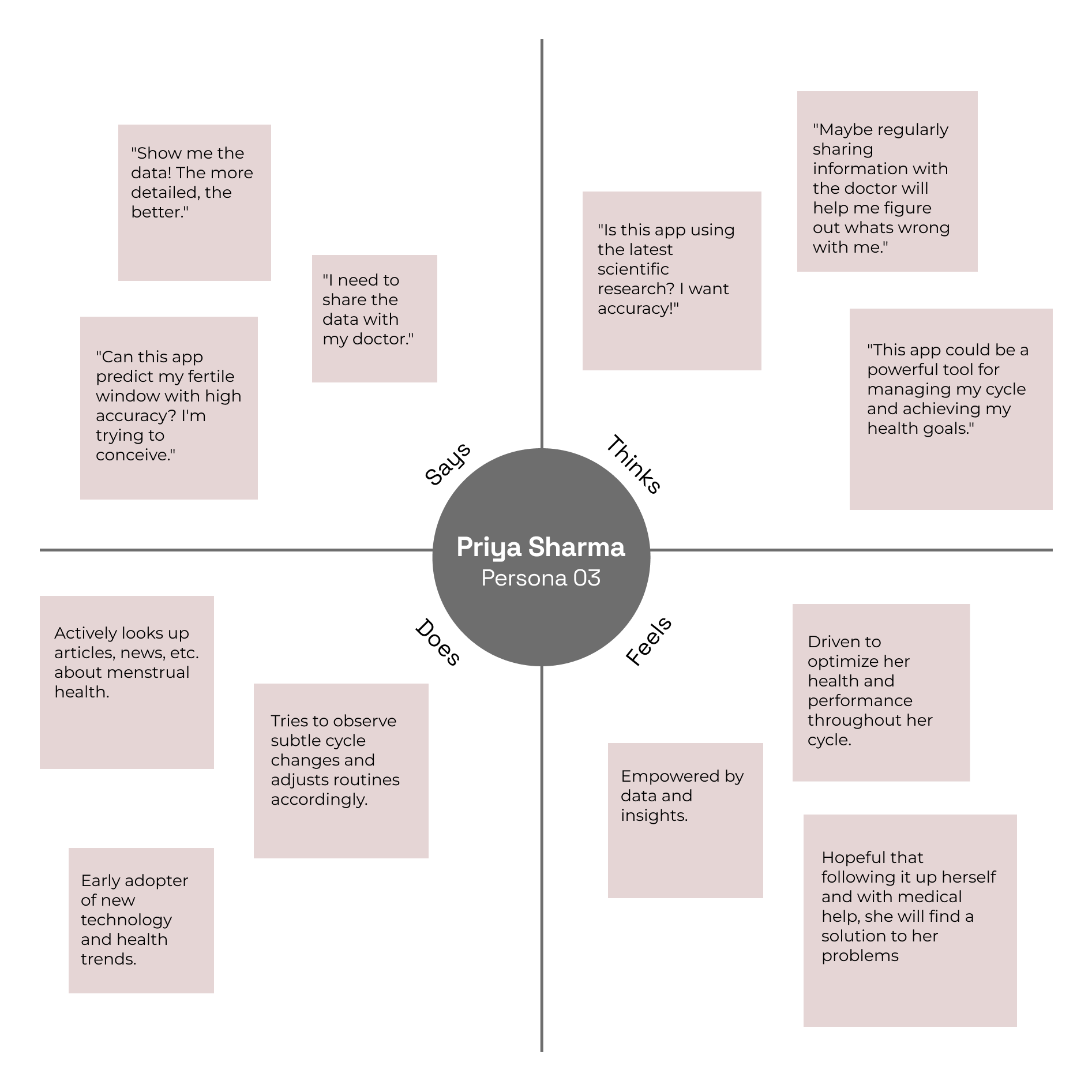
Based on insights gathered from research, interviews, and affinity mapping, we developed three user personas. Subsequently, empathy mapping was employed to delve deeper into the needs and motivations of our target audience, providing additional insights into their emotional states.
TARGETED USER GROUP
Considering the greatest need for menstrual health awareness in rural areas, our targeted user group aligns with User Persona 01
what is being done to address this issue?
Several Government Initiatives, Non-Governmental Organizations, International Organizations, Academic Institutions and Activist Groups have employed several strategies to address menstrual health awareness in rural India:
01
Community Workshops and Training
02
Distribution of Educational Materials
03
School-Based Programs
04
Digital Initiatives
05
Engagement with Community Leaders:
06
Improving Access to Menstrual Products
07
Women's Health Camps
why address the issue digitally?
We chose to address the issue digitally as it offers the following benefits :

Accessibility

Better accessibility to a wide audience as everyone has access to a smart phone and good network coverage

Anonymity

Individuals feel comfortable seeking such information anonymously, especially in cultures where menstruation is considered taboo

Cost-Effectiveness

Information and resources can be shared at a relatively low cost compared to traditional methods such as in-person workshops

Scalability

Solutions can be easily scaled up to reach larger populations as needed

Customization

Customization of content and resources to suit the specific needs and preferences of different demographics,

Interactivity

Features such as quizzes, videos, and forums can engage users and facilitate a more dynamic learning experience

Data Analysis

Data collection and analysis inform ongoing improvements  of menstrual health awareness initiatives by gathering insights on user engagement.
what are existing ways addressing this issue digitally?
MOBILE APPLICATIONS AND WERABLE DEVICES
There is a plethora of applications and wearable devices that exists in the market targeted to track menstrual cycles and reproductive health.
COMPETITIVE ANALYSIS
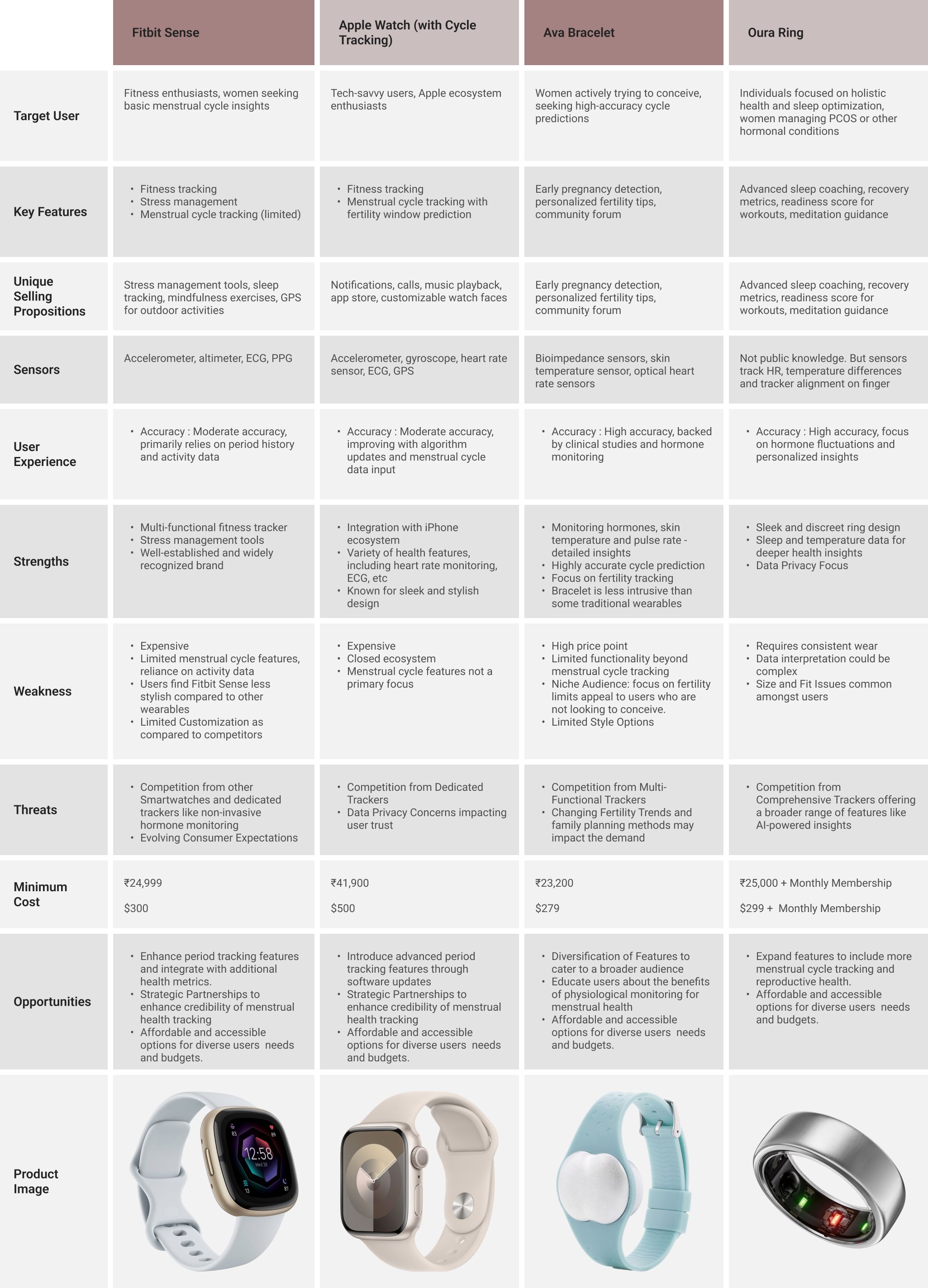
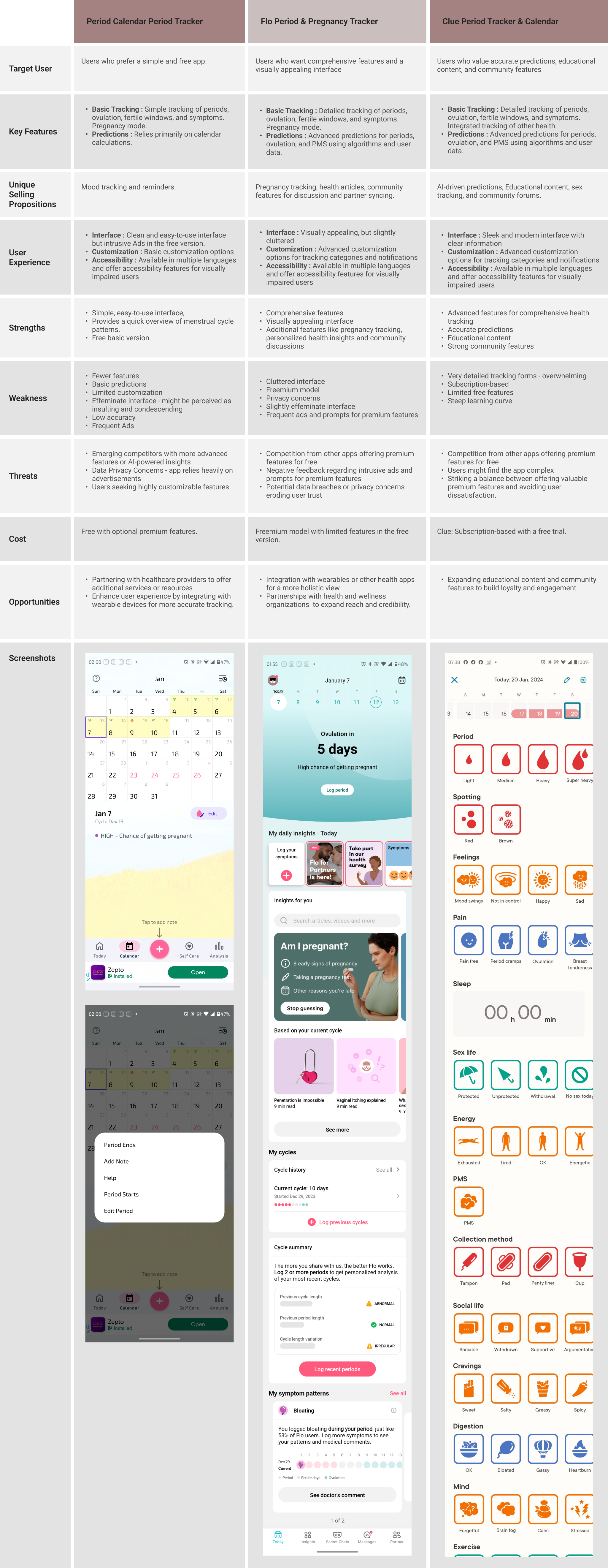
A competitive analysis was conducted to understand the functions targeted, user groups, and to learn from the strengths and weaknesses of existing menstrual health tracking applications and wearables.
Mobile Applications : Competitive Analysis
Wearable Devices : Competitive Analysis
insights
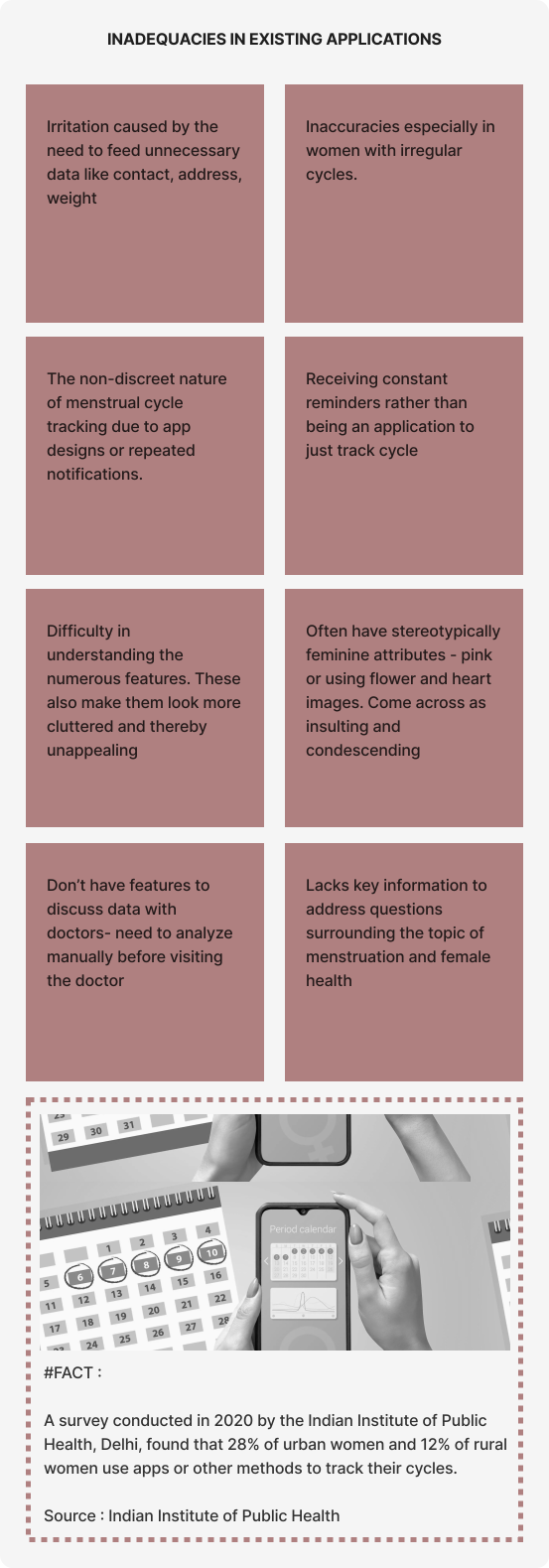
A wide array of applications and wearable devices are available in the market, targeting the tracking of menstrual cycles and reproductive health. However, they overlook several intricacies that must be considered to effectively promote awareness in a rural setting :
01
Cultural Nuances are not considered
02
Not Affordable as these applications and wearables are usually highly priced
03
Complicated interaction and interfaces for population that is not tech savvy.
04
Overload of information for a population that is unaware of basics of menstruation
05
Lack discreetness. This includes effeminate logos and interfaces in applications and large non discreet wearables.
06
Lack focus to create basic  awareness in a society where menstruation remains a taboo topic
07
Existing apps may not offer content in local languages which is especially an important feature to consider in a country with over 22 languages.
what is the purpose of the new application and device?
OUR PROJECT GOALS
01
Increase awareness regarding menstrual health in rural India
02
Debunk existing myths and taboos associated with menstruation
03
Ensuring accessibility and affordability
04
Simple and clean interfaces and interaction for better usability
05
Start by empowering women
#NOTE: It is important to note that are targeted user group is women. While there are applications catering to male partners and family members alongside women, we believe that in rural India, it's crucial to prioritize empowering women first. Our aim is to create awareness among women so they can overcome myths and taboos surrounding menstruation, embrace it as a natural process, and take pride in their bodies and bodily functions.
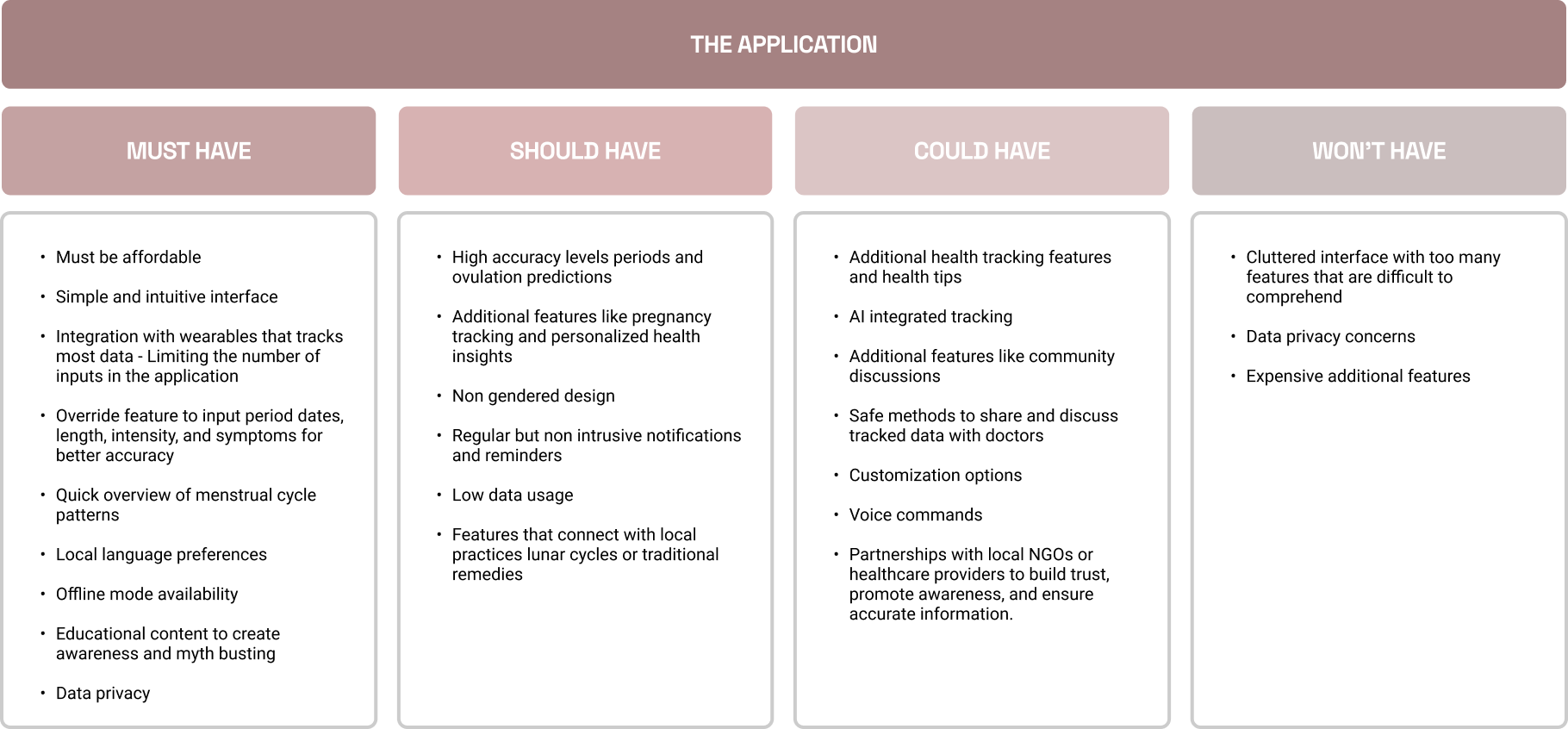
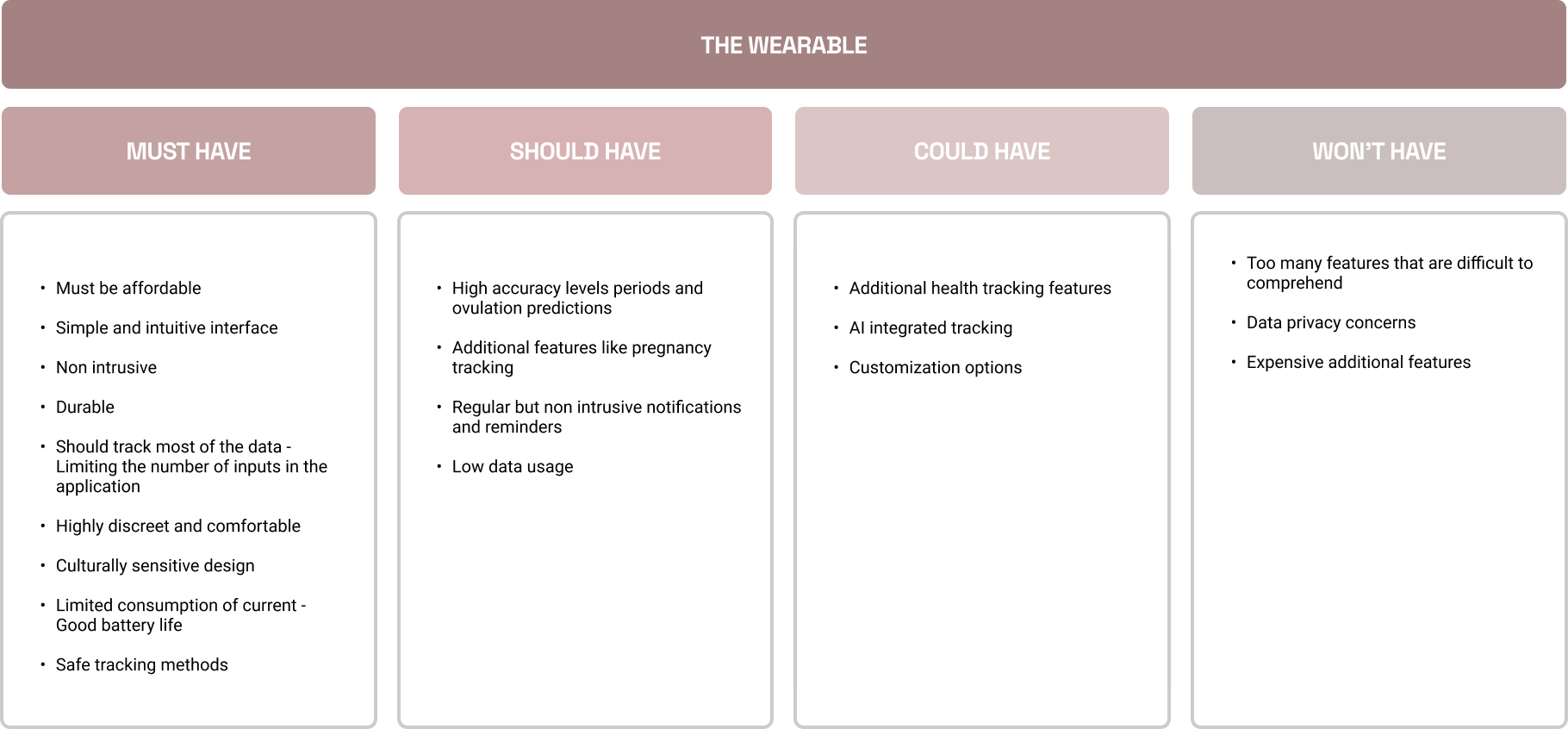
MOSCOW ANALYSIS
Taking insights from existing devices and applications, we conducted a MOSCOW Analysis to understand what features must be incorporated in the application and wearable to address the issue.
how do we anticipate the application and device will be used?
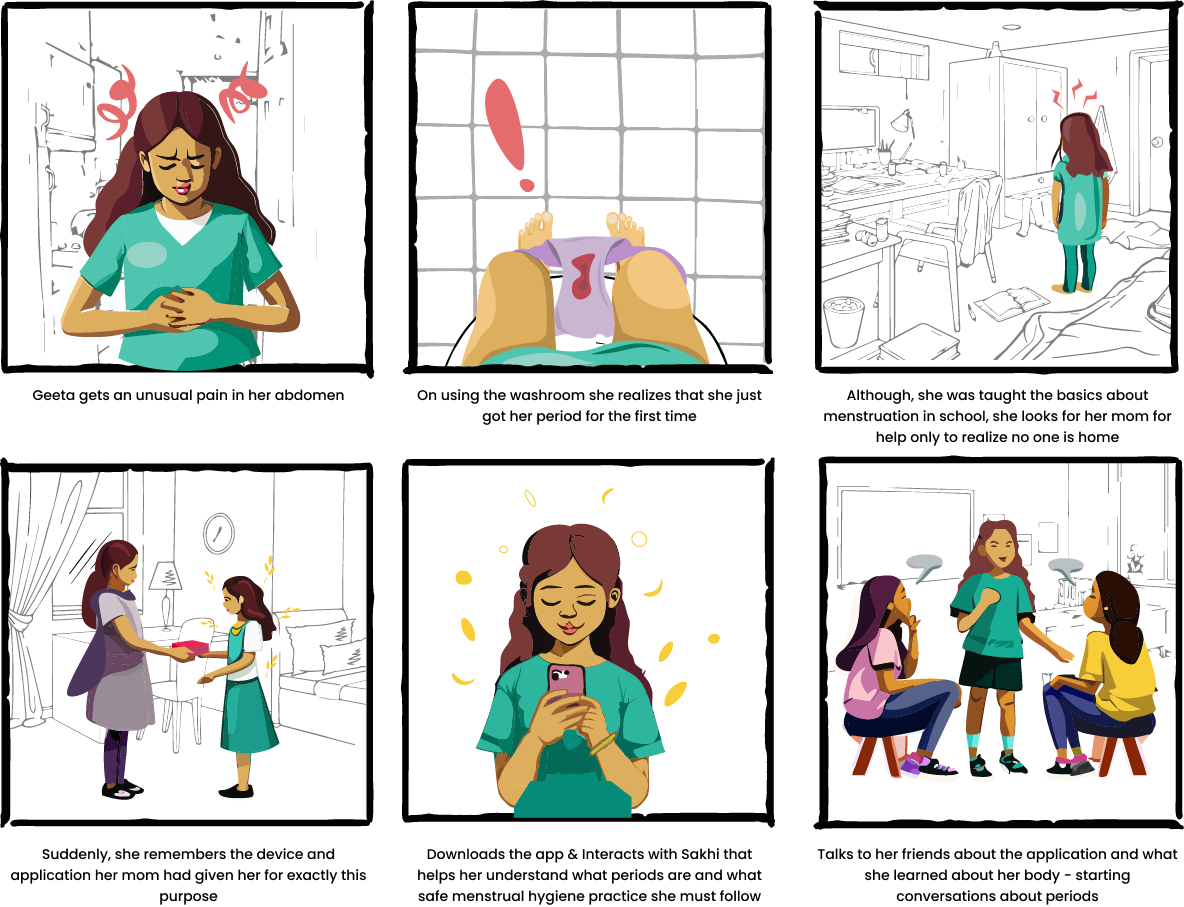
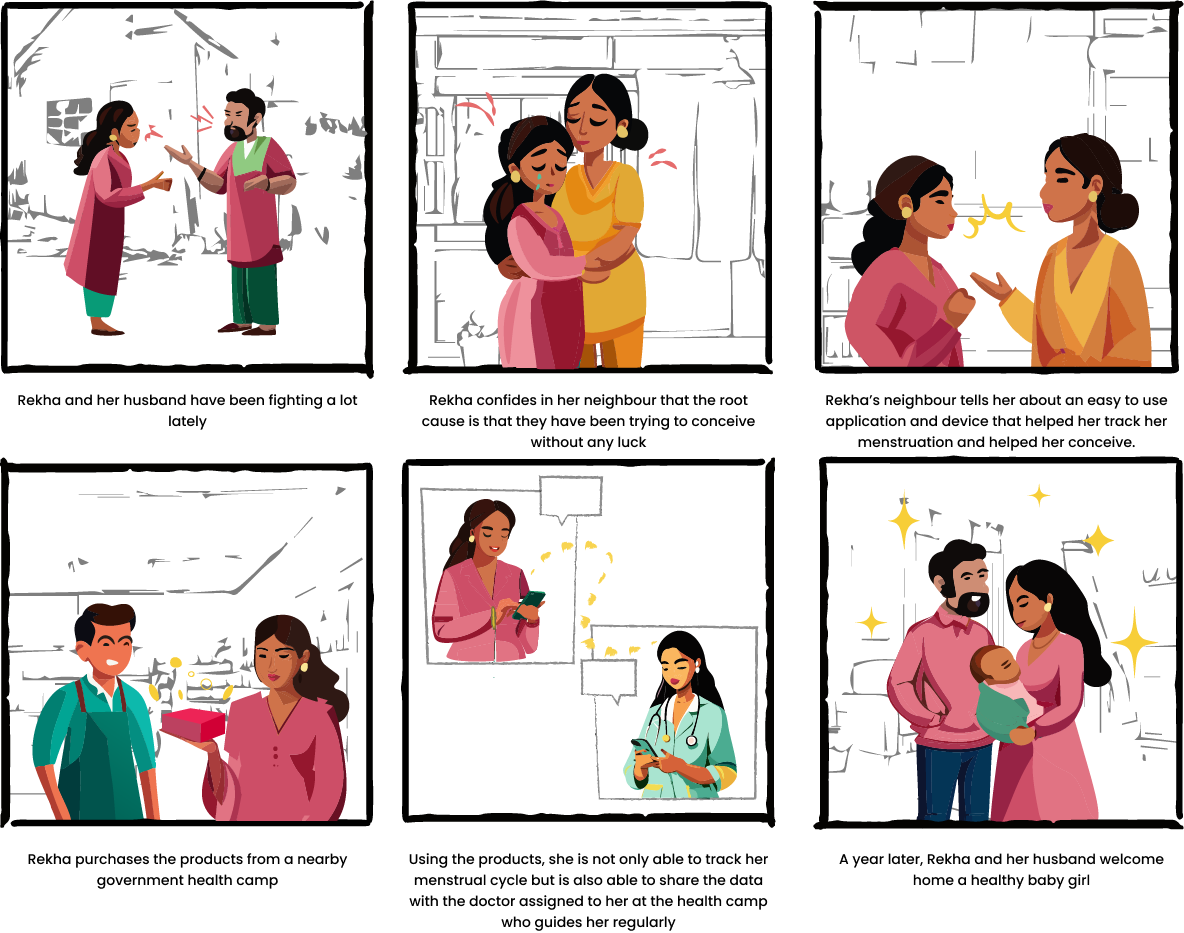
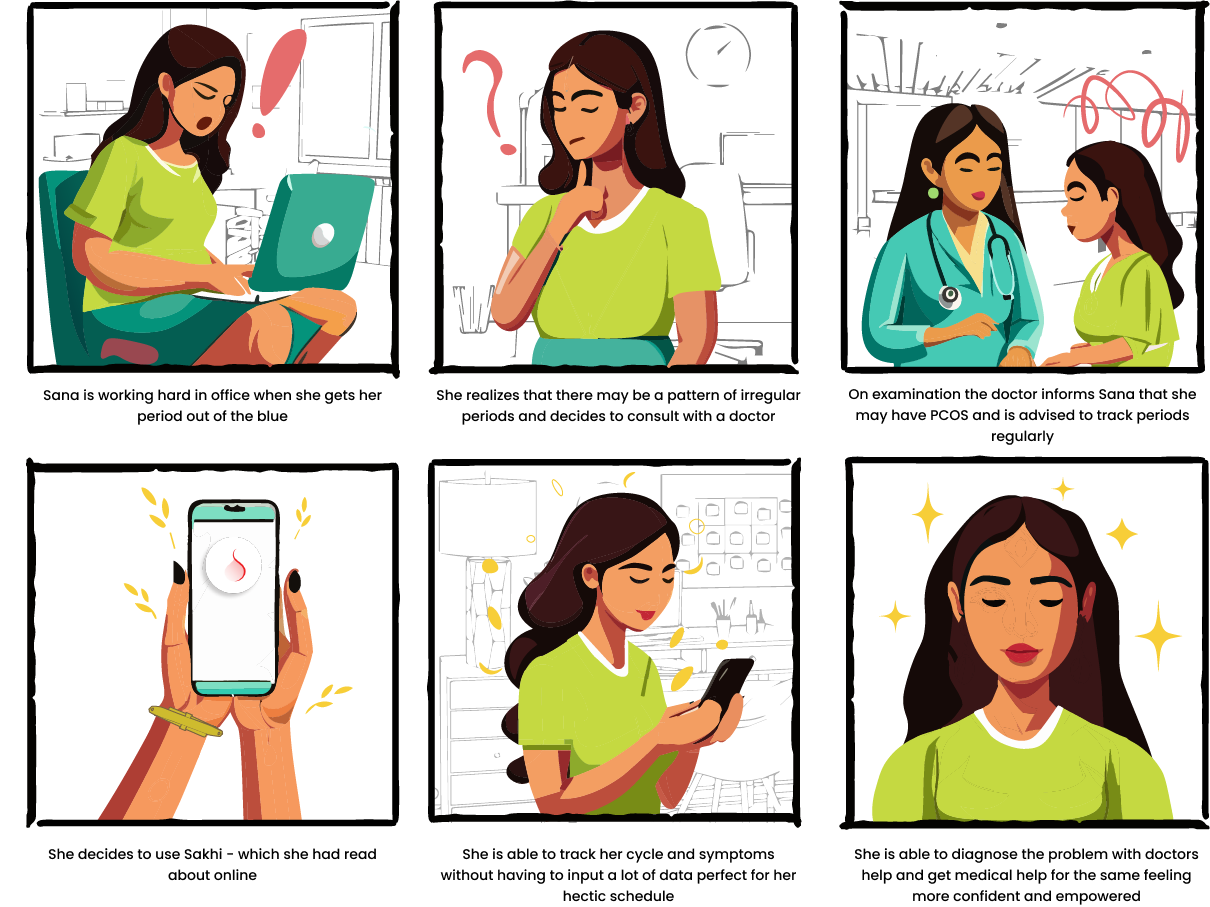
Storyboarding
Storyboarding was used as a method to understand how the application and device will be used to create awareness.
HOW WILL WE DO THINGS DIFFERENTLy?
IDEATion : THE WEARABLE DEVICE
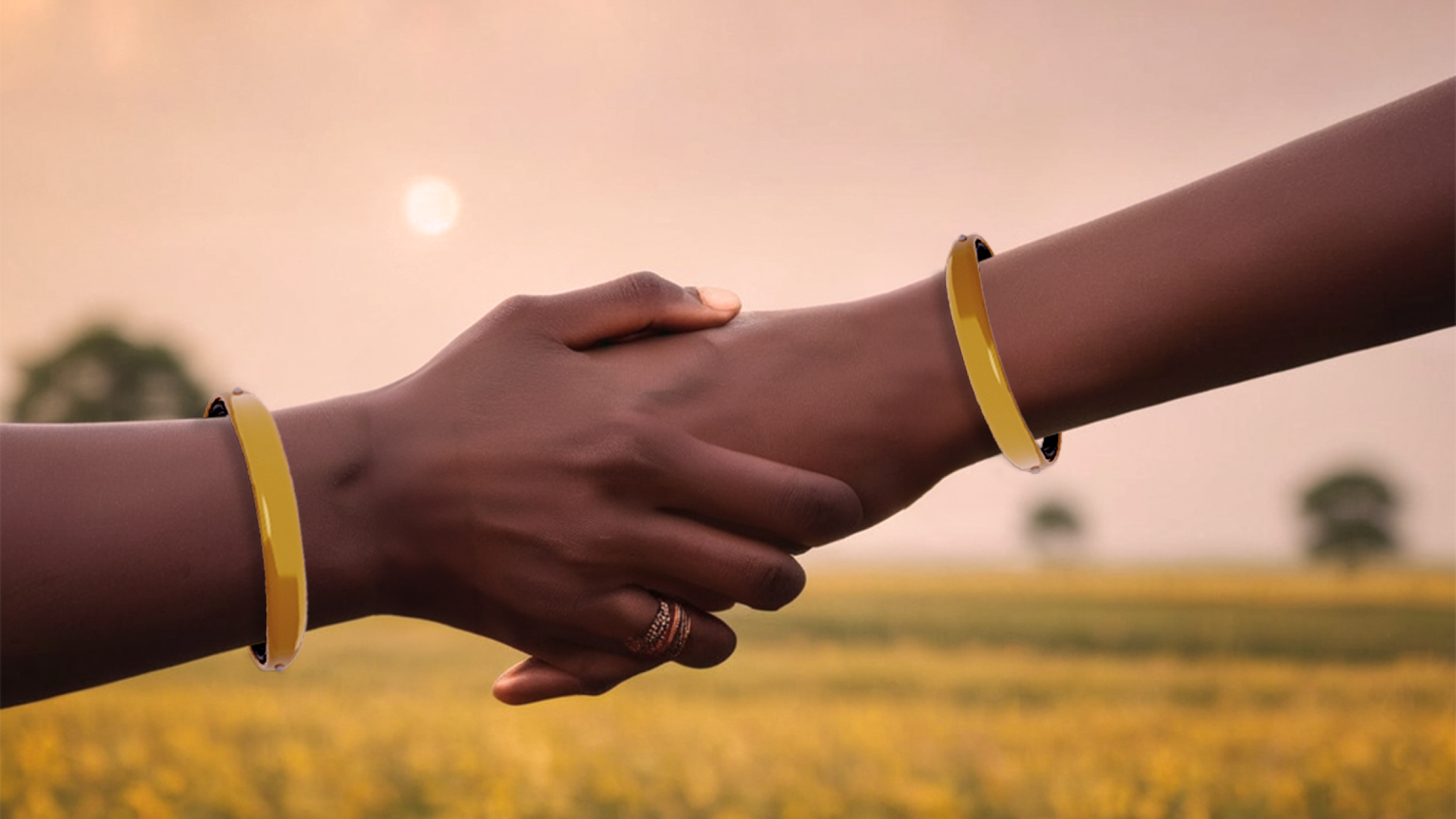
For the wearable we decided to design something much for relatable for the Indian audiences. Rather than a bulky, non- discreet watch, we were inspired by the traditional Indian bracelet, THE BANGLE.
WHY THE BANGLE ?
A bangle in the Indian context holds very important significance both in terms of the Culture and Vedic Science :
Cultural Significance
The cultural significance of the bangle changes with region and the color of the bangle. However, across the country it is believed to have various benefits, being the symbol for :

Fertility & Life

Relationship Strength and durability

Independence

Luck and prosperity

Auspicious beginnings

Positive Energy

Protective barrier to ward off evil spirits

Creativity


Scientific Significance
According to the Vedic Science texts the way in which the bangle interacts with our body, has numerous health benefits:

Purity of Human Body

Sound energy and pressure points - Purifies the human body by detoxifying the negative vibrations from the body and recharges depleted energy levels

Keeps Away Negative thoughts

Static force on skin trigger unwanted responses in minds, Wearing bangles prevents them and establishes the body’s energy channel balance.

Improves Blood Circulation

The constant friction between Bangles and wrists improves blood circulation and normalizes the pulse of the body

Improves Passion and Fertility

They are also believed to trigger action and passion in the body, thereby, improving fertility
For more information on the religious and cultural significance of bangles please click on the link to ourFigJam file
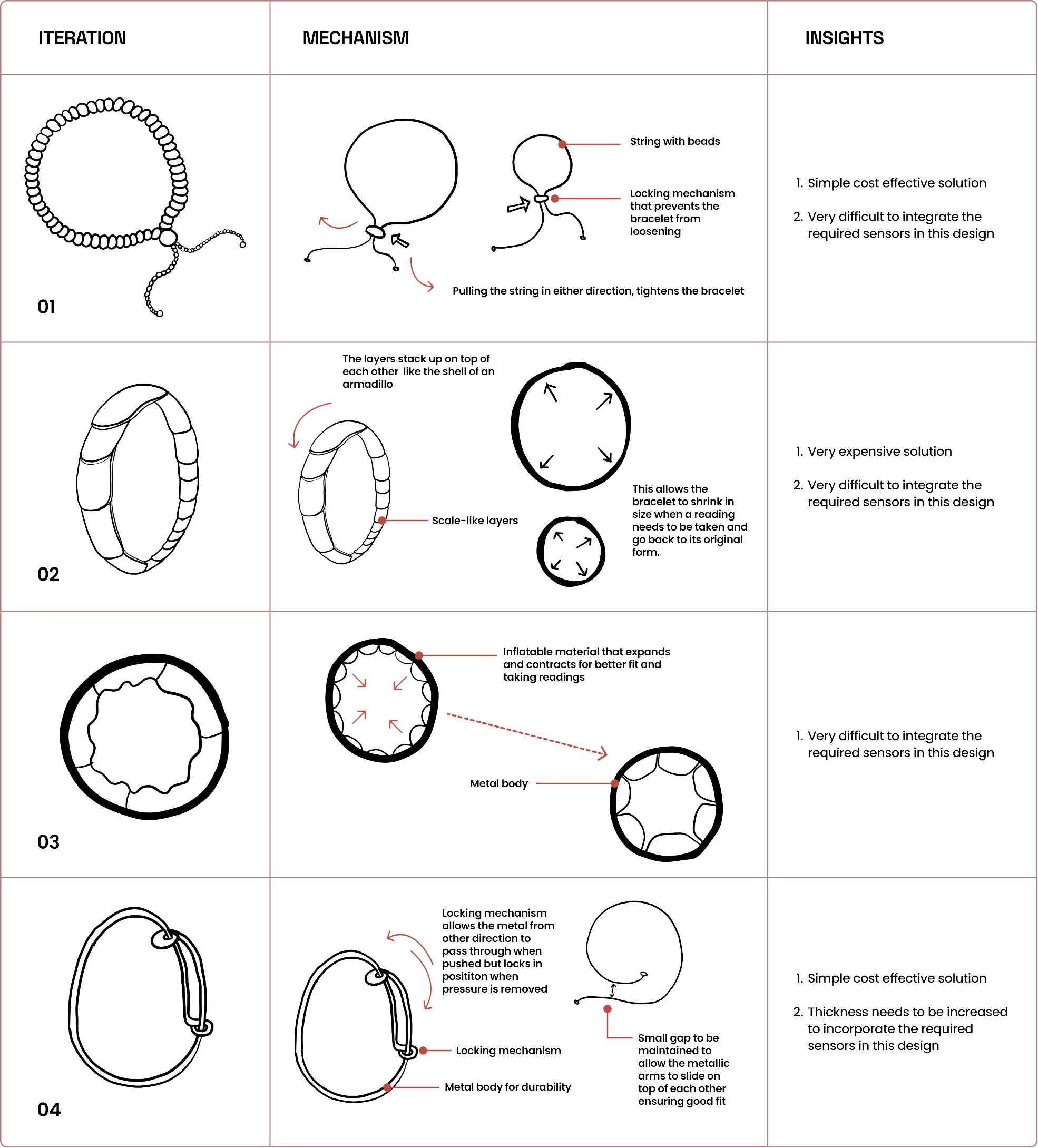
DESIGNING THE BANGLE
Initial design sketches exploring the mechanisms
IDEATion : THE application
Features that the application must include:
01
Simple and intuitive interface
02
Integration with wearables that tracks most data - Limiting the manual inputs in the application
03
Override feature to input correct menstrual information to improve tracking accuracy
04
Quick overview and analysis of menstrual cycle patterns and ability to share this data
05
Local language preferences
06
Application Integrated AI Chatbot that provides guidance and necessary information to the user
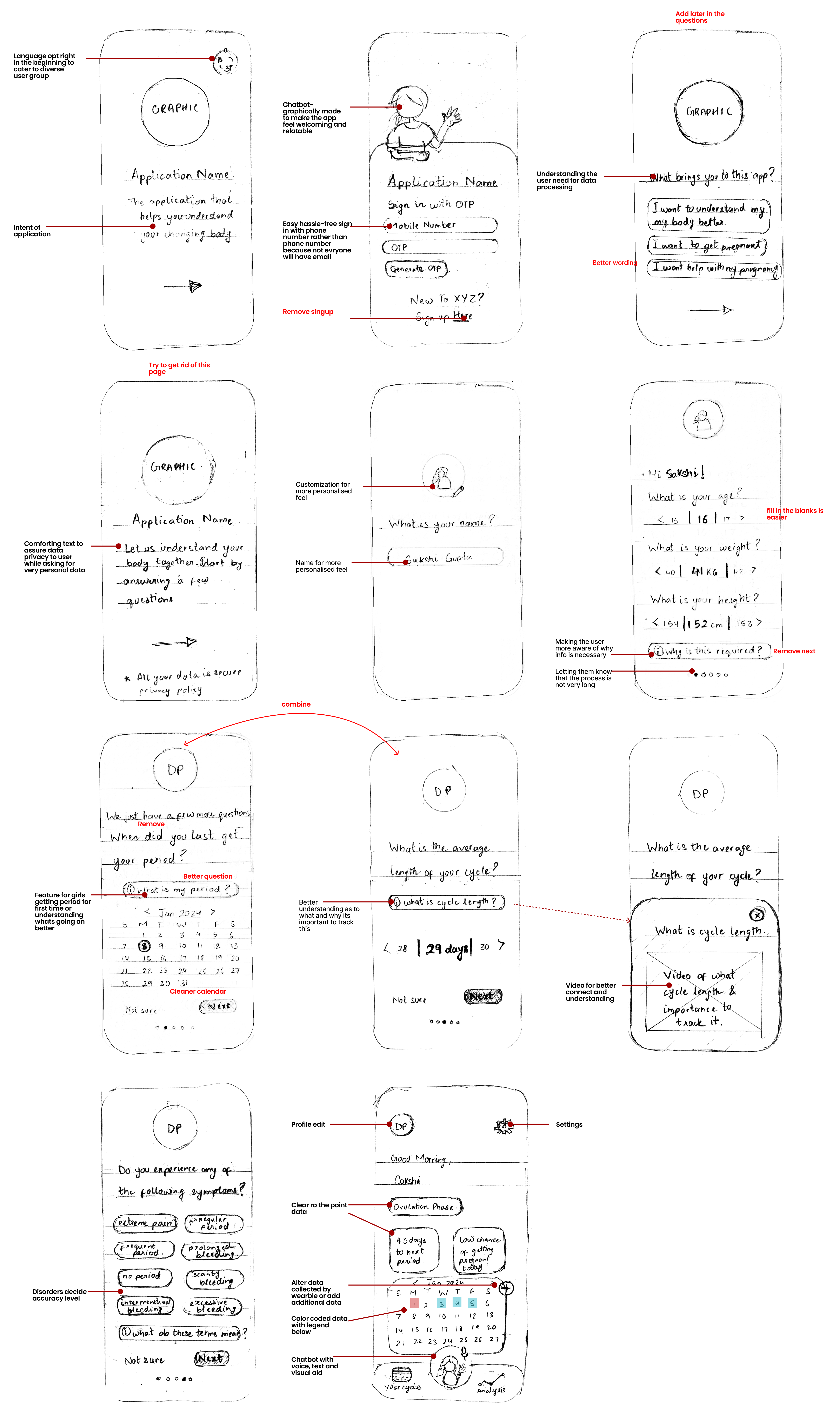
Initial sketches exploring the application features and interface :
IMPLEMENTATION
THE WEARABLE : BANGLE
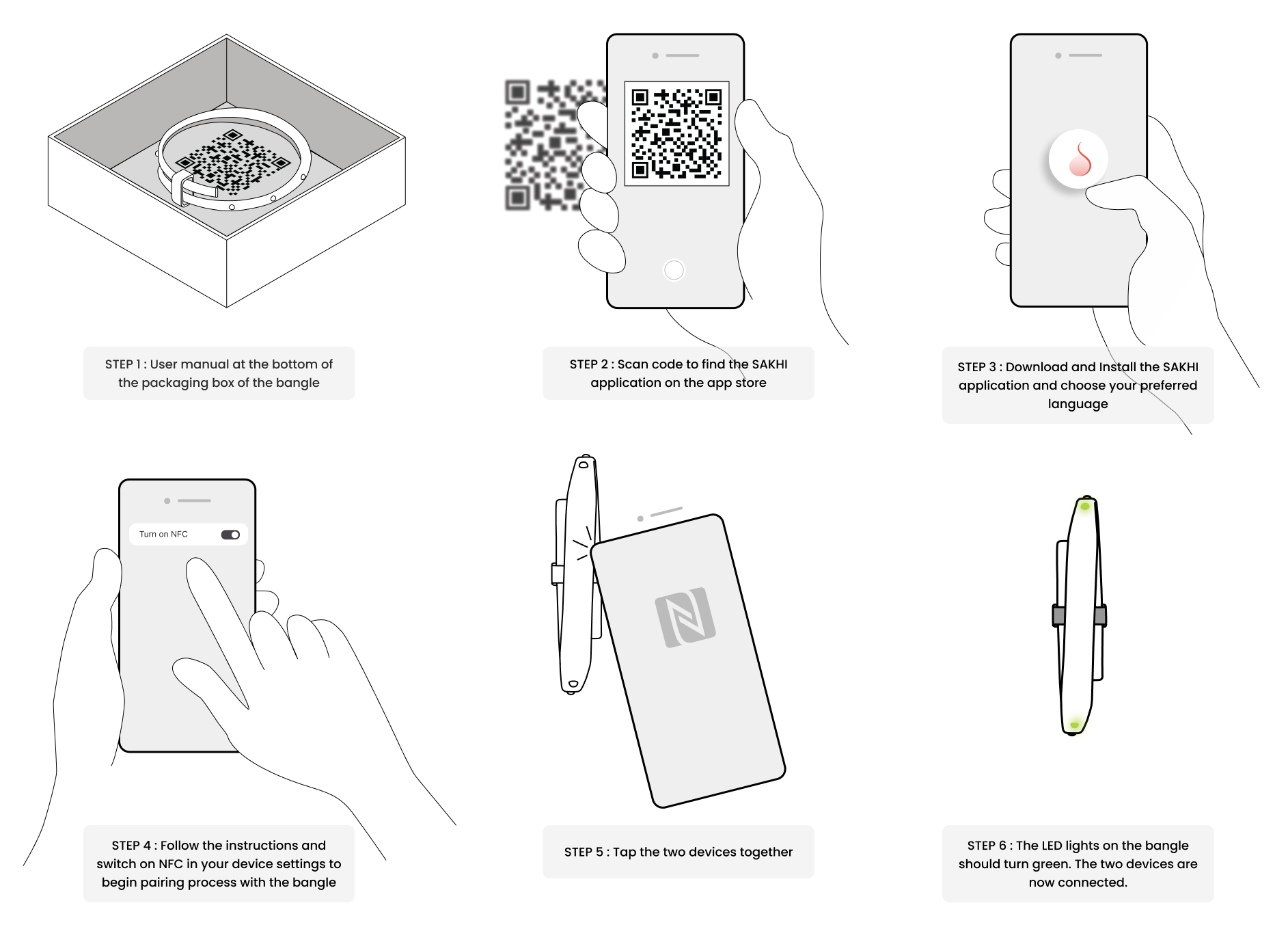
Device Onboarding
BANGLE KEY FEATURES
THE APPLICATION
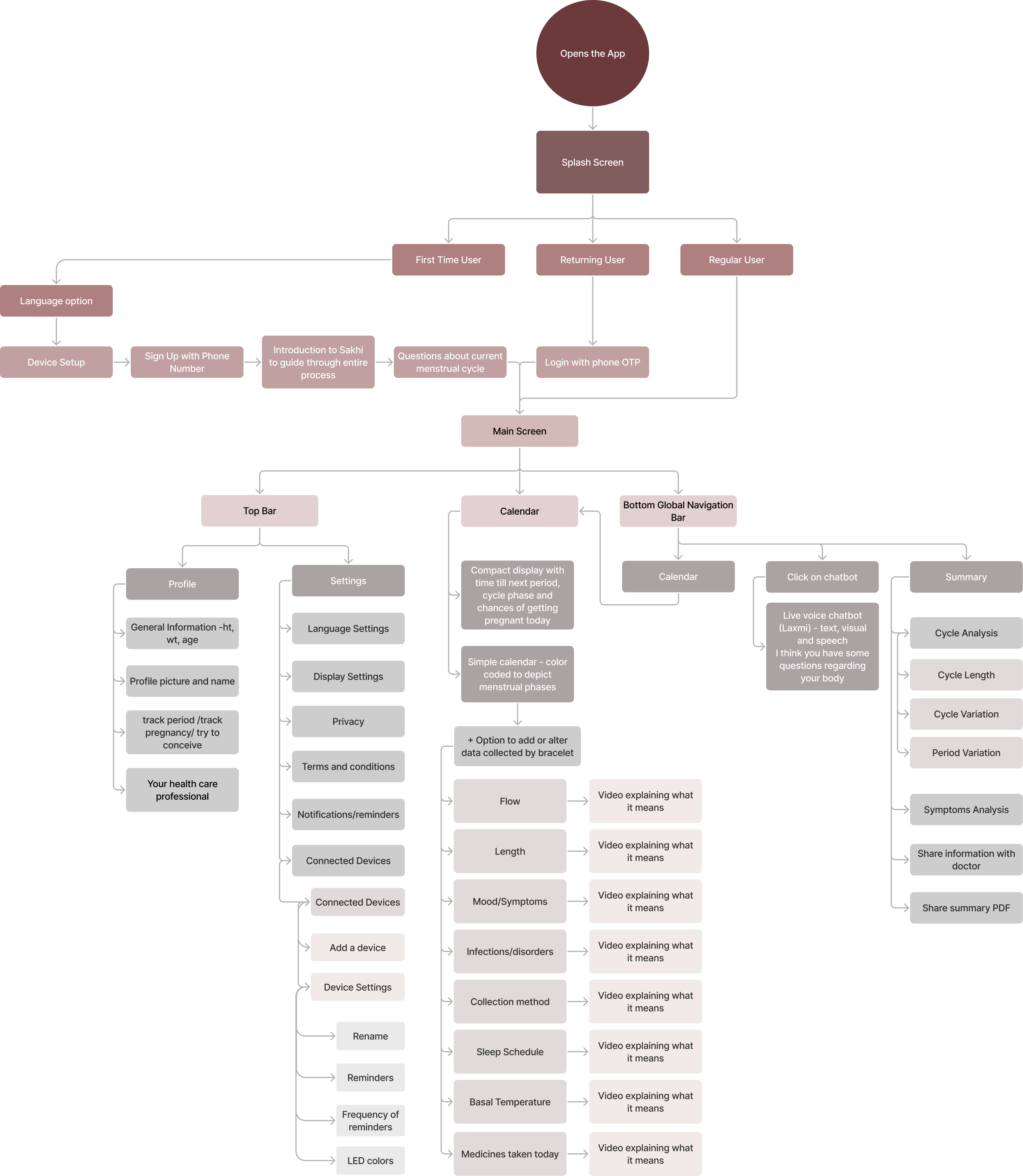
Information Architecture
THE APPLICATION KEY FEATURES
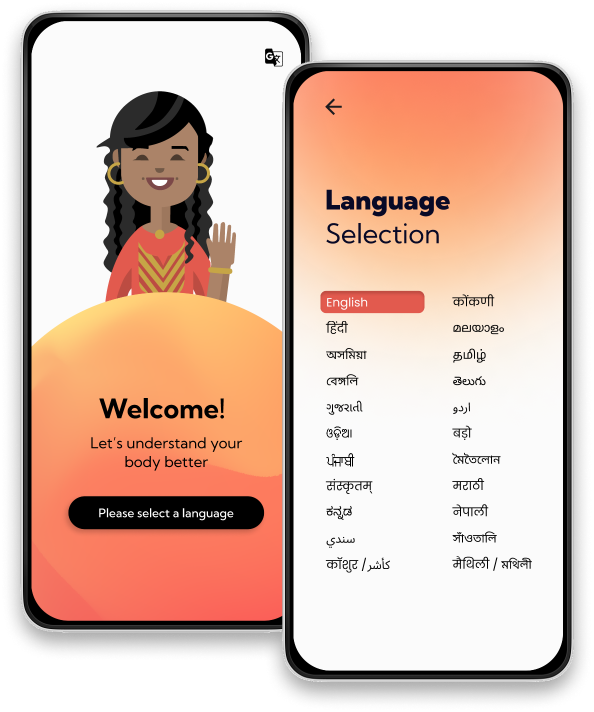
Local Language Preference
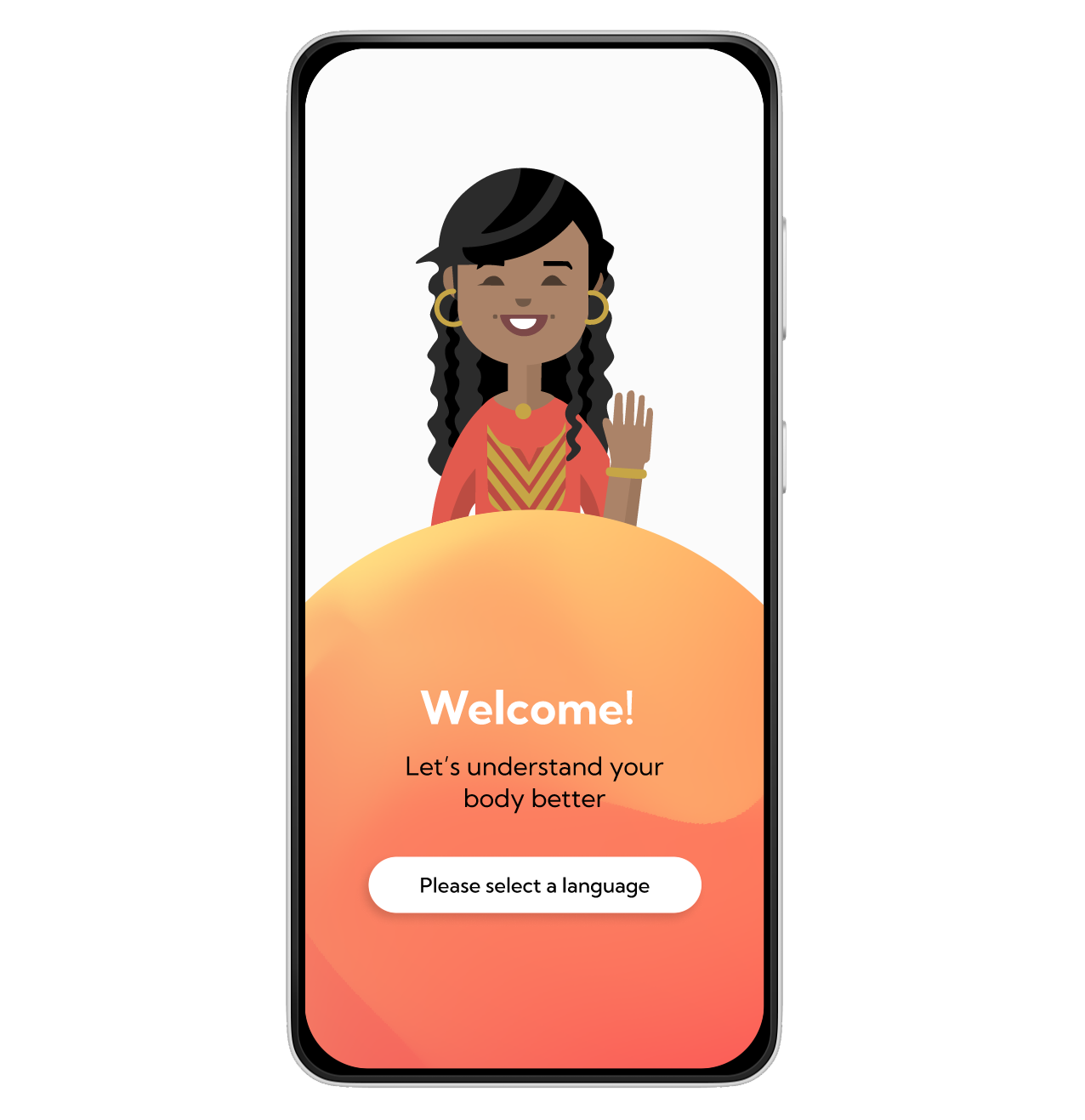
The application provides content in local languages to enhance outreach to users across India. It offers support for all 22 official languages of India, ensuring accessibility and inclusivity for diverse linguistic communities.
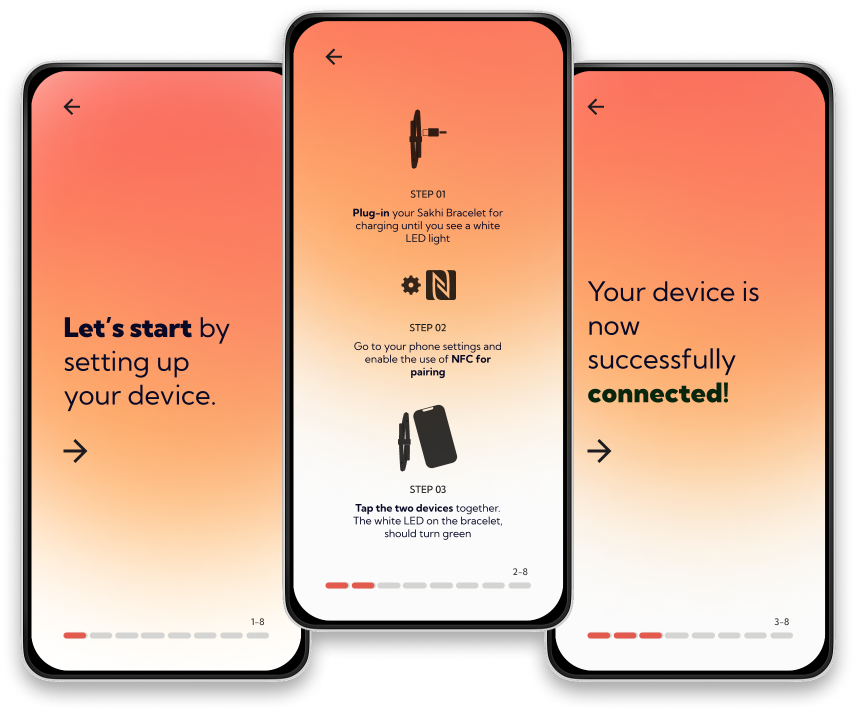
Easy Set Up with Bangle
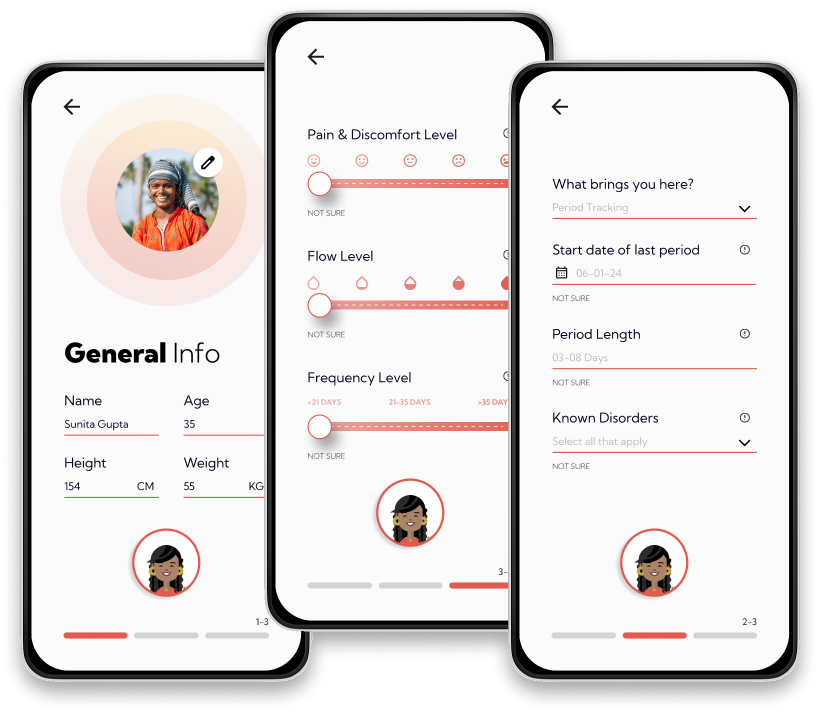
The application provides a step-by-step onboarding to first time users so they can pair their bangles with their applications and start tracking.
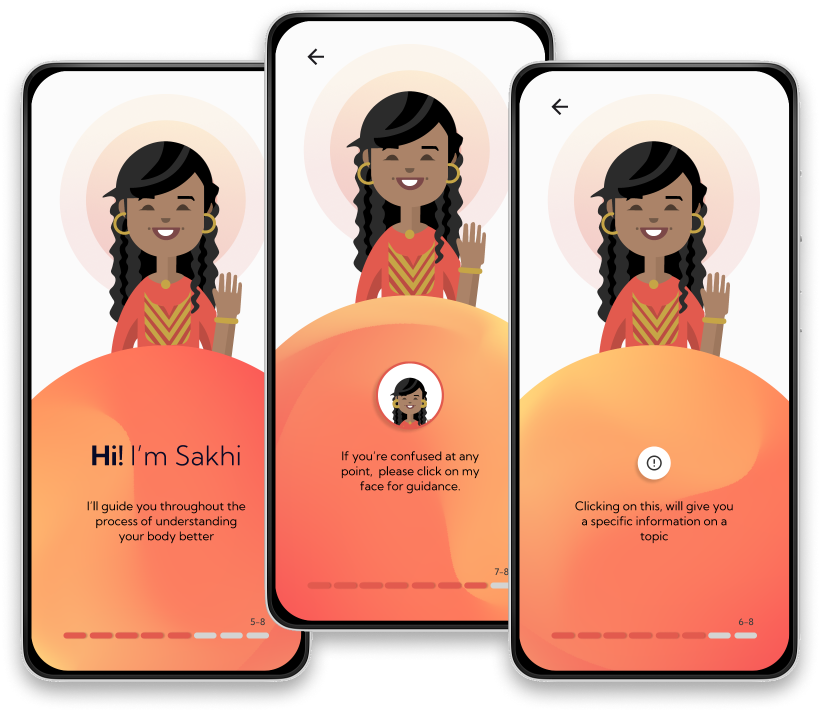
Introduction to Chatbot right in the beginning
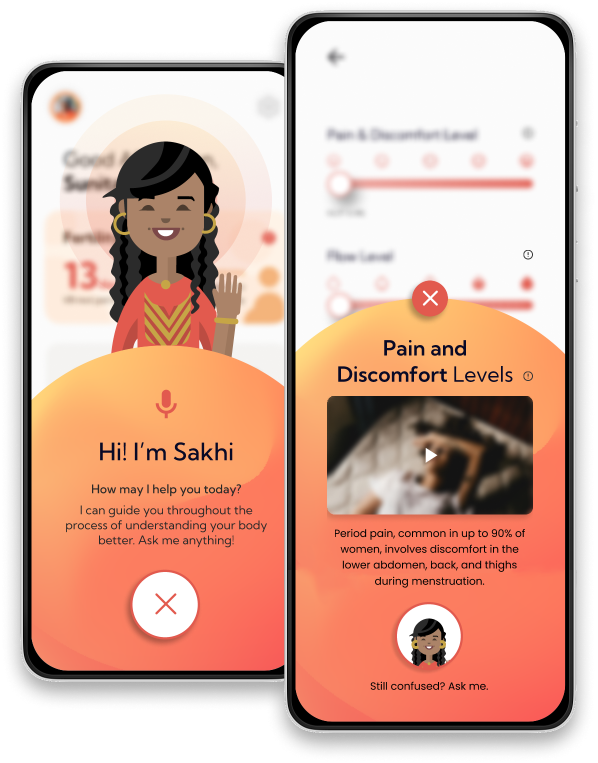
The application introduces the chatbot named Sakhi right at the beginning of the onboarding stage. This approach aims to streamline the onboarding process and ensure users have a clear understanding of how to use the application, making the experience as seamless and user-friendly as possible.
Easy Step by Step Onboarding
The app offers a step-by-step onboarding process for first-time users, enabling them to input essential menstrual cycle-related information seamlessly. This facilitates the initiation of cycle tracking and symptom monitoring with ease and efficiency.
Chatbot Sakhi and Information Pop Ups
The application prominently features the Sakhi Icon and the Information Icon on nearly every page. This design allows users to access additional information on specific topics, receive answers to their questions from the chatbot, or seek guidance whenever needed.
Simple and Intuitive Interface for Tracking and Override Input
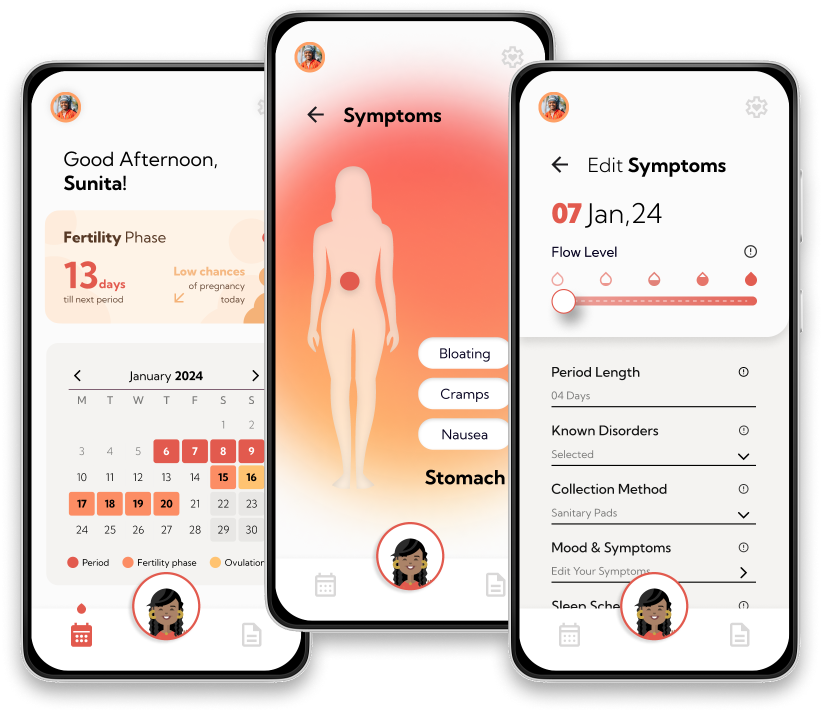
The application offers a clean, simple, and intuitive interface for viewing tracked data from the bangle and for manually inputting or overriding this data as needed.
Analysis with Easy Sharing
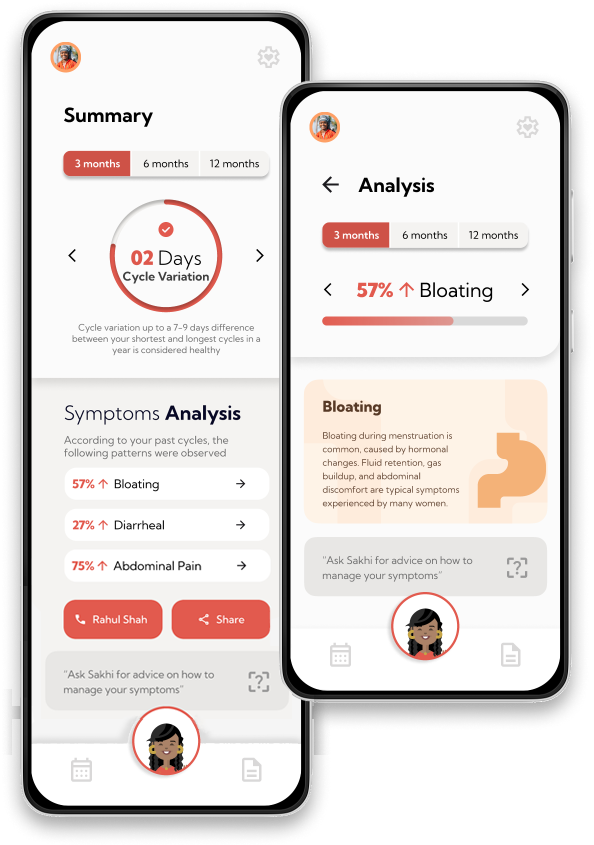
The application offers an analysis of past menstrual cycles, including both cycle data and symptoms. It provides alerts to users for any concerning patterns or changes. Additionally, users can share this analysis directly with their healthcare professionals for further evaluation directly from the application.
Customization and Personalization
Given the diverse user base with varying reasons for tracking, age groups, requirements, and schedules, the application provides a range of features to customize the user experience according to individual preferences.
Renders and High Fidelity Prototype
THE WEARABLE : BANGLE
Renders
THE APPLICATION
High Fidelity Prototype
Clicking on the image below will redirect you to the high fidelity prototype.
future scope
The current objective of this application is to debunk myths, raise awareness about menstruation and its significance, initiate dialogue among women, and ultimately empower them.

To achieve this and take the project forward the following could be done :  
01
Government tie ups to promote the project to have better outreach
02
Integrating features to improve awareness in men of rural India as well.
03
Incorporating sections for inputting medicine intake to enhance accuracy and analysis
reflections and takeaways
This was my first project was my first step into the field of HCI. It exposed me to working on an end-to-end user centered design process.

1. ​Every user is different and your design will be interpreted differently by all of them.
2. Design is very subjective so seeking as many feedback ay early stage is beneficial to see the general reaction of users.
3. We cannot design for every user or achieve all the design goals - scope is important!
4. Breaking it down into achievable deadlines and keep iterating the designs as it grows is the best solution.
Like my work?
Let's build something amazing together!
I’m always down to collaborate . I'm hoping to further my career by disrupting the social product space.
Let's get in touch ✌️