EDUCATION FOR ALL
EDUCATION BY ALL

Reimaging a learning center in the urban context
pROJECT BRIEF
Education is vital for a nation's progress. This thesis assesses India's education system, identifying its shortcomings in infrastructure, social equity, community involvement, and teaching methods.

Drawing insights from government policies, case studies, and literature, it proposes an innovative, decentralized urban learning centeraffordable, optional, state-funded, and most importantly open to all. The system fosters collaboration among neighborhood schools, institutions, and individuals who wish to share their knowledge and skills.

While schools remain essential for foundational literacy and numeracy, the dissertation advocates for additional learning beyond the classroom, utilizing city resources. This holistic approach complements traditional schooling, creating an inclusive educational landscape.


It should be emphasized that the project serves as a mere foundation, representing an idealistic endeavor intended to inspire us to explore beyond the confines of institutionalized learning.
TIMELINE
June 2020 - May 2021
tools
Autocad, Sketchup, Rhinoceros, Illustrator, Indesign, Photoshop, Enscape
My Contribution
Research, Contextual Analysis, Conducting Surveys and Interviews, Empathy Building, Ideation, Storyboarding, Final Design
Jump to solution
pROBLEM STATEMENT
The Indian education system faces several deficiencies in providing good quality education that is accessible to all which hinders the overall growth and development of its citizens. Some of these issues are listed here :

Addressing these challenges is vital to ensure a more inclusive and holistic education system that caters to the diverse needs of all learners and prepares them for a successful future.
01
Improper budget allocation
02
No improvement in learning methods
03
Social divisions & disparity
04
Institutionalization of Education
05
No improvement in the design of the educational spaces
06
Unequal Access
INITIAL DESIGN QUESTION
How can we bridge the gap in current education system by making meaningful interventions in the school ?
Keep in mind that the following constraints and limitations lead to the crafting the design question :​

- ​Limited project timeline
- Limited access to resources due to the pandemic
- Limited access to potential users
EMPATHIZE
Three different research methodologies were undertaken to understand the problem statement. Starting with broad observations through surveys, moving on to individual discussions to better understand the challenges faced by people, and finally reviewing literature and policies centered around education to gain a better understanding of the core issues.
SURVEYS
Setting :
  • Target audience : Teachers and students
  • Age group : 12-50 years
  • Number of people : Around 116 surveys
  • Sources/Platforms : Google Forms  & DISE (District Information System for Education)
  • Focus topics : Infrastructure, facilities and financial aspects.
Click here to view the survey.
Observations :
01
In more developed cities, students and teachers felt that their schools are quite compact and congested.  
02
Many students and parents complained about the lack of facilities required for the holistic development of a child.
03
Students and parents also complained about the exorbitant fees and poor quality of education.
Takeaways :
1. More than 75 % of the participants, were dissatisfied with the infrastructure and facilities offered by their school and felt that the expenses they incur were completely not justified in any manner.
2. While the survey sheds some light on the current condition of schools with respect to infrastructure and finances it fails to understand the role of the social aspects. Also it caters to a very specific group of users (socio-economically).
SEMI STRUCTED INTERVIEWS
Setting :
  • Target audience : teachers, parents, students, teachers, working professionals and retired persons
  • Age group : 16-65 years
  • Number of interviews :  8 interviews
  • Sources/Platforms : Google Forms  & DISE (District Information System for Education)
  • Focus topics : included quality of education and  social & economic factors
Observations :
01
Many schools still lack in infrastructure this aspect is still being looked into and developed.
02
Schools lack in terms of quality of education; incompetent teachers
03
Social barriers and other taboos such as age, background, etc. play a huge factor in hindering learning
04
Education lacks in terms of hands on experience and 'real life knowledge'
Takeaways :
The interviews suggested that despite the required infrastructure and equipment, many areas (both urban and rural) regions, lack in terms of quality of teaching provided. This was due to redundant teaching methods or just the lack of good quality teachers.
LITERATURE AND POLICIES
Setting :
  • Sources :
    1. National Education Policy (NEP India), 2020                      
    2. Education, Space and Urban Planning - Angela Million • Anna Juliane • Heinrich Thomas Coelen                
    3. Deschooling Society - Ivan Illich
  • Focus Topics : Challenges that are uniquely faced by Indian learners; What factors contribute to these challenges and How people/ government are addressing these issues.
Observations :
01
Schools' infrastructure and operations are constrained by strict board affiliations and curriculum regulations.
02
Indian education lack in terms of collaborative and mutual learning with peers, professionals and communities.
03
Most international case studies overlook the budgetary constraints linked to India's large and diverse population
Takeaways :
1. The current government policies aim to have global standards of education, but drastically differ from all the fundamentals adopted by world leaders in education.
2. Since all schools in India are affiliated to some educational board, it becomes increasingly difficult to bring about any new changes when bound by their regulations.
3. There are notable ways to improve the situation that educational institutes and scholars have suggested and adopted in the other countries some of which are discussed later. However, they cannot be directly incorporated in a country like India which comes with its own diverse complications.
define
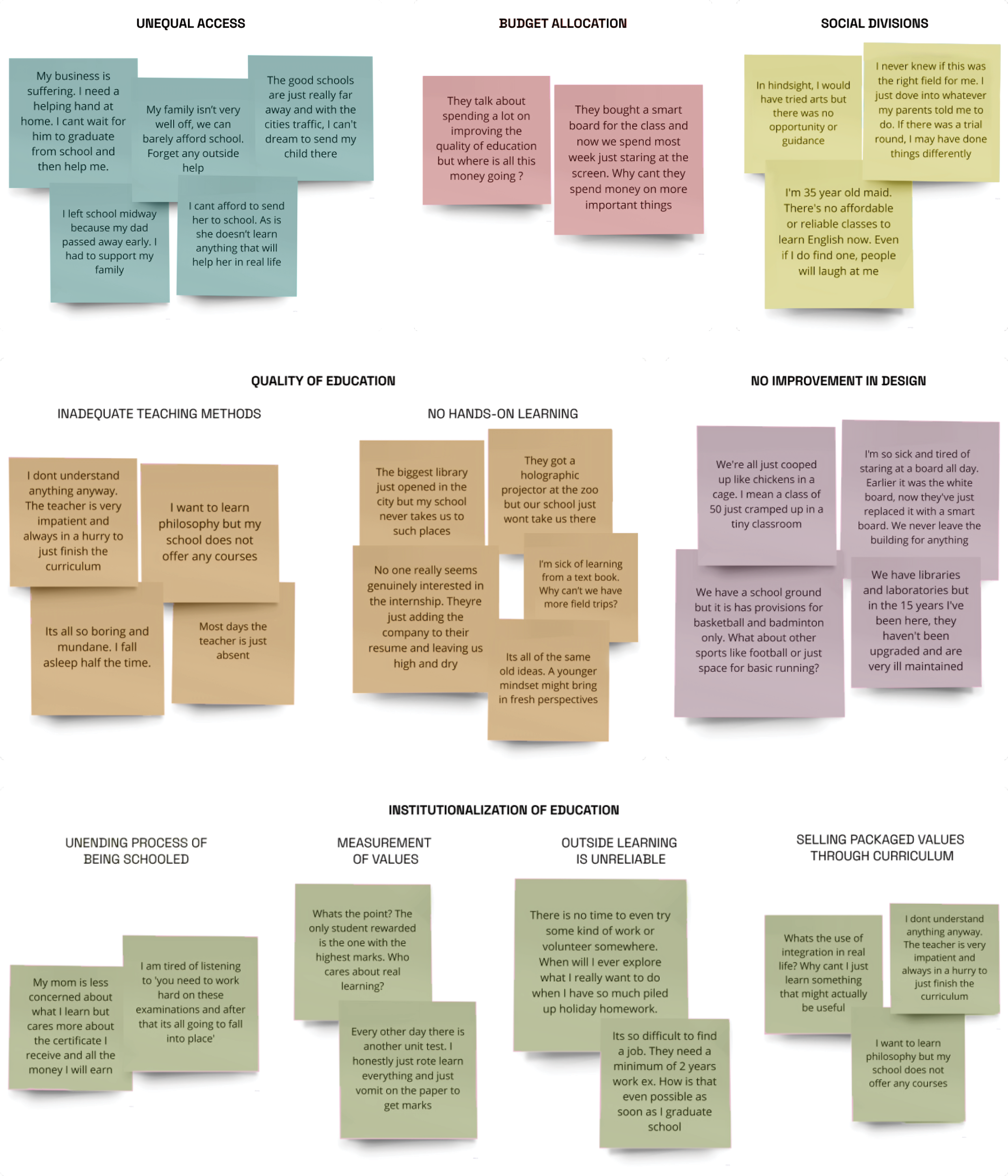
Affinity mapping was used as a way to find common themes from the interviews and surveys.
AFFINITY MAPPING AND RESEARCH FINDINGS
Affinity Mapping was used to identify patterns in user feedback and to generate insights about what was working well, what was not working, and what recommendations users had for improving the features. This helped in synthesizing the qualitative data and identify common themes that emerged from user feedback. Using both qualitative and quantitative data, certain themes were identified.
Takeaways :
Affinity mapping highlighted challenges tied to school operations and curriculum, both regulated by board rules, regulations, and government policies.
rEDEFINED DESIGN QUESTION
Affinity mapping highlighted challenges tied to school operations and curriculum, both regulated by board rules, regulations, and government policies. As these areas fall outside my role as an architect, I opted to seek a solution beyond the school setting – a space free from board affiliations, dedicated to celebrating knowledge sharing without the constraints of a rigid curriculum.
How can we bridge the gap in current education system by intervening outside the school, providing a space for anyone who wishes to exchange their skills and knowledge?
IDEATE
In order to understand how to intervene, several questions needed to be addressed :  
#1 HOW CAN WE IMPROVE THE SYSTEM BY USING RESOURCES MORE JUDICIOUSLY?
Case Study #1 : Netherlands - Brede School'School as a Community Centre; the Community Centre as a School'
FEATURES : 
1. The primary school lying at the heart of an extensive building complexes includes, the town library, the public health department, provides residential care for senior citizens and the youth welfare services.

2. Close contact between these services & social institutions provide support when problems arise. The parents also benefit from having just one place to go for the school, day-care and visiting doctors.
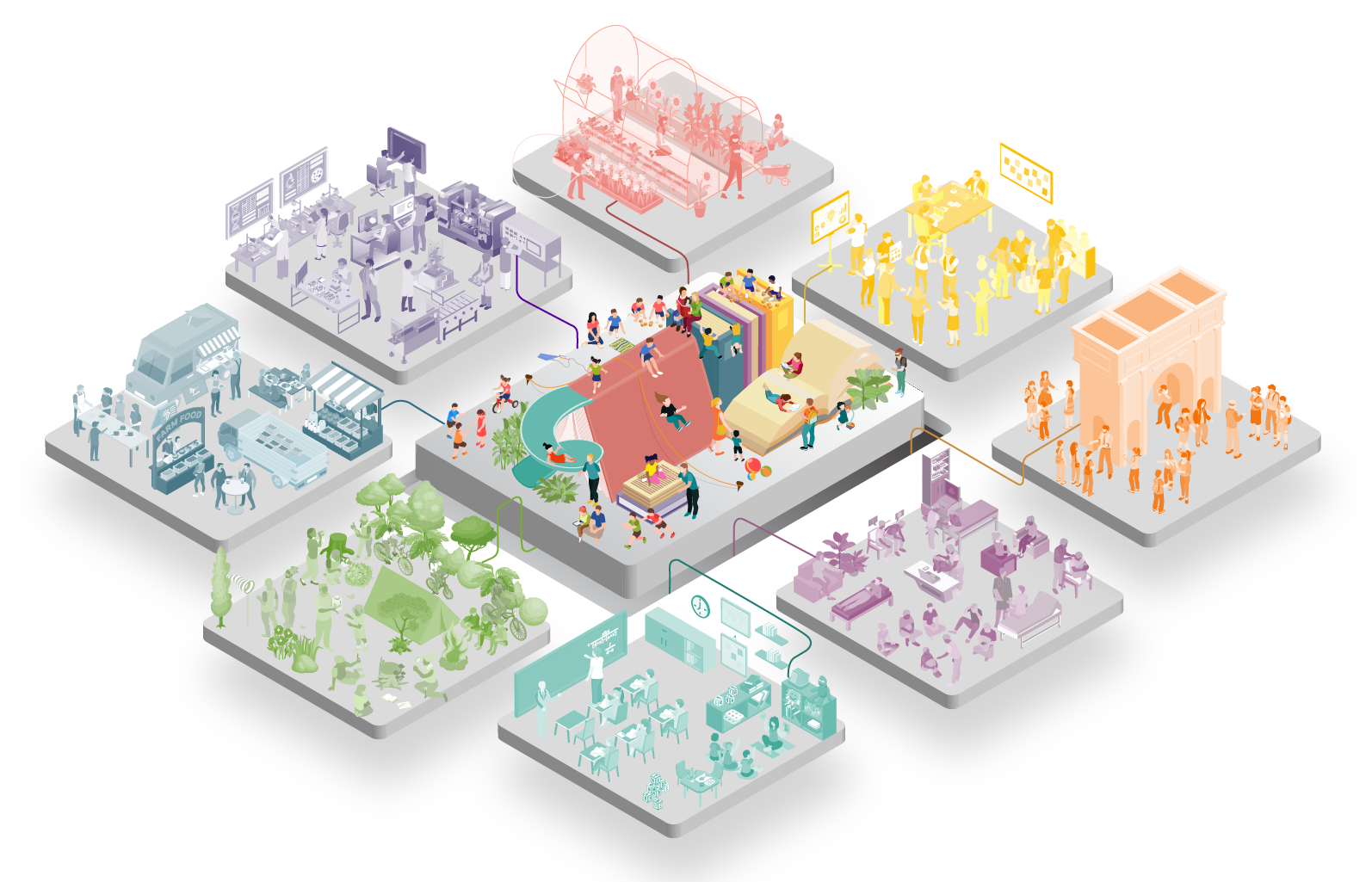
Case Study #2 :
Ganztagsschule All day German Schools
FEATURES :
1. Many German schools deliberately remain open—at least at certain times, and sometimes for long periods of time. Pupils go out and come back in; external experts are welcome to visit for specific projects.
Takeaways :
These case studies demonstrate, the rich networks that a school is capable of establishing with other institutions, communities and individuals and how all users involved benefit from each other creating a symbiotic relationship between them. Additionally, they emphasize how the utilization of the same space may evolve over time to meet changing user needs.
#2 WHAT ARE THE DIFFERENT WAYS IN WHICH ONE LEARNS?
Educational Objects
Providing access to items or processes used in formal learning, with some stored in libraries, museums, etc., while others are everyday objects.
Skill Exchanges
Allows individuals to list their skills and the conditions under which they are willing to serve as models for others seeking to learn these skills. Both parties can collaboratively determine a convenient time, place, and teaching method.
Peer - Matching
Establishing communication networks where individuals can describe their desired learning activities and find like-minded partners
Professional Educators
Connecting learners with professionals, paraprofessionals, and freelancers for access to their services facilitates obtaining professional advice, real-life experiences, and discovering the learner's genuine interests.
#3 WHAT ARE SOME DESIGN STRATEGIES THAT CAN BE INCORPORATED TO ENSURE HOLISTIC LEARNING ?
I.Based on Learning Methods
Nature Integrated Learning
Strategically locating and designing spaces to incorporate learning about nature & sustainability methods and integrating it with different subjects.
Using Building Elements to Teach
Exposing elements of the building, instilling curiousity amongst users.
Technology Aided Learning
Remotely creating networks with resources, a student generally won’t  have easy access to.
II.Based on Accessibility
Pride
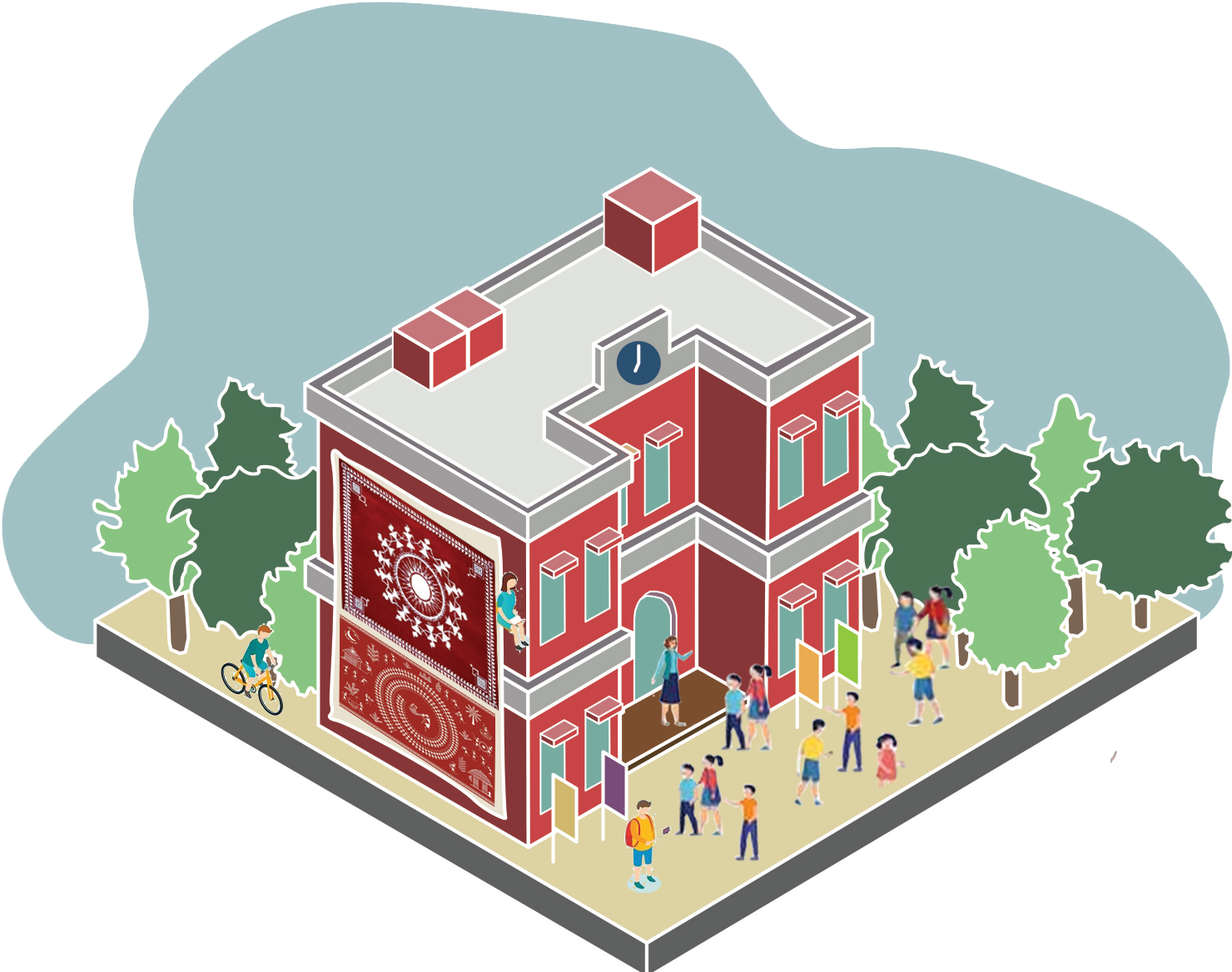
Incorporating elements that celebrate cultural diversity to instill pride in learning spaces.
Accessible and Inclusive design strategies
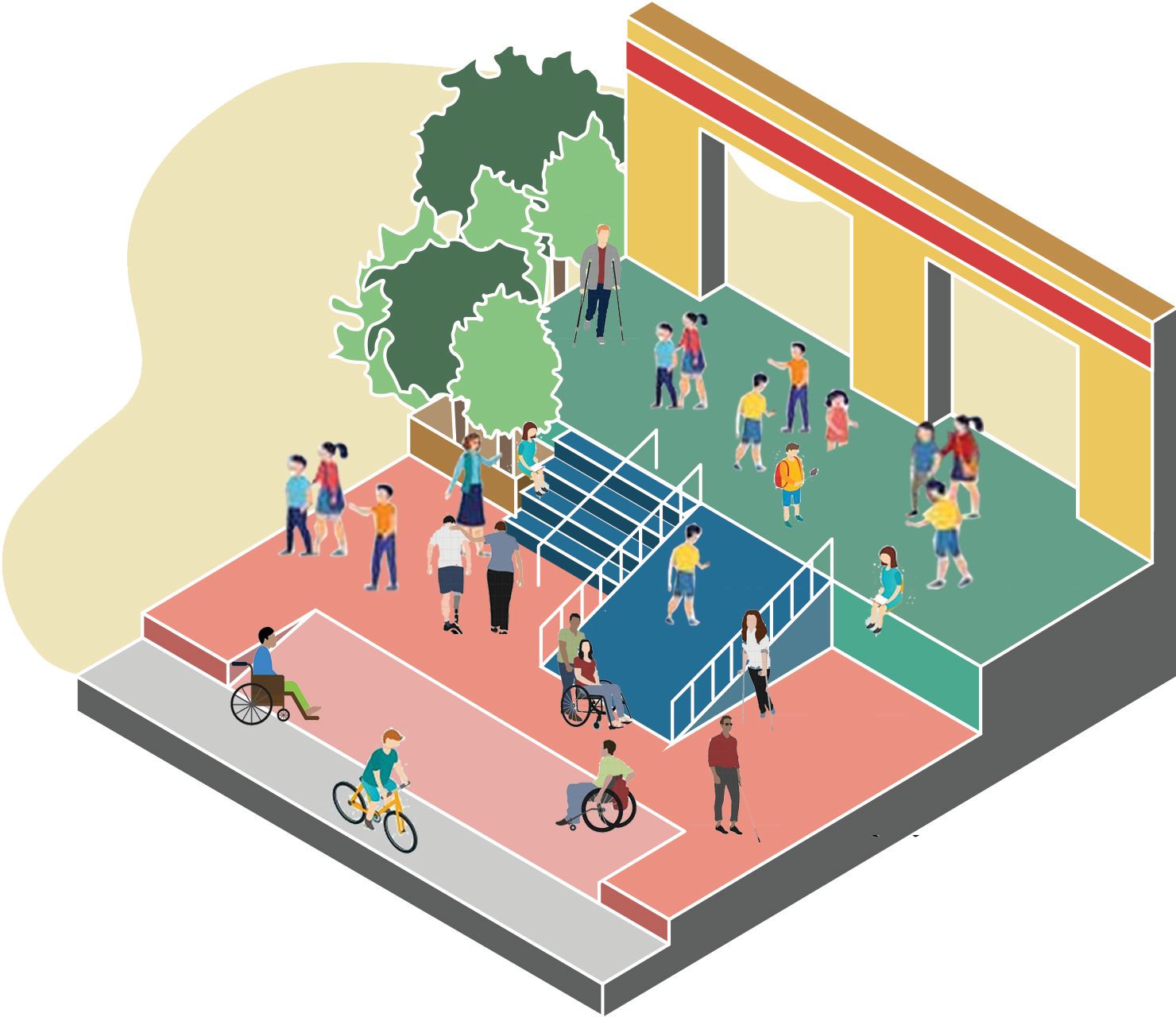
Using ramps, visual aids and other multimodal aids to ensure better accessibility.
Ensuring Safety and Security
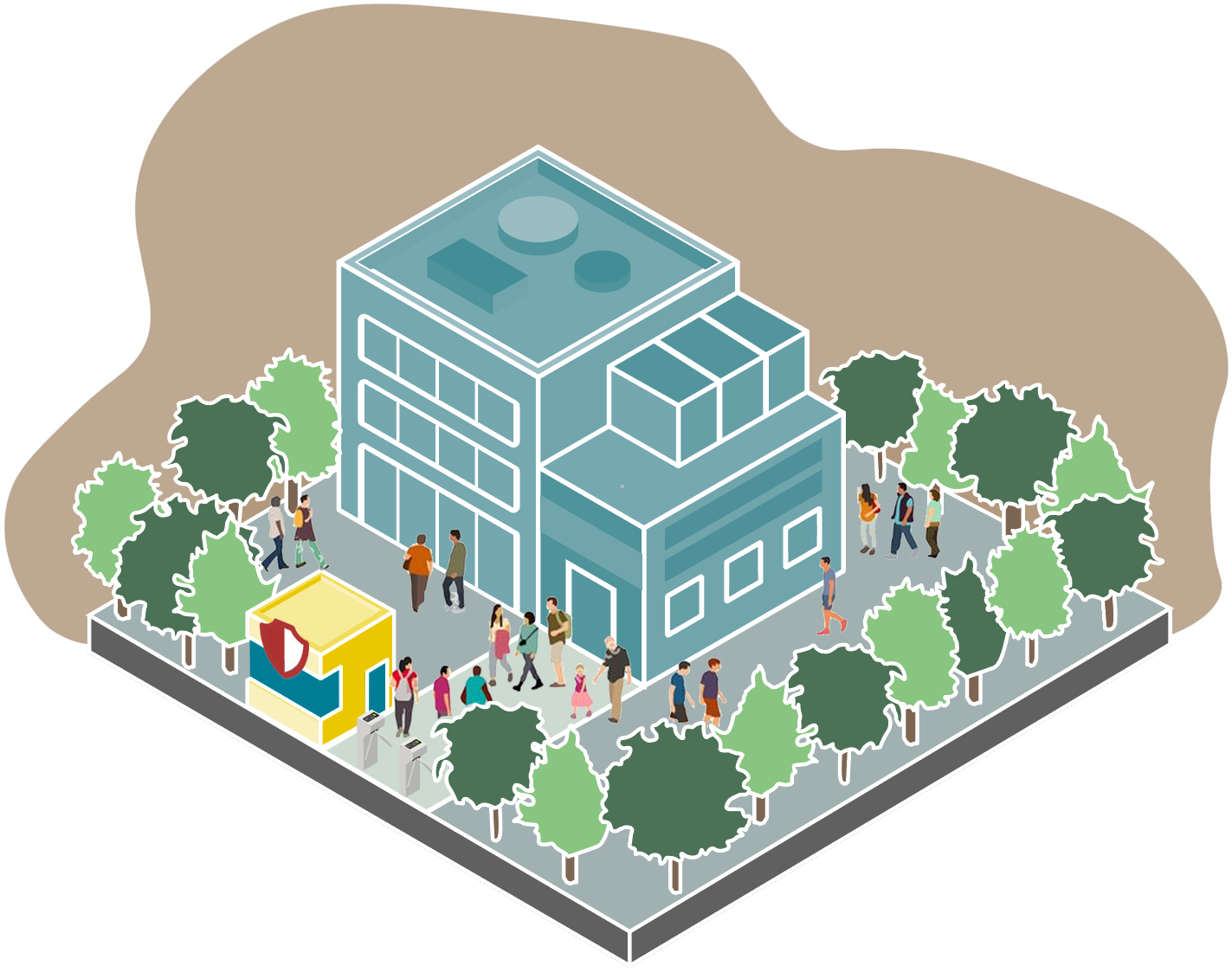
Incorporating strategies that ensure user safety and security.
III.Based on Empowerment
Modularity
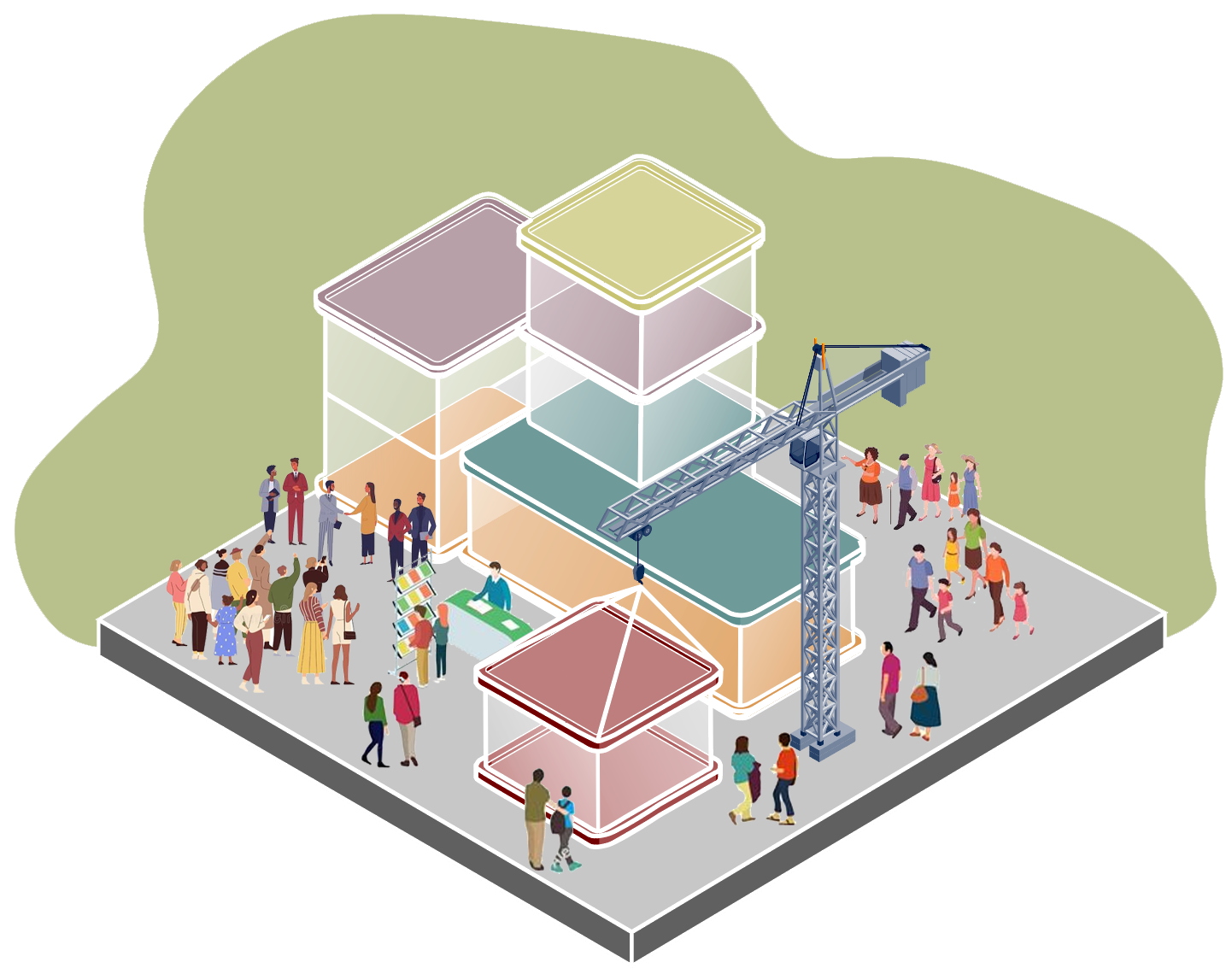
Using modularity for providing flexibility to address contextual needs
final idea
Based on research findings the final design of the decentralized learning center was developed based on the following requirements:
01
Understanding who the users will be
02
Utilizing resources judiciously exploring the idea of the City as a School
03
Empowering users to control what they learn and design their own learning spaces through the idea of modularity
04
Incorporating important design strategies to create a space for a more holistic learning
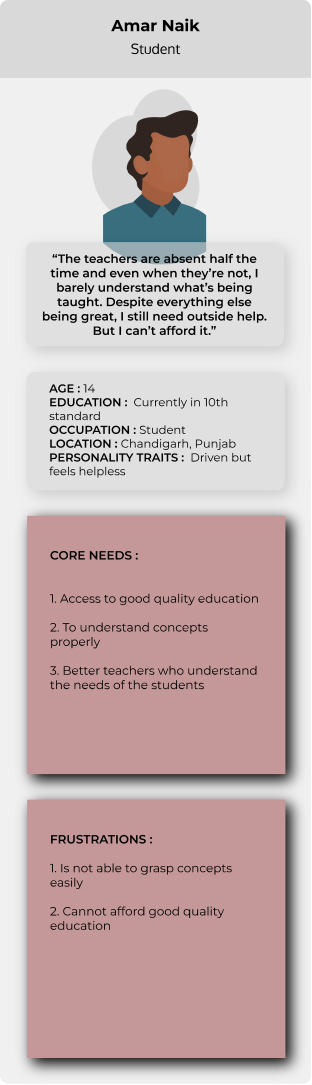
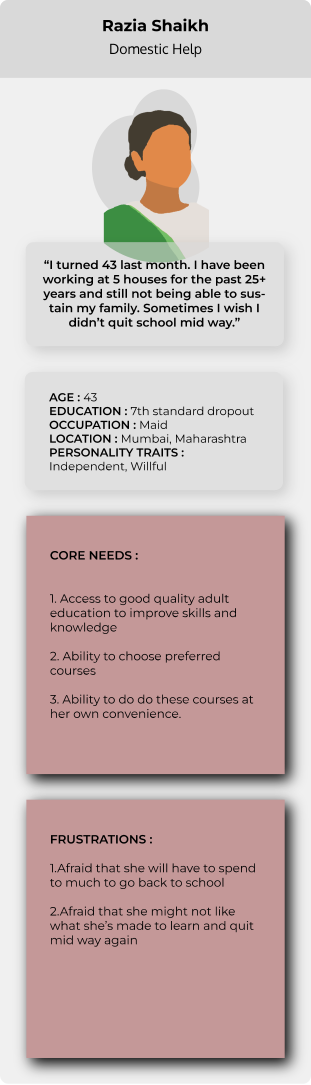
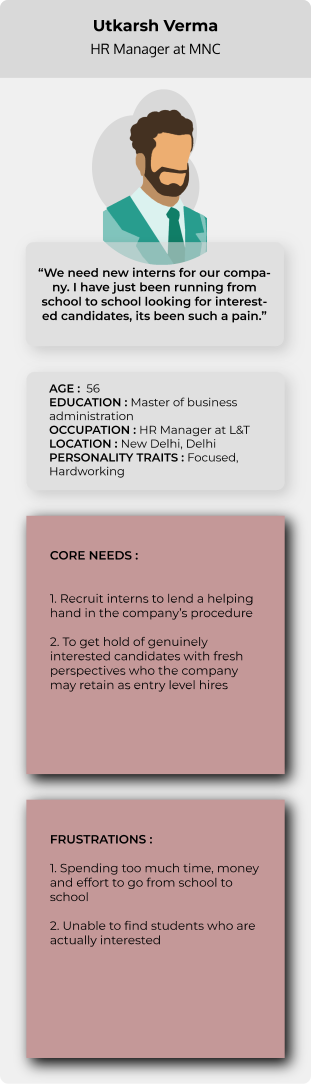
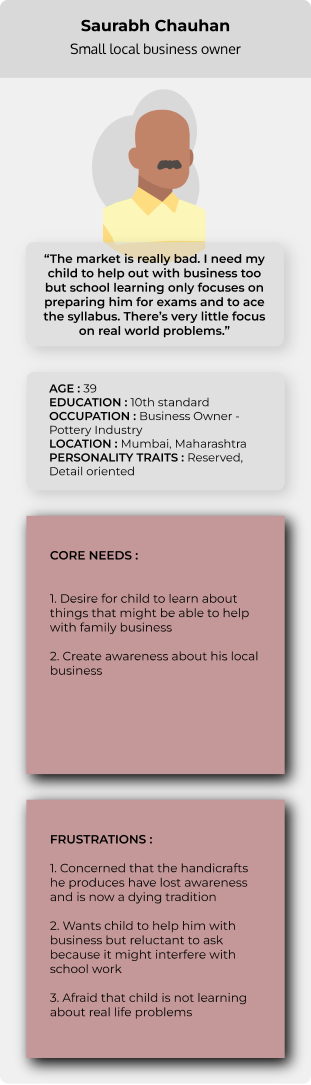
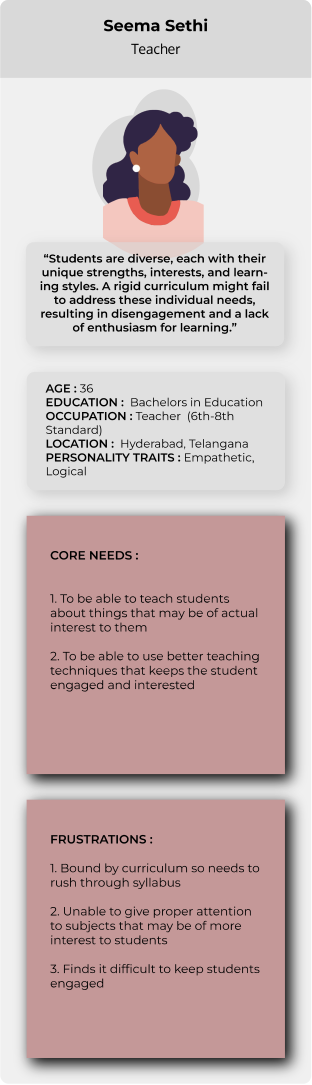
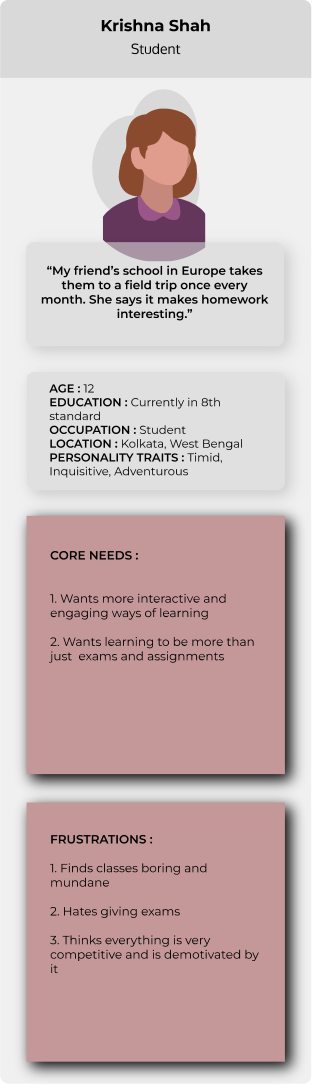
USER PERSONAS
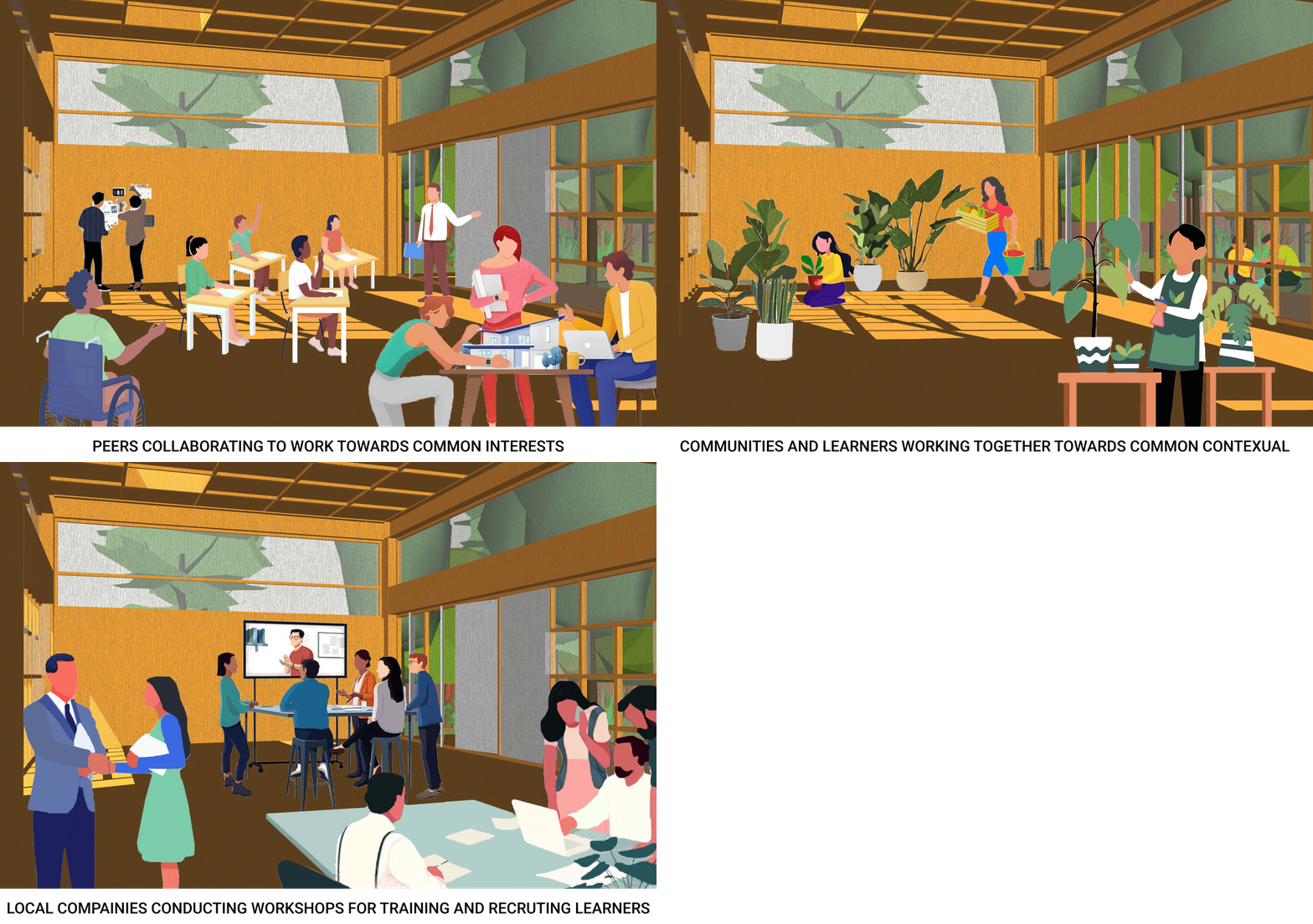
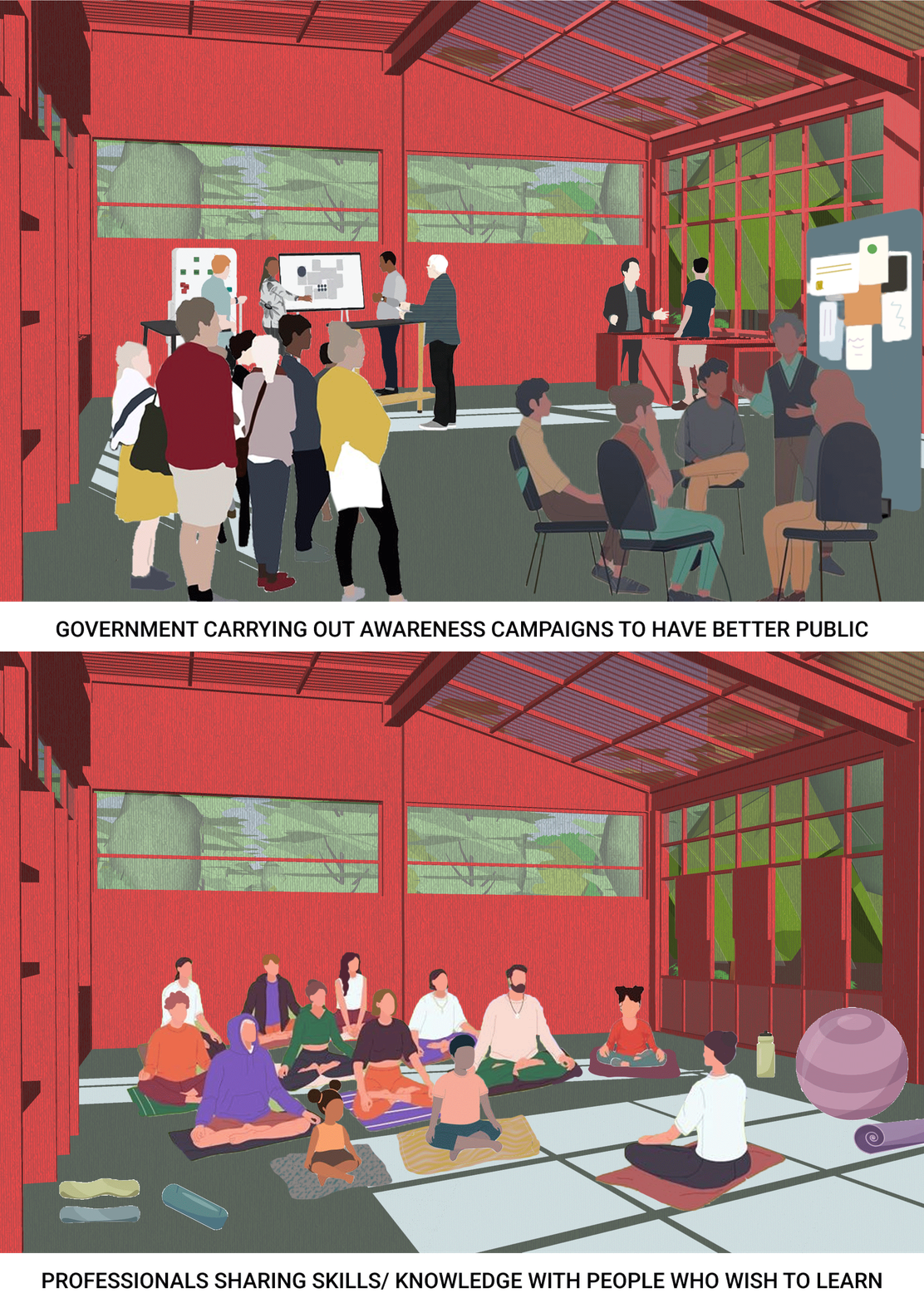
For truly accessible learning, the users could be anyone and everyone who wishes to share/receive knowledge. This includes but is not limited to :
1. Children who may or may not be enrolled in school.
2. Teachers looking to develop specific skills to provide better learning to their students.
3. Any individual who wishes to receive/impart knowledge or skills with others irrespective of age, caste, creed, race, gender, economic background, etc.
4. Communities/Institutes/Industries to improve financial and employment opportunities.
5. Government using the spaces for better public outreach.

From the insights six user personas were generated :
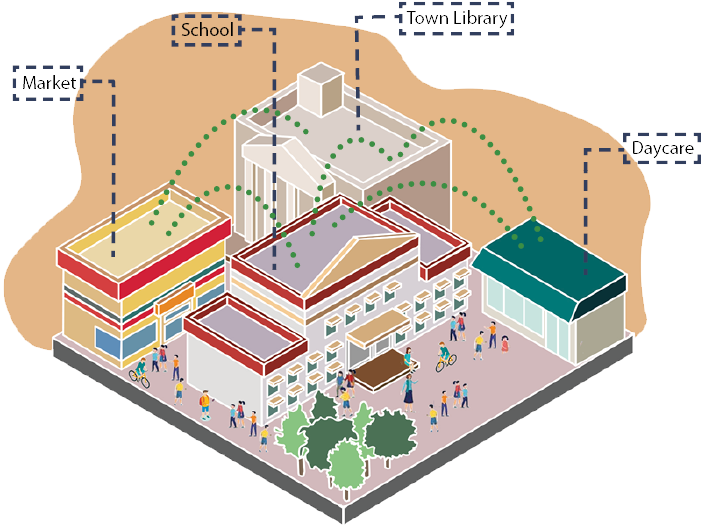
The Idea of the City as the School
The study identifies one of the major reasons behind inefficiencies in India's education system as inadequate funding and shortage of resources. However, resource scarcity isn't the sole issue; untapped resources also contribute. The thesis thus, presents a decentralized education model, utilizing city resources like theaters, museums, and parks, promoting holistic learning citywide.
The city and its resources lie at the disposal of its inhabitants and show them the possibilities of accessing different potential learning spaces at their own will.

The model will enable users, with government support, to establish an affordable, non-mandatory, truly inclusive, and accessible learning center within their own neighborhoods.

The goal is to encourage learning beyond traditional school settings, establishing learning networks connecting students, teachers, institutes, organizations and communities. These networks will foster collaborative and mutual learning with diverse users and communities, preparing the learner for a lifetime of building relationships with people.
empowering the users through modularity
Why Go Modular?
01
Lack of Space in Urban Centers
02
Budget Constraints
03
Fast Construction
04
Allows for flexibility. Thus, empowering the users to choose from a large 'kit of parts' to address their context specific needs.
05
Education is ever changing and evolving and being modular, the structure can easily be modified over time
06
Temporary and Dismantlable
07
Less Ecological Impact
Which Functions to incorporate?
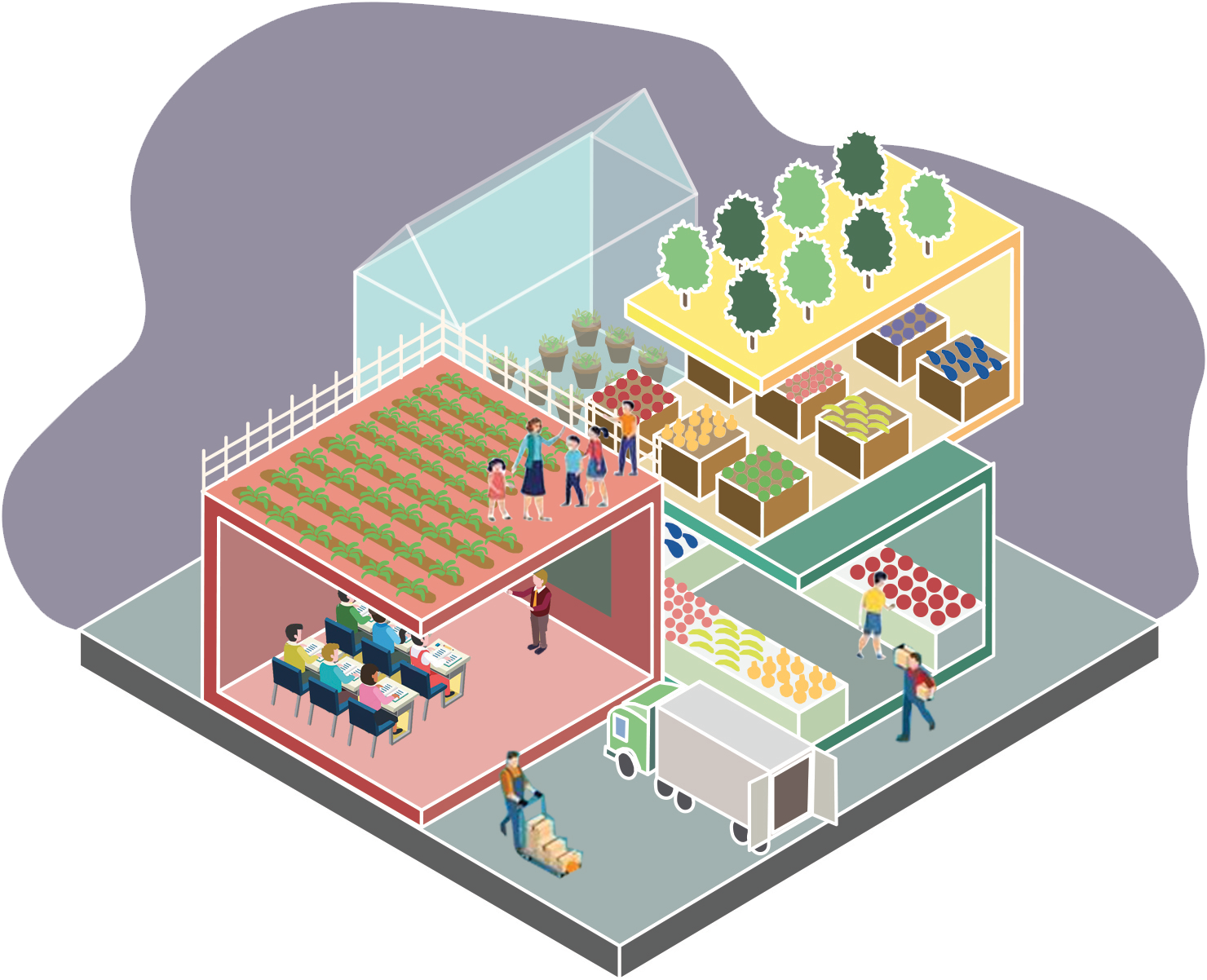
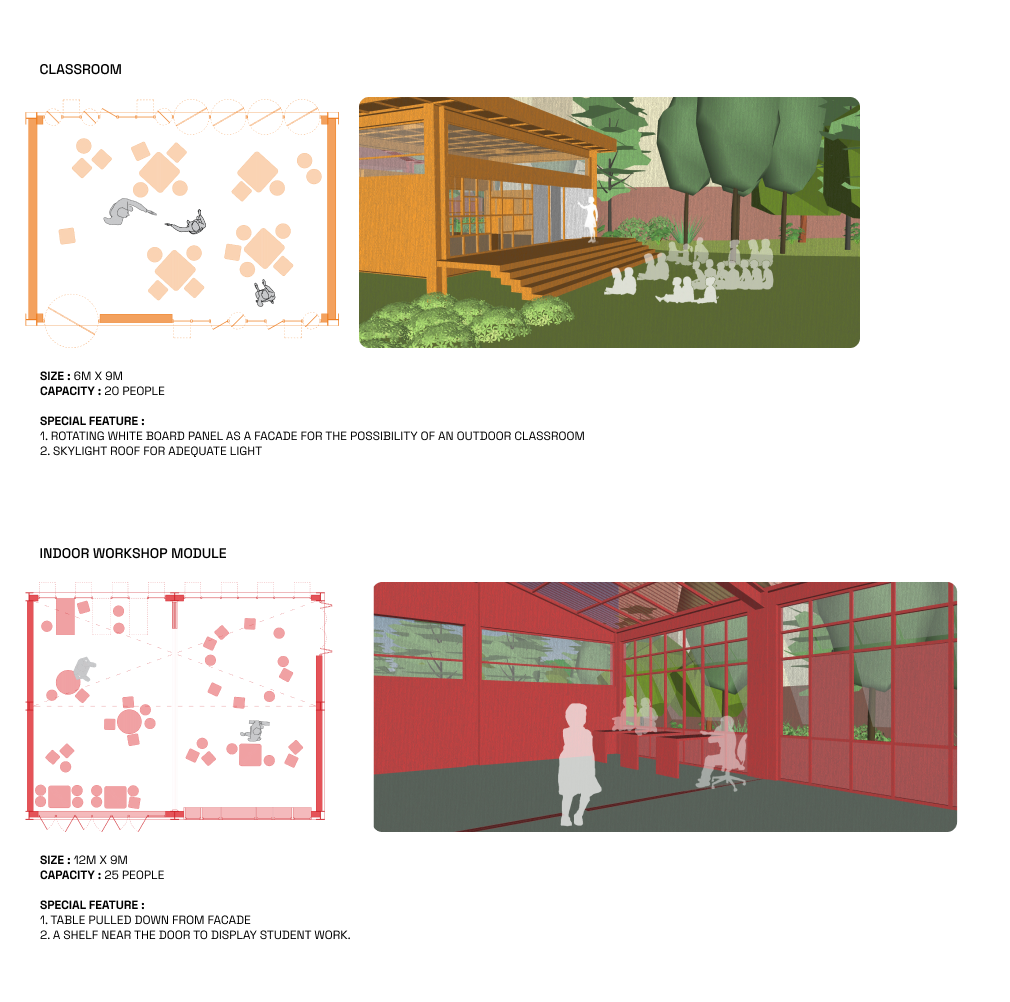
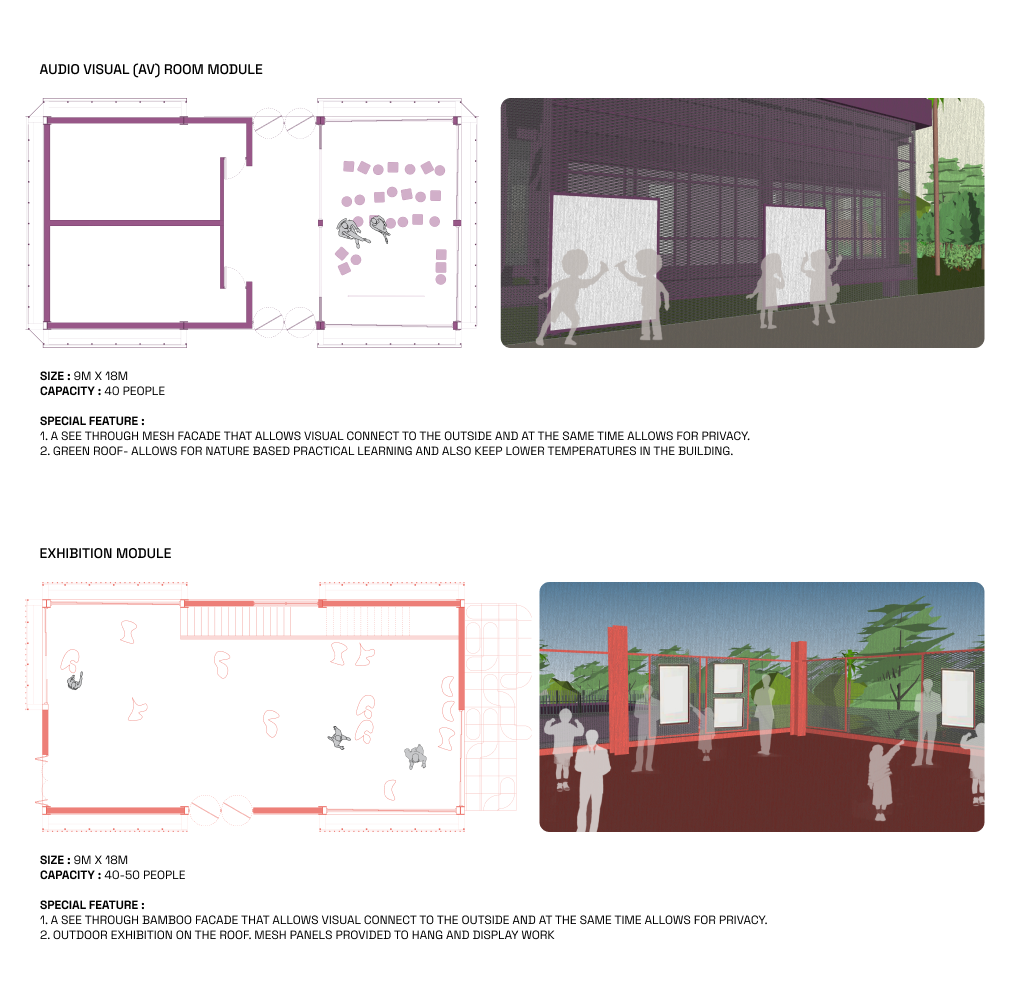
By analyzing the way one learns, the functions and the kinds of spaces to incorporate these functions were identified. These were divided into three broad categories :
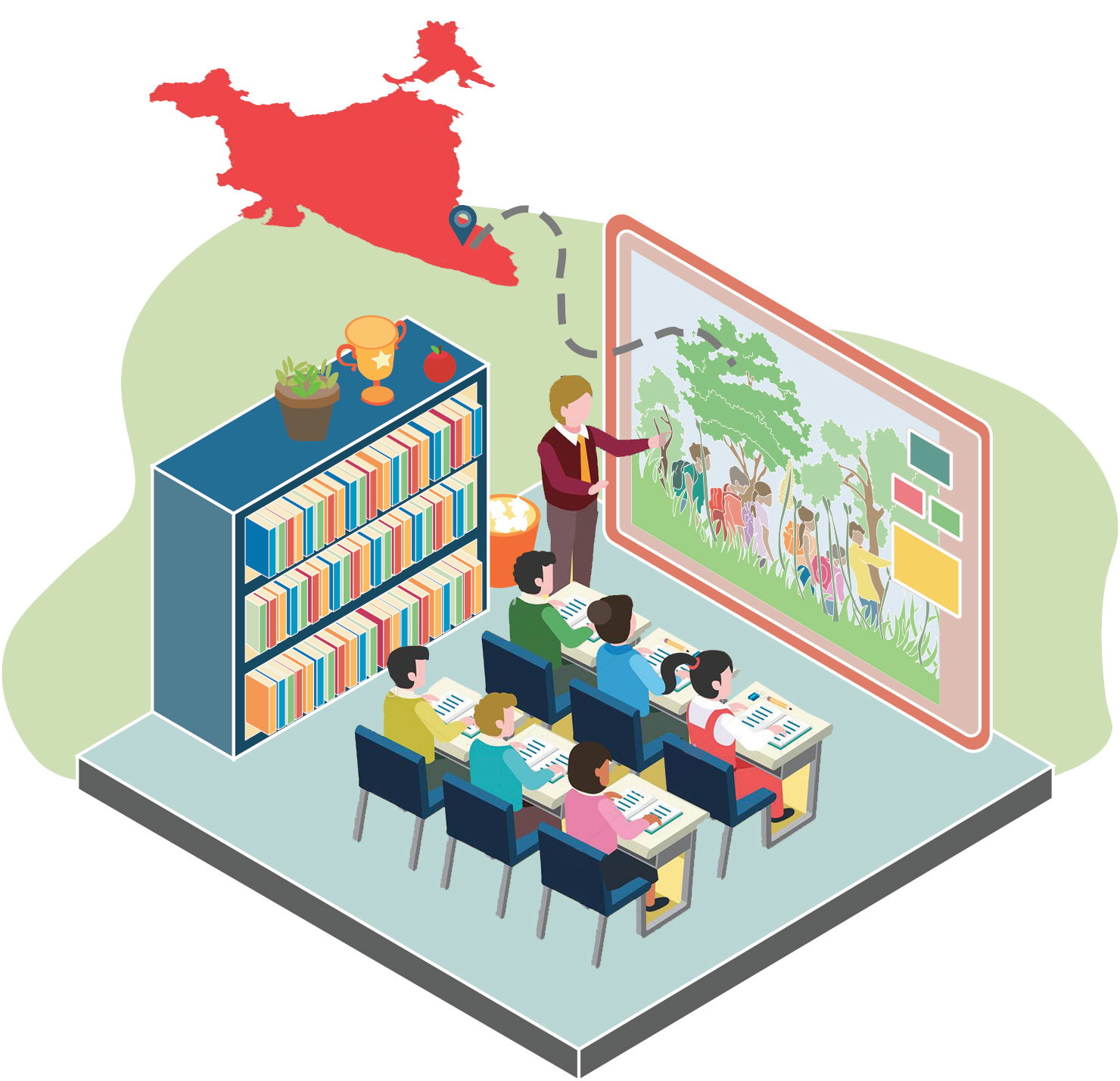
Learn & Innovate
1. Classrooms 
2. Indoor Workshops
3. Audio Visual Rooms
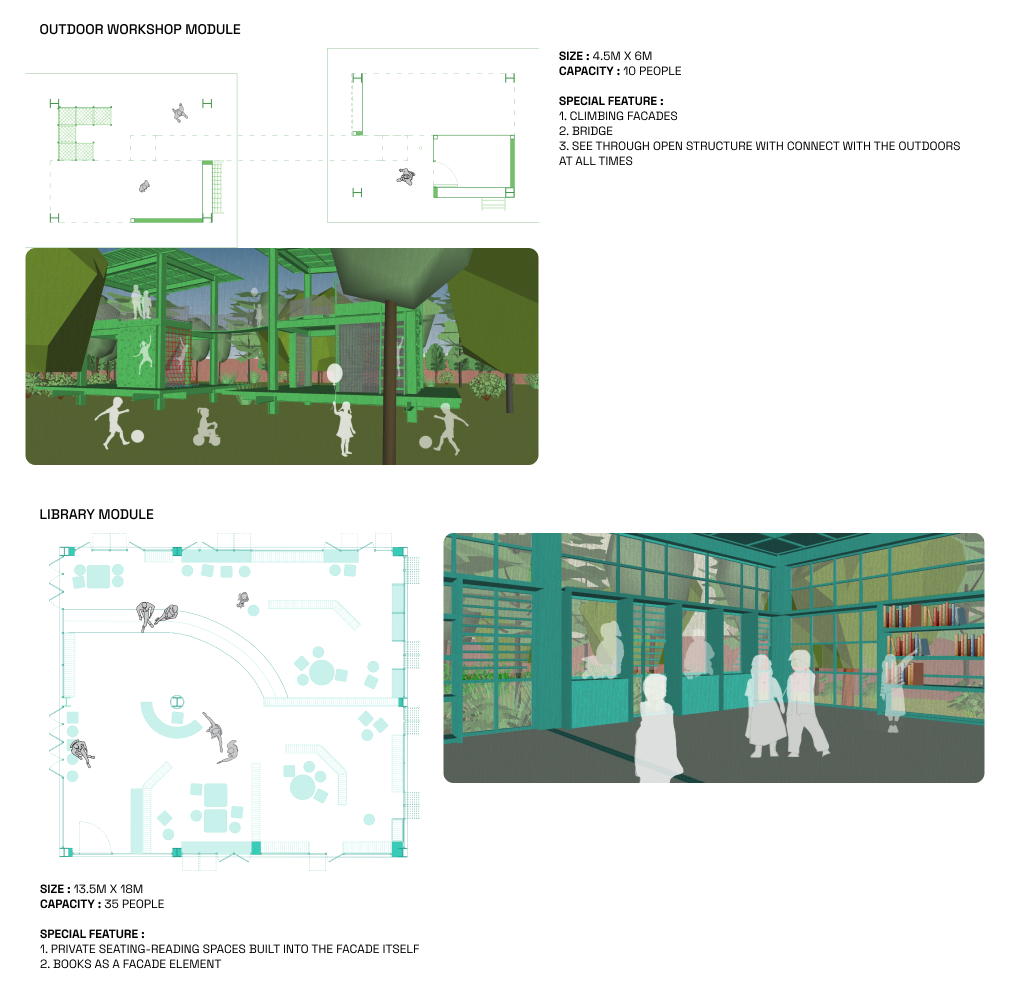
Discover
1. Outdoor Workshops
2. Tree Houses
3. Nursery & Plantation beds
Share
Exhibition Spaces
Exploring the Module
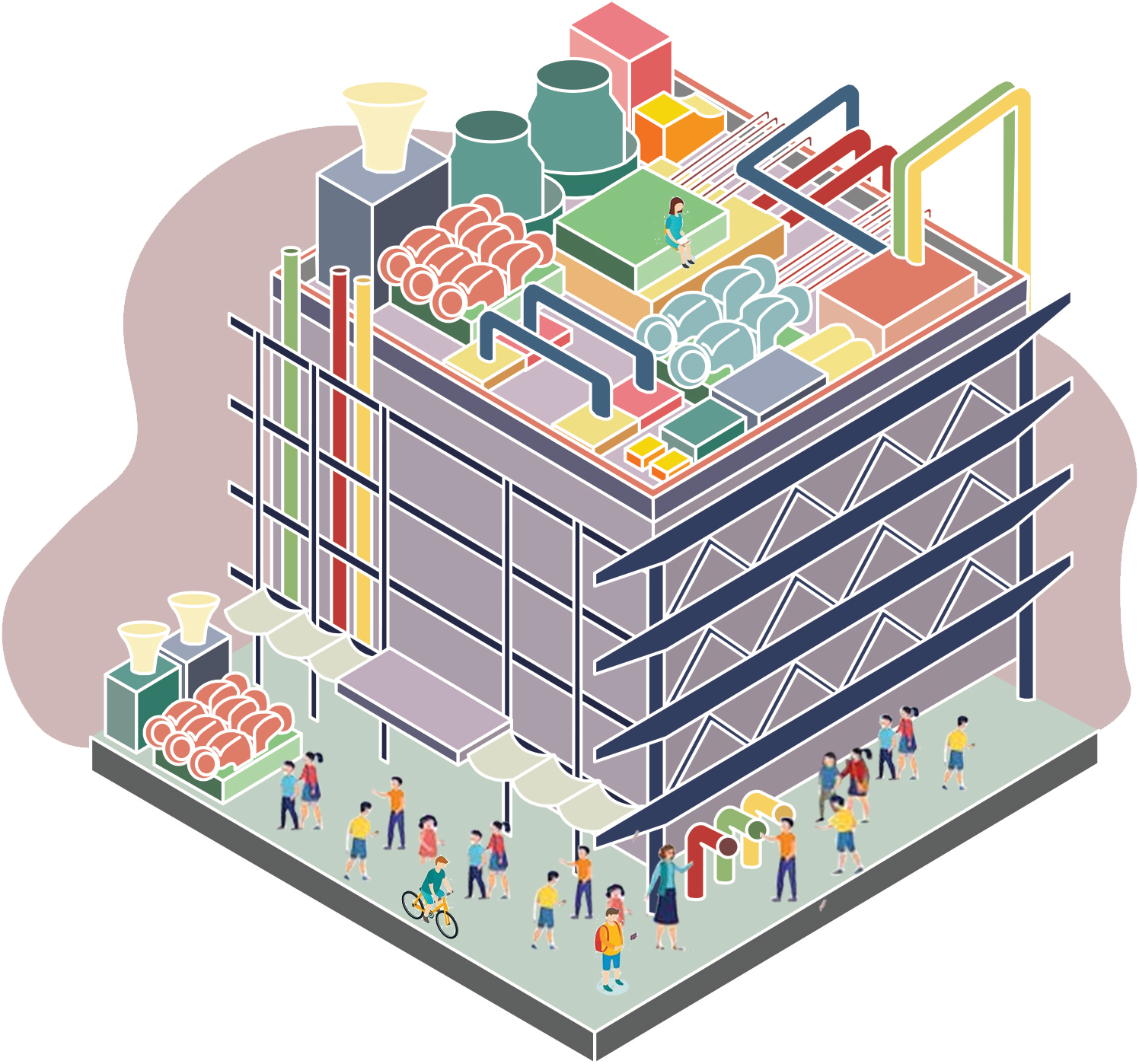
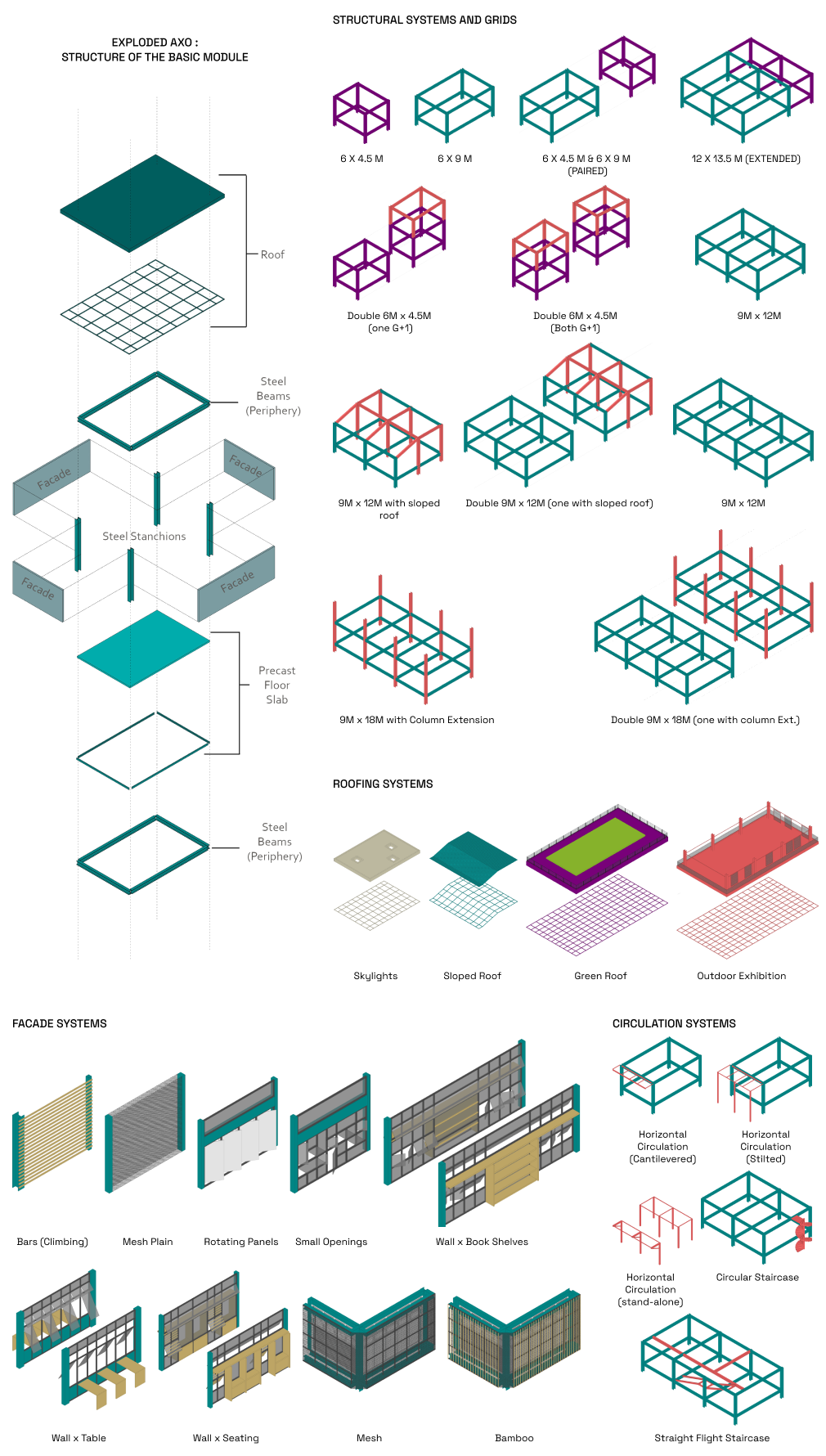
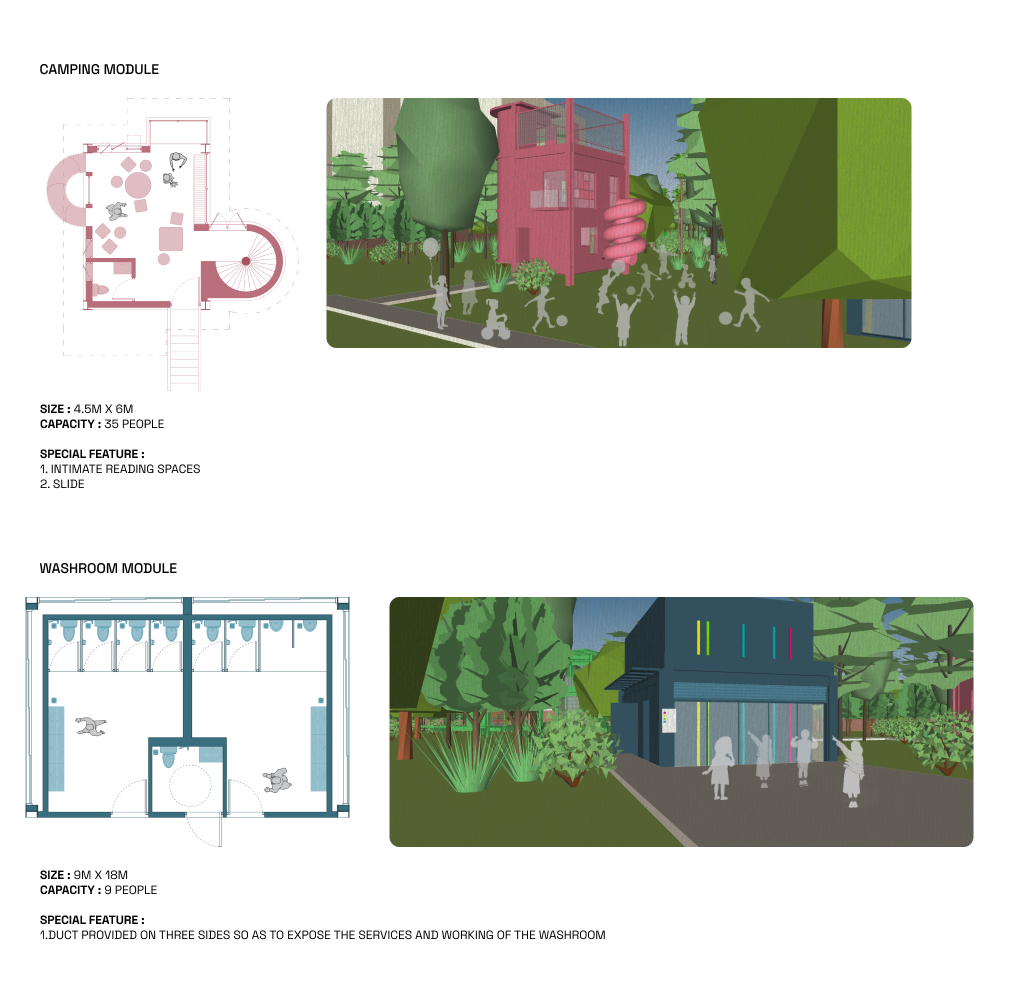
The basic module was imagined as a simple steel structure with a grid of 6x9m. Keeping in mind the functions that the learning center would offer, this was further explored in terms of structural grids, roofing systems, facade systems and circulation systems.
The Different Modules and their Features
IMPLEMENTATION
LOCATING POTENTIAL EDUCATIONAL SPACES THAT WILL AID LEARNING
The city of Mumbai was selected as an experimental prototype. The location of the proposed learning center was to be determined by the proximity of schools and potential educational spaces (lake, museum, national parks). Similar methods of site selection and design interventions can be incorporated in any other city.

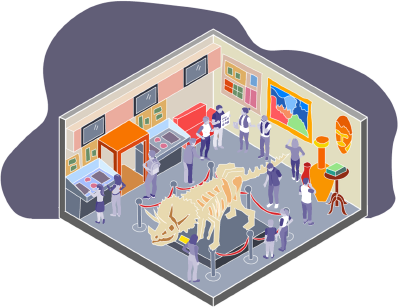
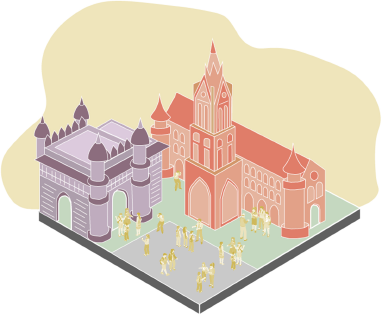
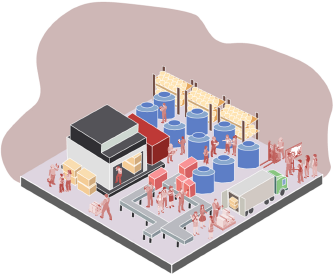
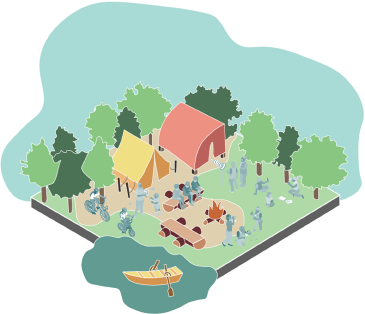
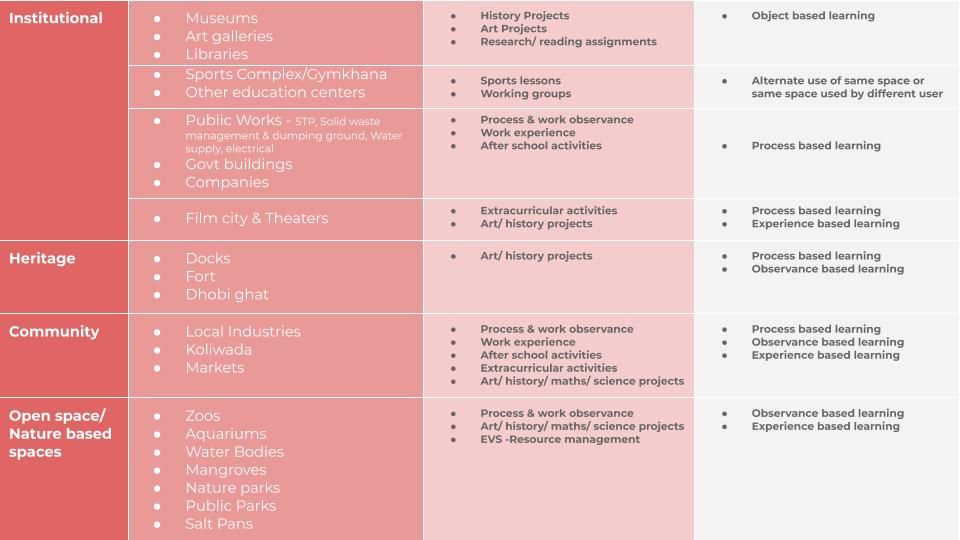
For the city of Mumbai the potential educational spaces were categorized as follows :
1. Institutional
2. Heritage
3. Community
4. Nature Based Spaces
UNDERSTANDING THE LEARNING OUTCOMES FROM EACH TYPE OF EDUCATION SPACE :
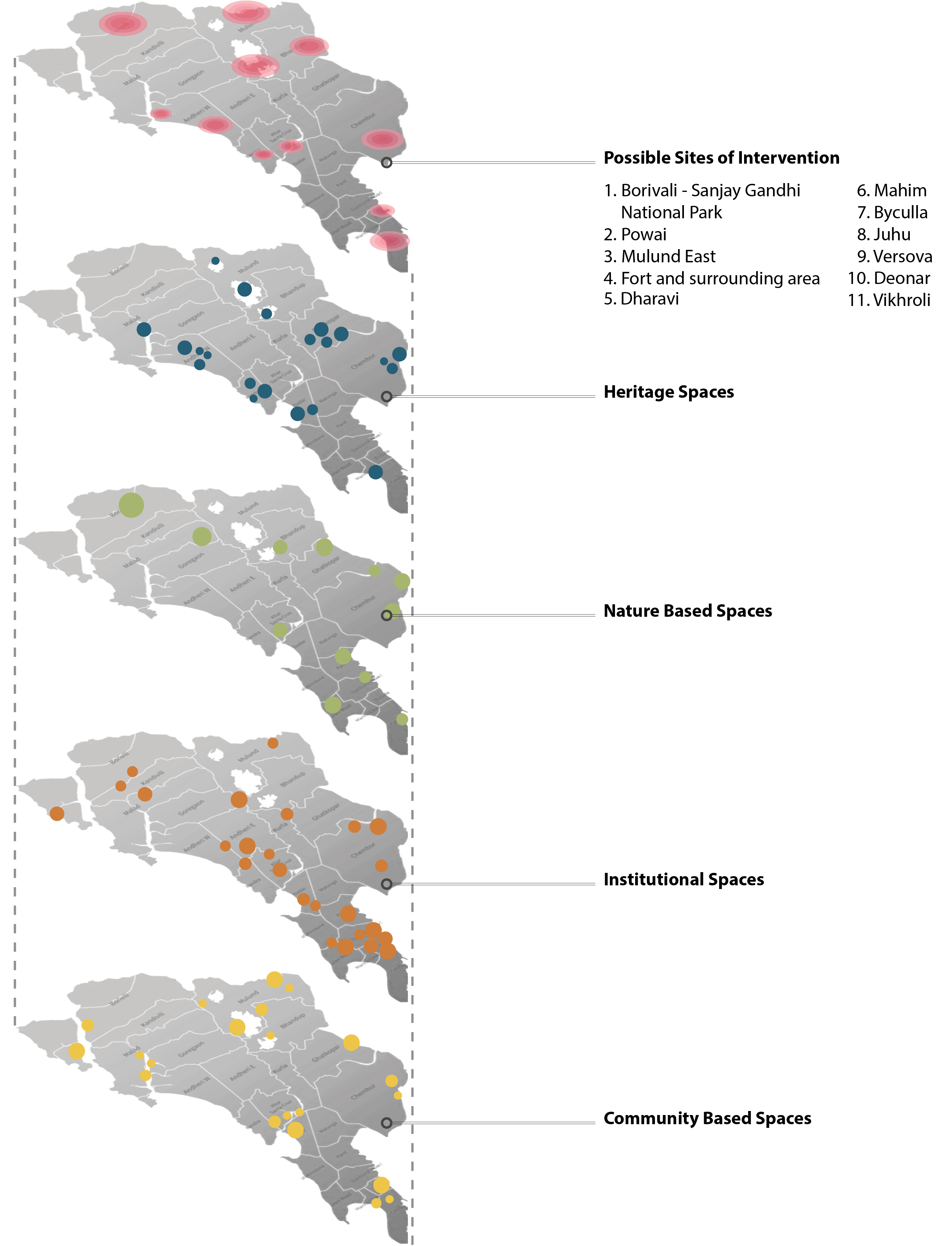
DETERMINING SITES FOR INTERVENTION
Once the potential educational space types were identified, they were located on a map and overlayed to determine the possible sites of intervention in the city of Mumbai.  
site demonstration
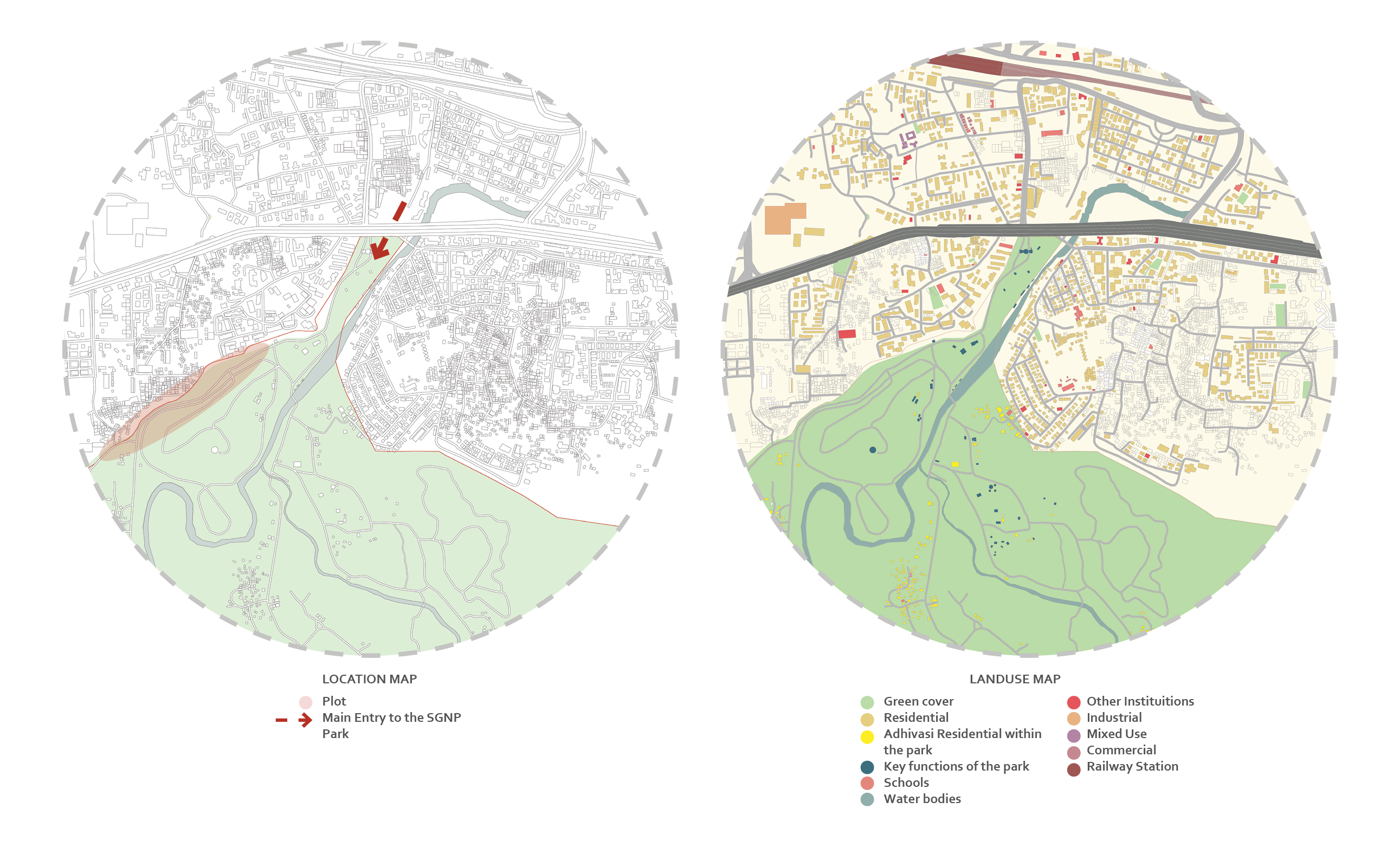
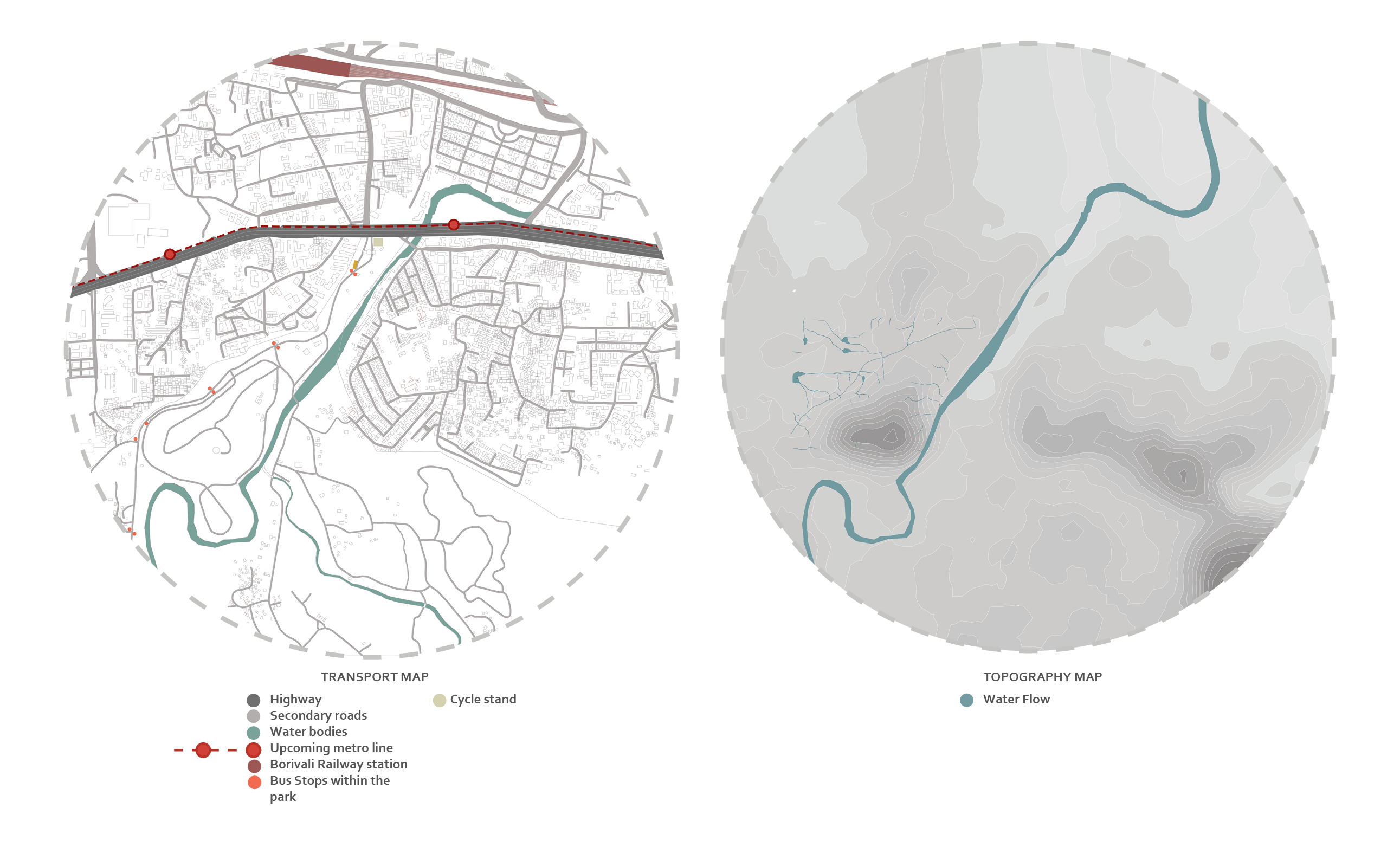
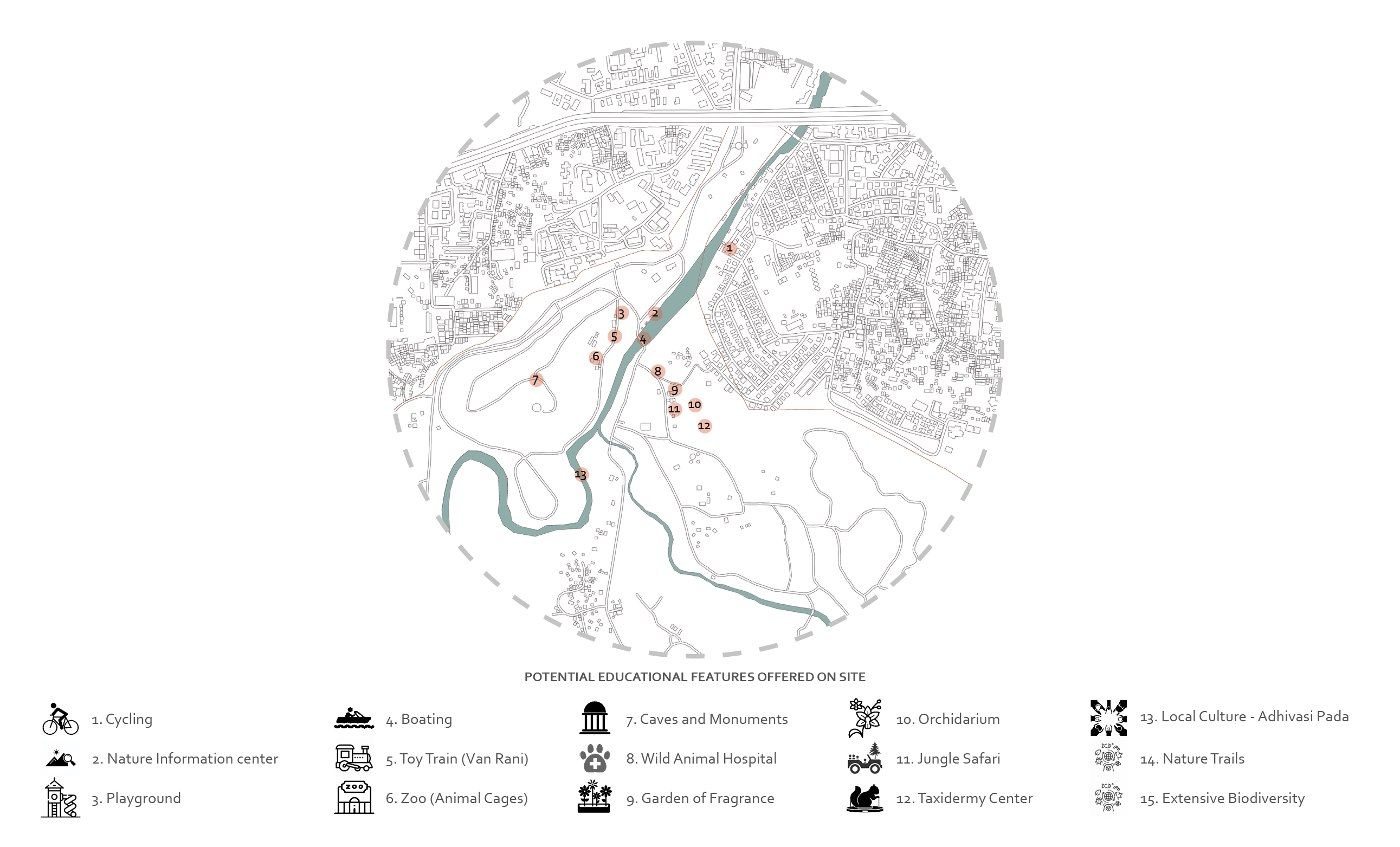
SANJAY GANDHI NATIONAL PARK (BORIVALI)
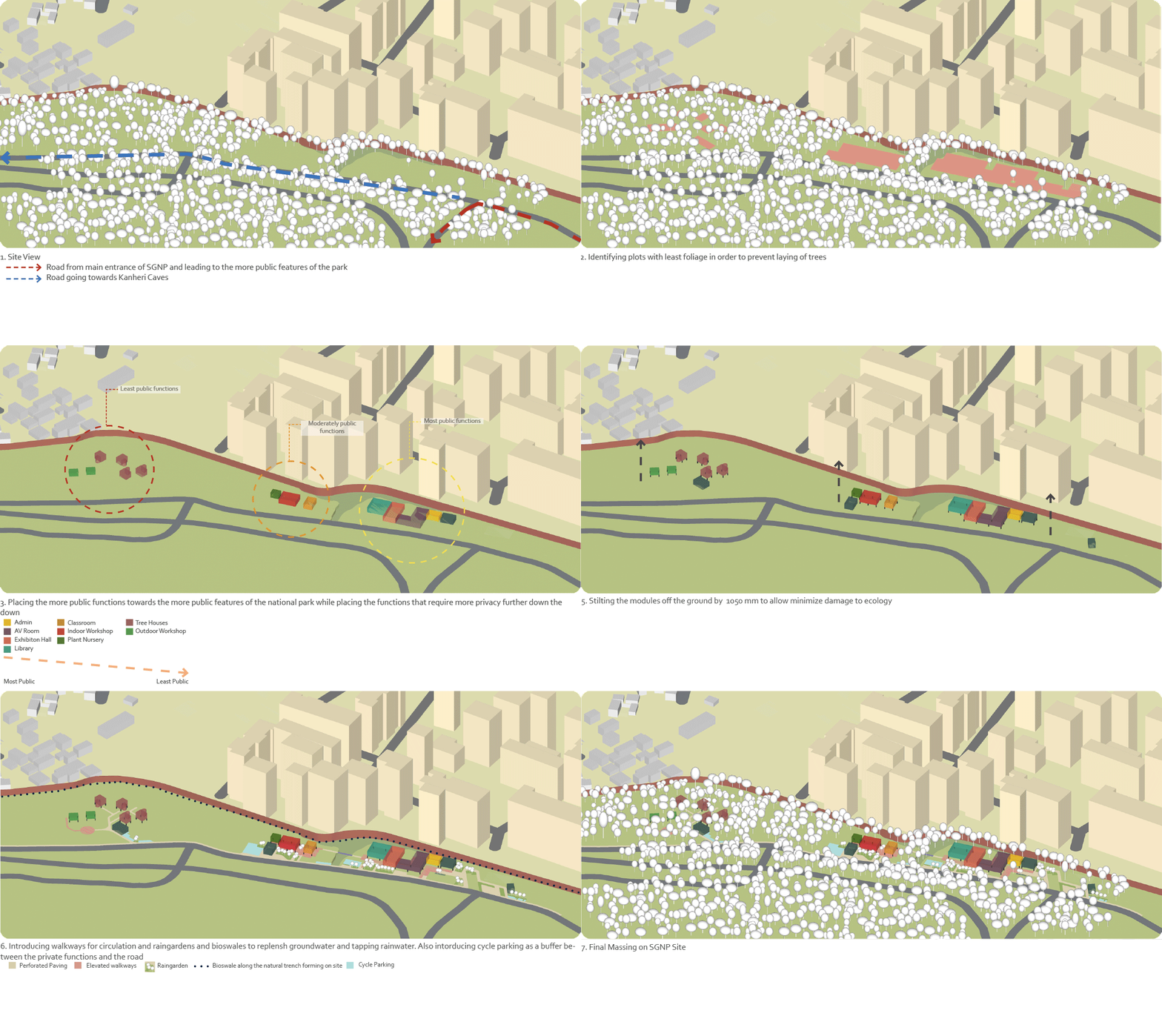
The site of Sanjay Gandhi National Park was selected to demonstrate the project. It must be noted that a similar process could be followed at any other site in the city or for that matter any city in the world.
Site Study
Massing Diagrams
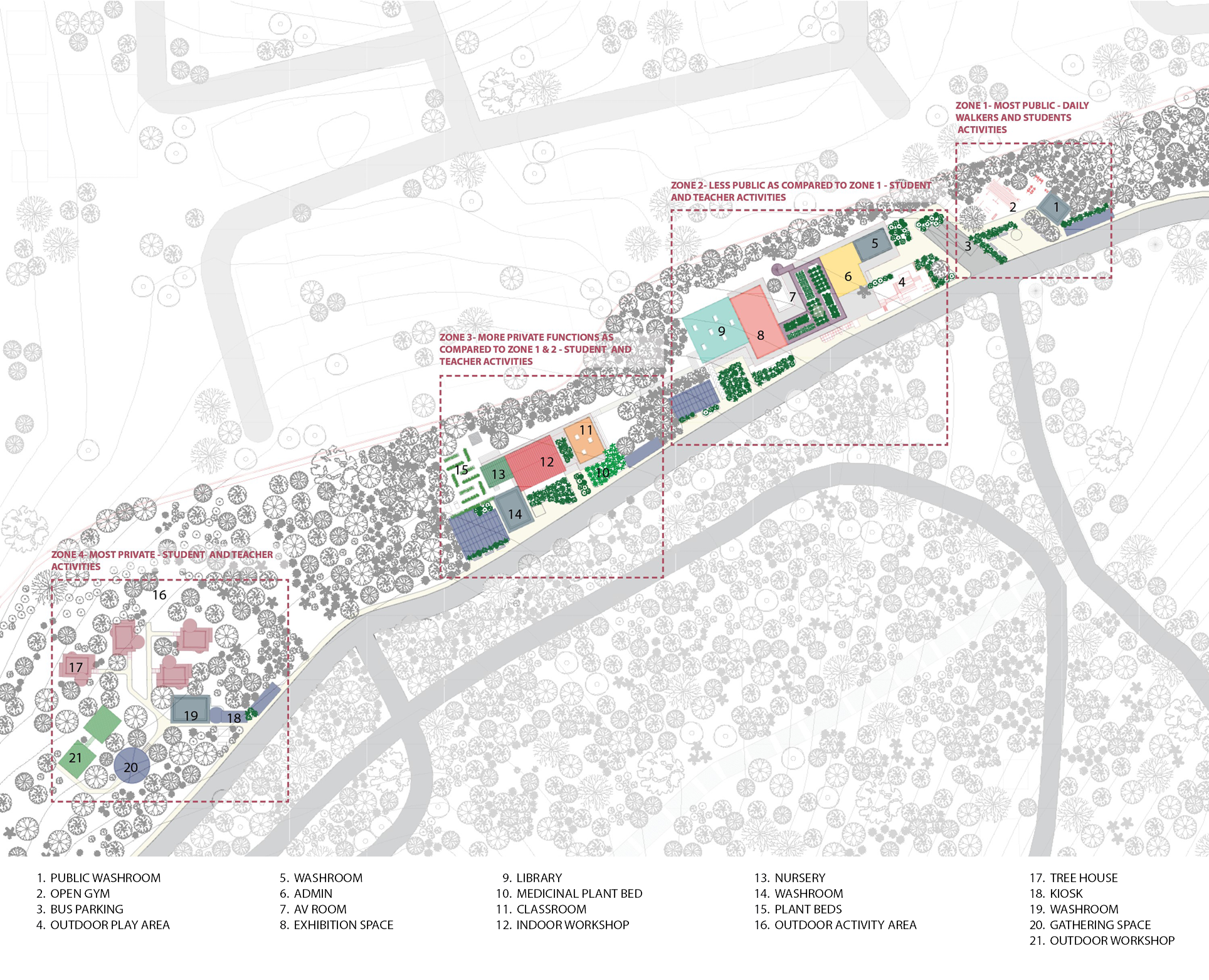
Master Plan
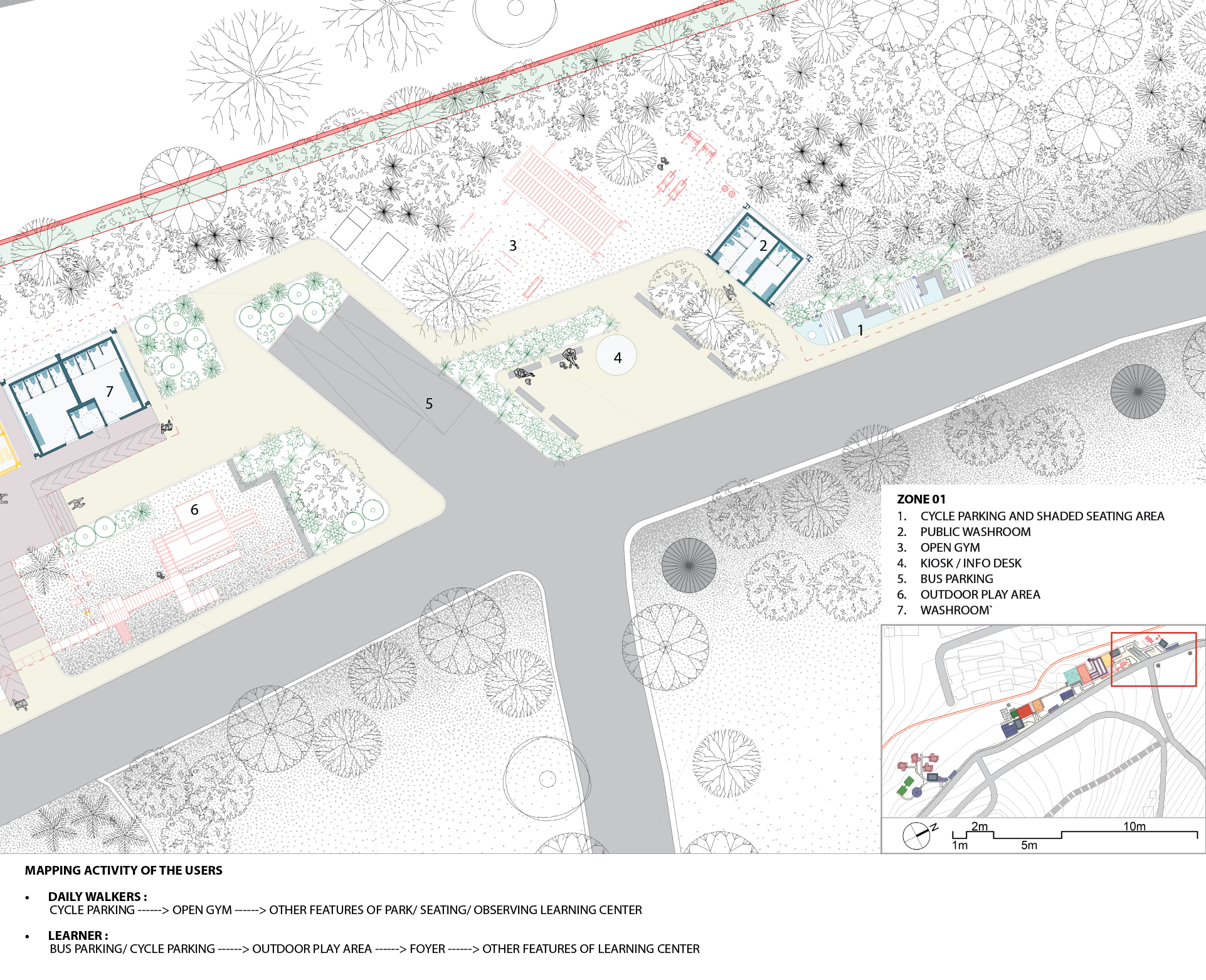
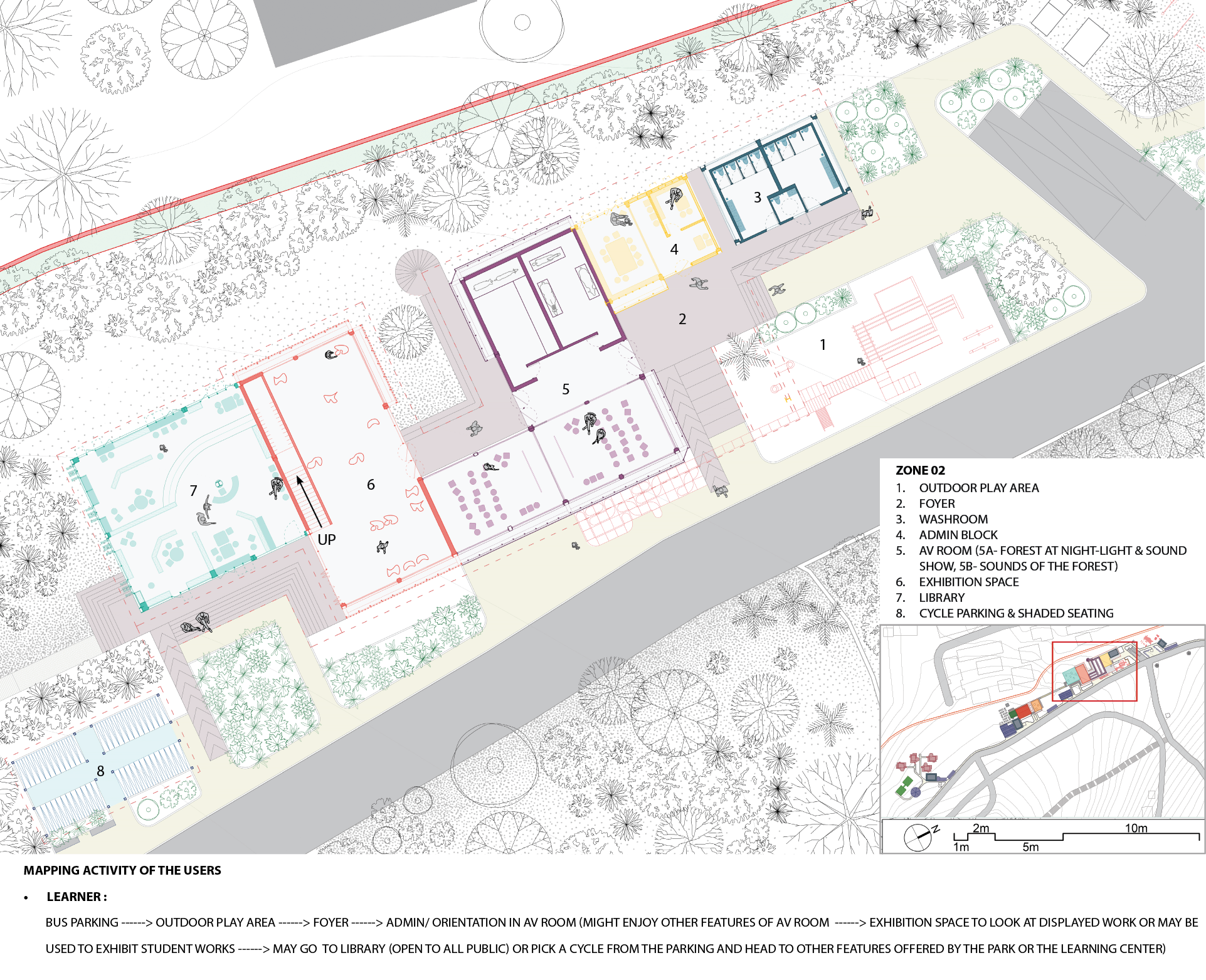
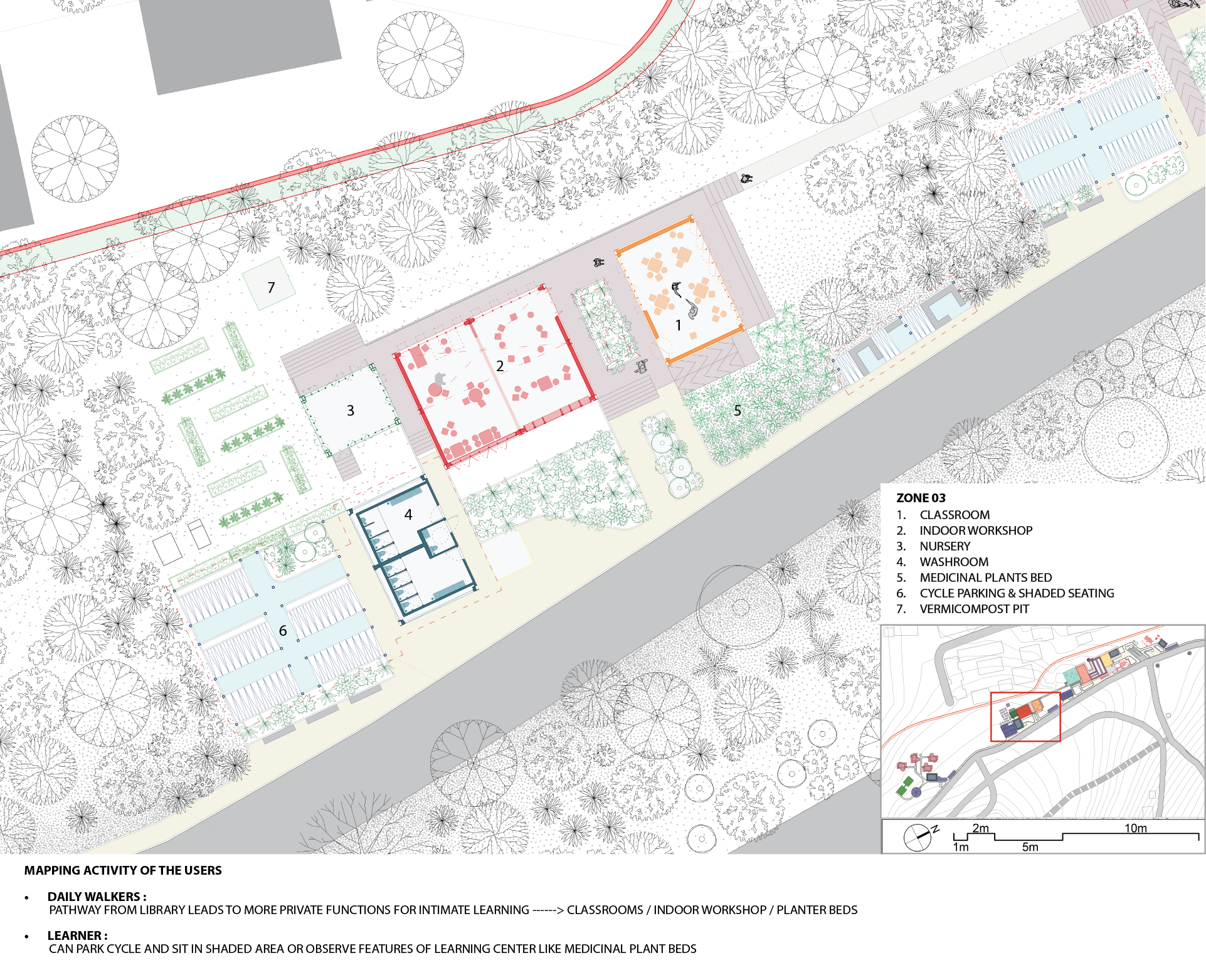
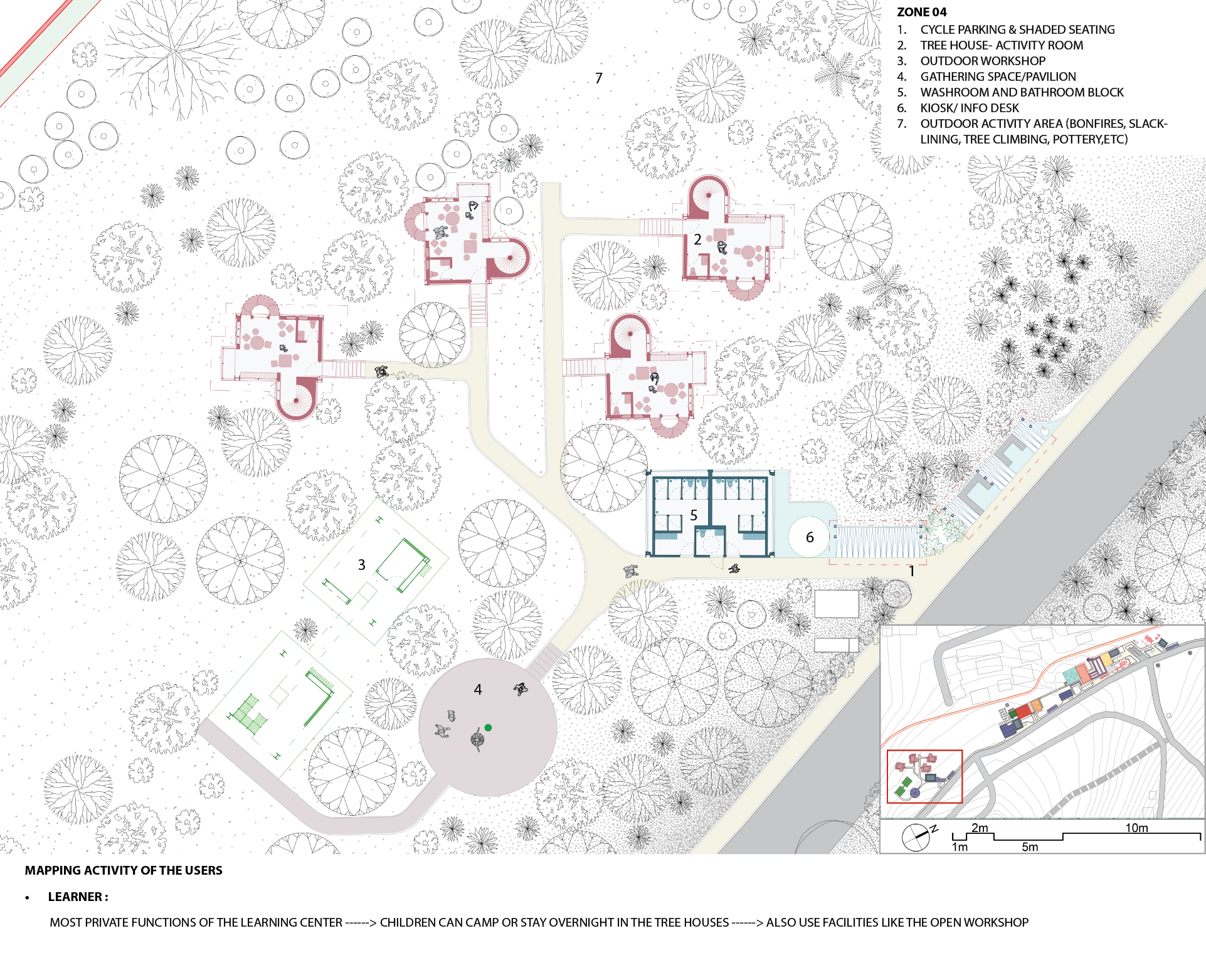
Plans and Mapping Activity of the Users
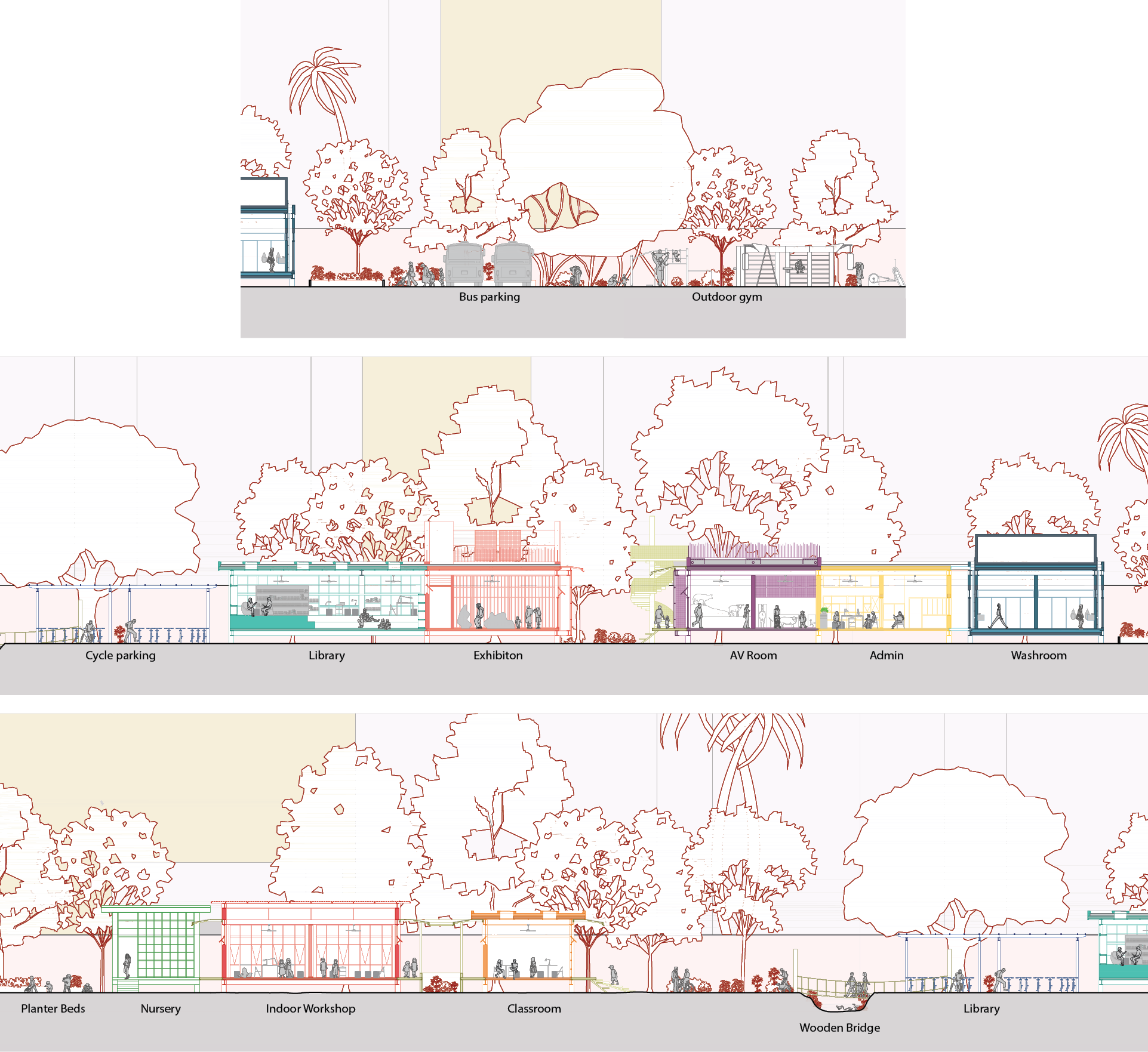
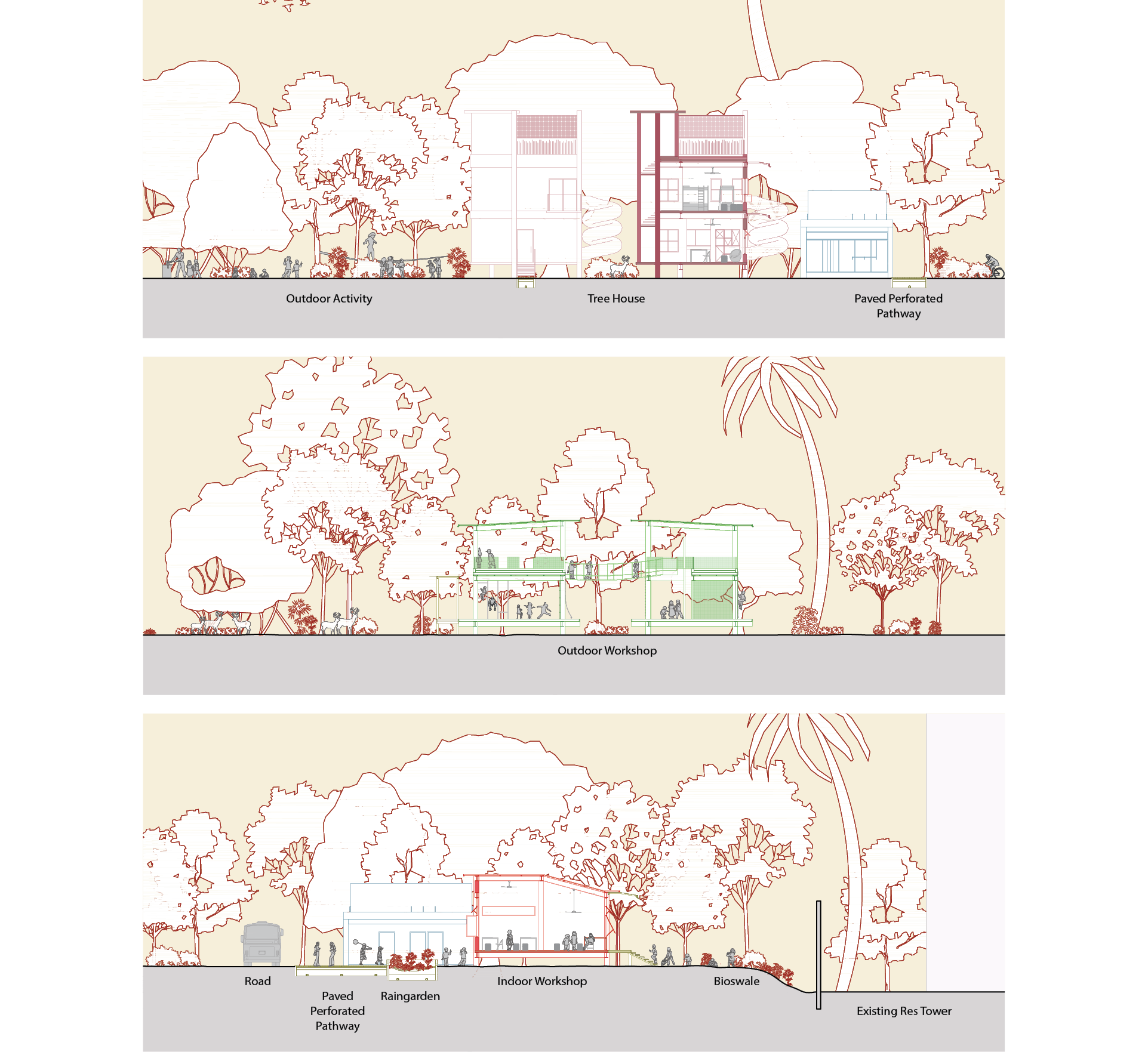
Sections
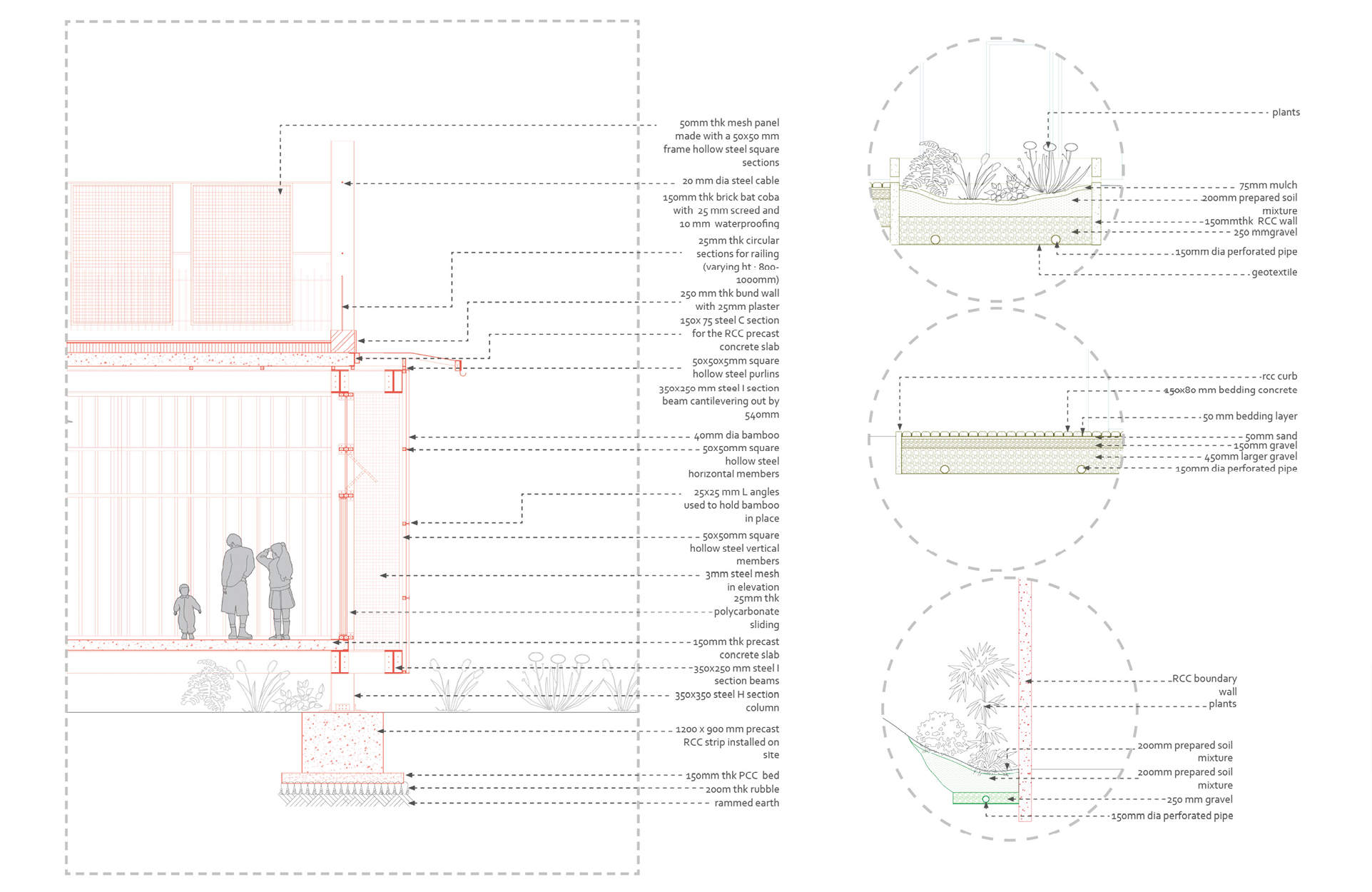
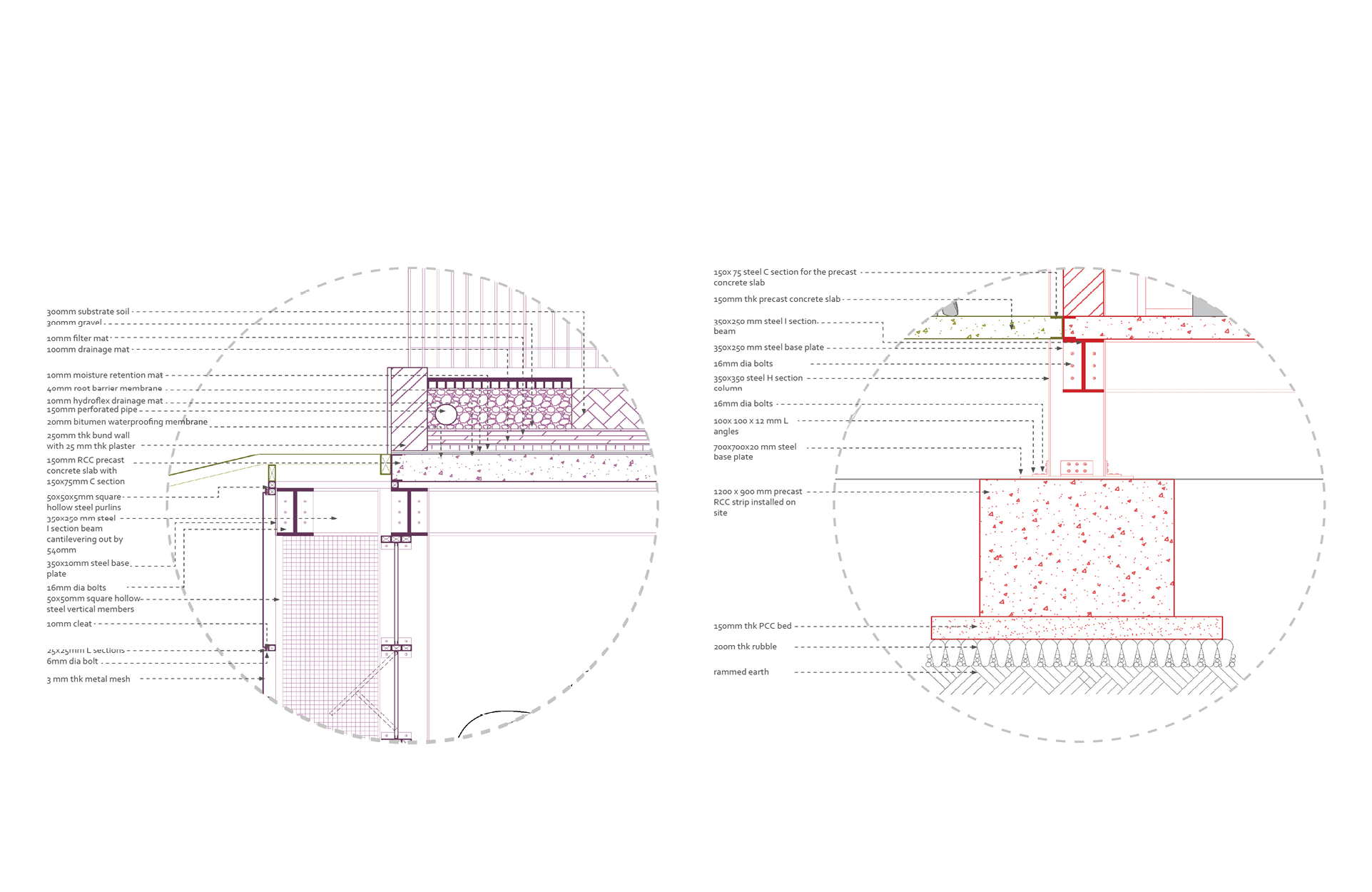
Details
Temporality of the Learning Center
This project is under consideration by the Maharashtra state government
For my thesis volume, dissertation video presentation, or additional research and design details, click here
reflections and takeaways
The project serves as a mere foundation, representing an idealistic endeavor intended to inspire us to explore beyond the confines of institutionalized learning. Establishing functional learning networks, would require opening up several institutes and facilities for educational purposes and the shared use of the learning center, which is bound to cause friction and only little educational synergy, if any. But it is possible and requires special conditions to be successful. Some of these are discussed below:

1. Setting up resilient communication structures within the city : These would hold regular education conferences to ensure two-way information exchange, crisis management, joint planning and careful consideration of future steps.

2. Setting up a team of individuals representing each institute/community/organization.

3. Ensuring cooperative requirements do not become a great burden : One partner should not be expected to solve the other partner’s key problems: there are clearly defined shared interests, but they fall within certain limits

4. The relationship between all stakeholders should be eye to eye.
Like my work?
Let's build something amazing together!
I’m always down to collaborate . I'm hoping to further my career by disrupting the social product space.
Let's get in touch ✌️